Golden Dawn Tarot Correspondences Explained
How Hebrew letters, astrology and the Tree of Life turn every Thoth tarot card into four systems read as one.
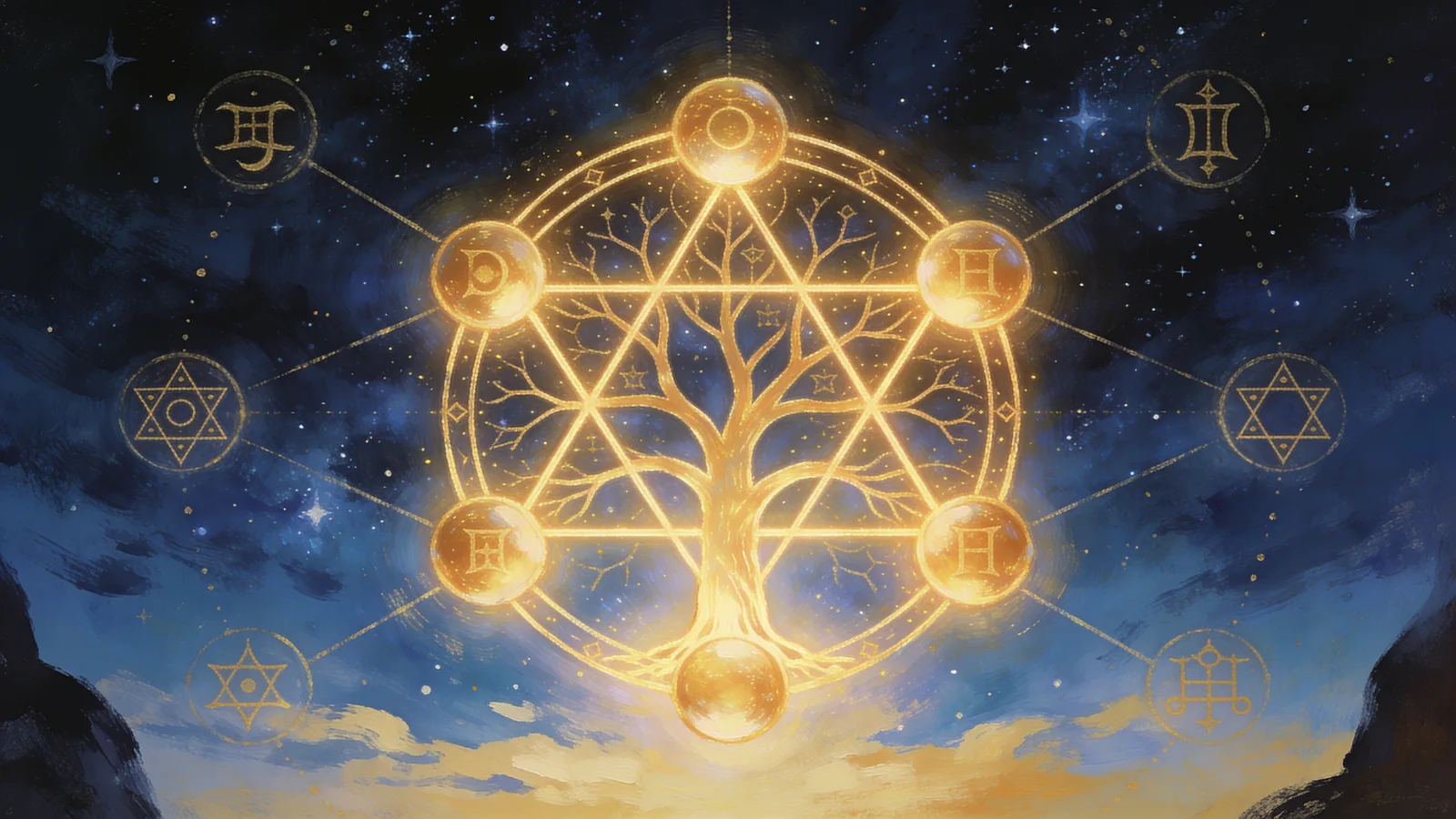
Open the Book of Thoth to any minor arcana card and you will find a small paragraph of attributions before the meaning ever gets explained: a Hebrew letter, a planet or zodiac sign, a path on the Tree of Life. These Golden Dawn tarot correspondences are not decoration. They are the actual argument the Hermetic Order of the Golden Dawn made in the late nineteenth century: that tarot, Qabalah, astrology and alchemy describe the same underlying structure from four different angles, and that reading one system fluently means you can read all four.
Where the system comes from
The Golden Dawn, founded in London in 1888, built a unified curriculum out of ceremonial magic, Qabalah, astrology, tarot and alchemy. Members were taught the Tree of Life first — ten spheres (Sephiroth) connected by twenty-two paths — and then shown how the tarot's twenty-two major arcana trumps map exactly onto those twenty-two paths, each one tagged with a Hebrew letter. Aleister Crowley, an early Golden Dawn initiate, later built the Thoth deck directly on this map, which is why the correspondences sit so visibly on every card.
The Tree of Life in one paragraph
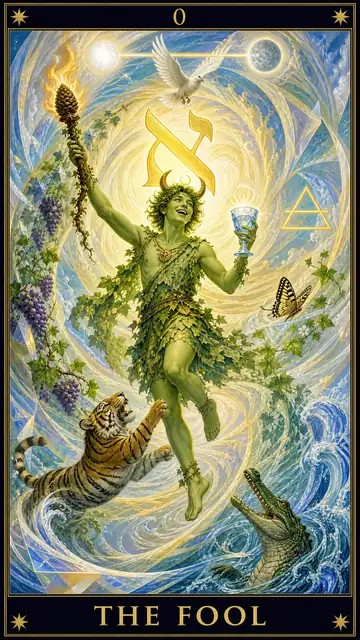
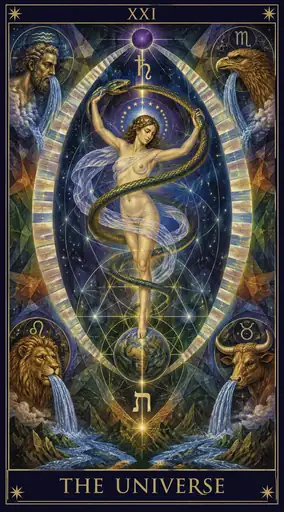
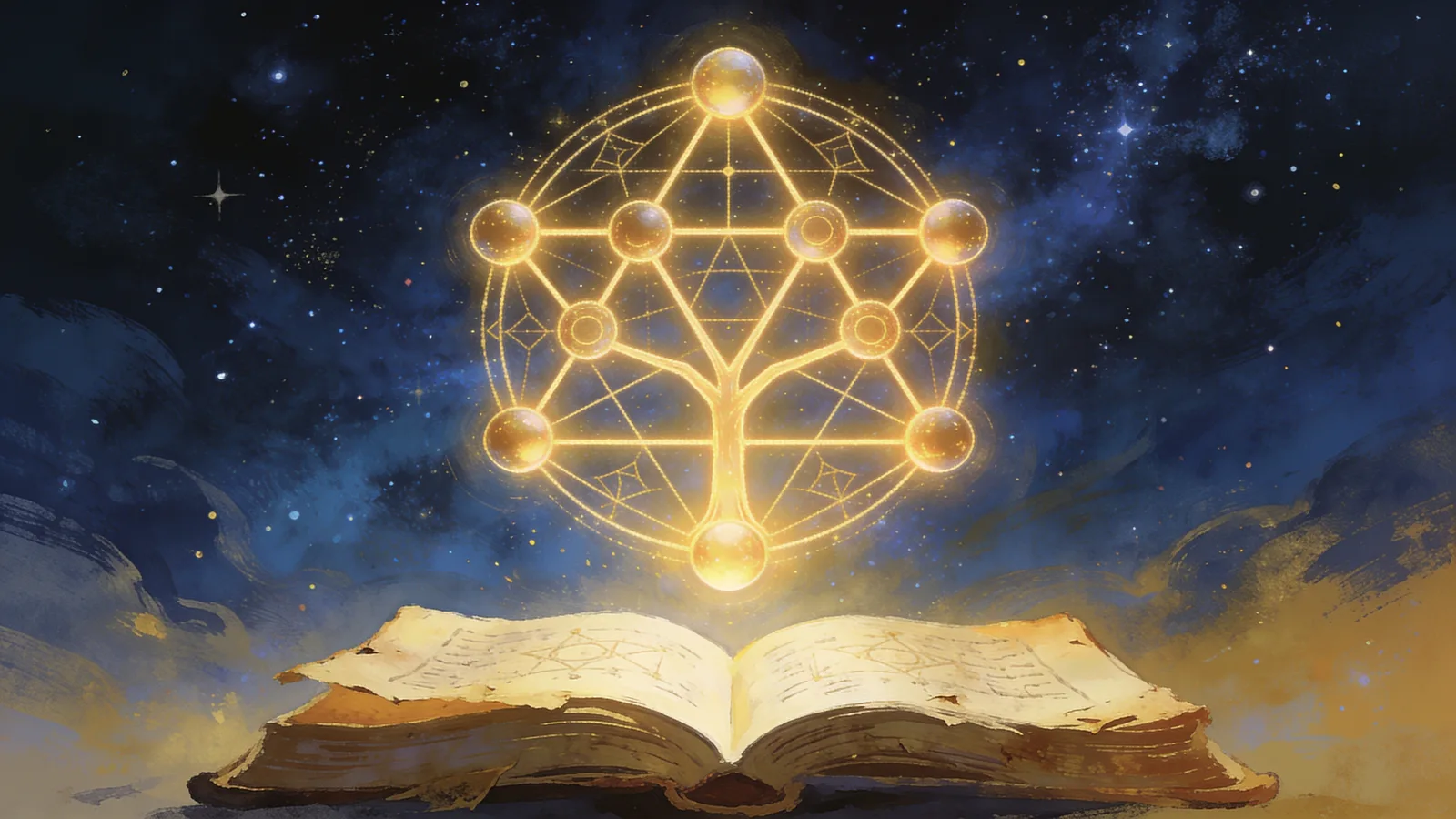
Picture ten circles arranged in three columns, connected by twenty-two lines. The circles are stages of manifestation, from the crown (Kether, pure will) down to the physical world (Malkuth). The twenty-two connecting lines are the tarot trumps: The Fool sits on the highest, most abstract path; The Universe completes the map at the bottom. A reading that references the Tree of Life is really asking: at what stage of manifestation is this situation sitting right now — still an idea, or already solid and material?
Hebrew letters and astrology, card by card
Each major arcana trump carries one Hebrew letter and one astrological attribution:
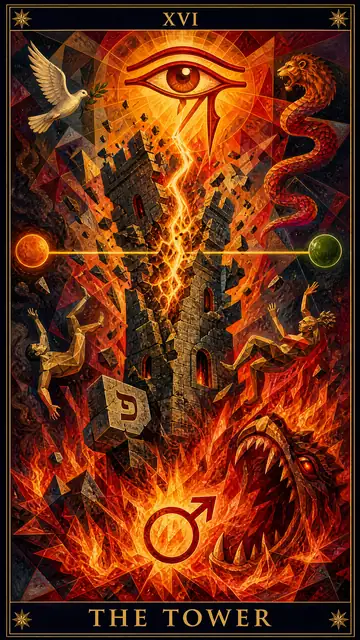
- The Tower — Peh, ruled by Mars: sudden, forceful change.
- The Star — Heh, ruled by Aquarius: hope arriving after upheaval.
- The Hermit — Yod, ruled by Virgo: withdrawal in service of clarity.
- The Moon — Qoph, ruled by Pisces: instinct and illusion working together.
The minor arcana attributions work differently: each of the thirty-six small cards (excluding aces) is tied to one of the ten astrological decans, giving every minor card a specific planet-in-sign flavor — Five of Wands — Strife (Strife) is Saturn in Leo, a fight over pride and territory rather than principle.
Why Golden Dawn tarot correspondences matter for a reading, not just a chart
You do not need to be a Qabalist to benefit from the correspondences. The practical payoff is a second, independent check on a card's meaning: if the plain keyword and the astrological attribution point the same direction, the reading is more solid; if they seem to disagree, that tension is often exactly what the question is really about. An interview-style reading that names both — the ordinary meaning and the correspondence behind it — teaches the system passively, one card at a time, instead of asking you to learn Qabalah before your first spread.
A note on Rider-Waite-Smith
Correspondences were never a Thoth exclusive. The Rider-Waite-Smith deck was designed by two Golden Dawn members too, A.E. Waite and Pamela Colman Smith, so the same Hebrew-letter and astrological attributions sit quietly behind its pictures — they are simply not printed on the cards or foregrounded in most popular teaching material the way Crowley chose to foreground them on the Thoth deck.
A source worth reading directly
Israel Regardie's The Golden Dawn, first published in 1937 and still in print, remains the most complete primary account of how the order organized its correspondences; a summary of the order's history is available on Wikipedia for a faster overview of the timeline and key figures.
FAQ
What are Golden Dawn tarot correspondences? A system linking each tarot card to a Hebrew letter, an astrological sign or planet, and a position on the Qabalistic Tree of Life, developed by the Hermetic Order of the Golden Dawn in the late 1800s.
Do I need to study Qabalah to read Thoth tarot? No. You can read the plain meaning of a card and let the correspondences deepen your understanding over time, rather than treating them as a prerequisite.
How many paths are on the Tree of Life? Twenty-two, matching the twenty-two major arcana trumps exactly.
Are the minor arcana cards also attributed to astrology? Yes. Each of the thirty-six numbered minor cards (excluding aces) corresponds to one of the ten astrological decans, combining a planet and a zodiac sign.
Did Aleister Crowley invent these correspondences? No. He inherited them from his Golden Dawn training and organized them visibly into the Thoth deck; the underlying system predates him.
Frequently asked questions
What are Golden Dawn tarot correspondences?
A system linking each tarot card to a Hebrew letter, an astrological sign or planet, and a position on the Qabalistic Tree of Life, developed by the Hermetic Order of the Golden Dawn.
Do I need to study Qabalah to read Thoth tarot?
No. You can read the plain meaning of a card and let the correspondences deepen your understanding over time.
How many paths are on the Tree of Life?
Twenty-two, matching the twenty-two major arcana trumps exactly.
Are the minor arcana cards also attributed to astrology?
Yes, each of the thirty-six numbered minor cards corresponds to one of the ten astrological decans.
Did Aleister Crowley invent these correspondences?
No, he inherited them from his Golden Dawn training and organized them visibly into the Thoth deck.
This article talks about
 The Fool
 The Universe
 The Tower
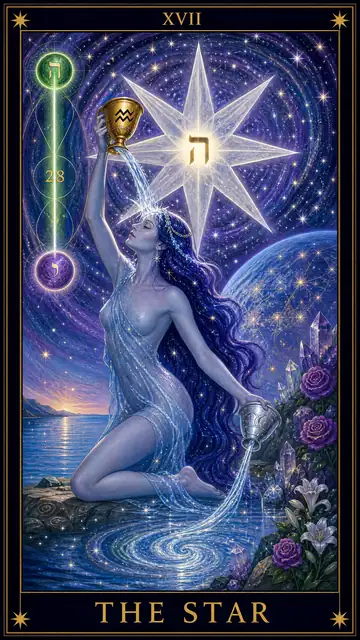 The Star
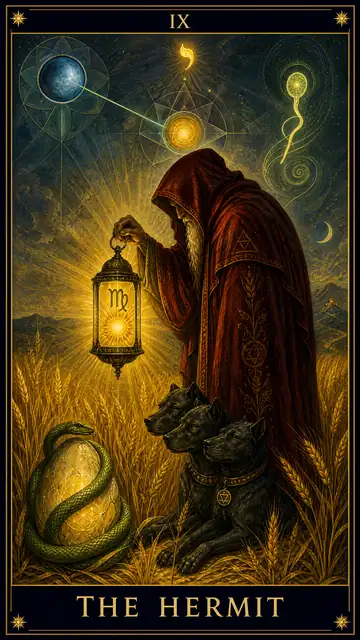 The Hermit
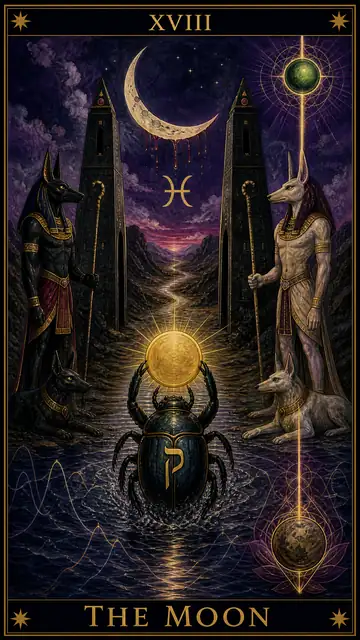 The Moon
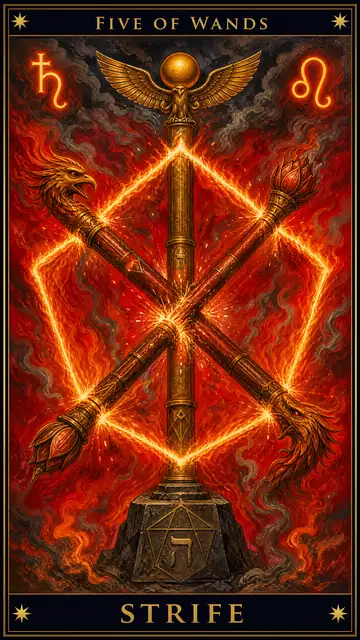 Five of Wands — Strife
Share this article
You might also like
Tarot Tree of Life: A Qabalah Primer
The ten spheres, three columns and twenty-two paths that map the entire major arcana.
Thoth Tarot vs Rider-Waite: What's the Difference
Two decks built for two different jobs: one to be read at a glance, the other to be studied for years.
How to Read Tarot Cards: A Beginner's Guide
Suits, positions and one simple three-card spread to get you reading with real instinct, not memorized definitions.