Sun in Scorpio: The Decan Behind the Thoth Six of Cups
by Redazione · 9 October 2026 · 5 min read
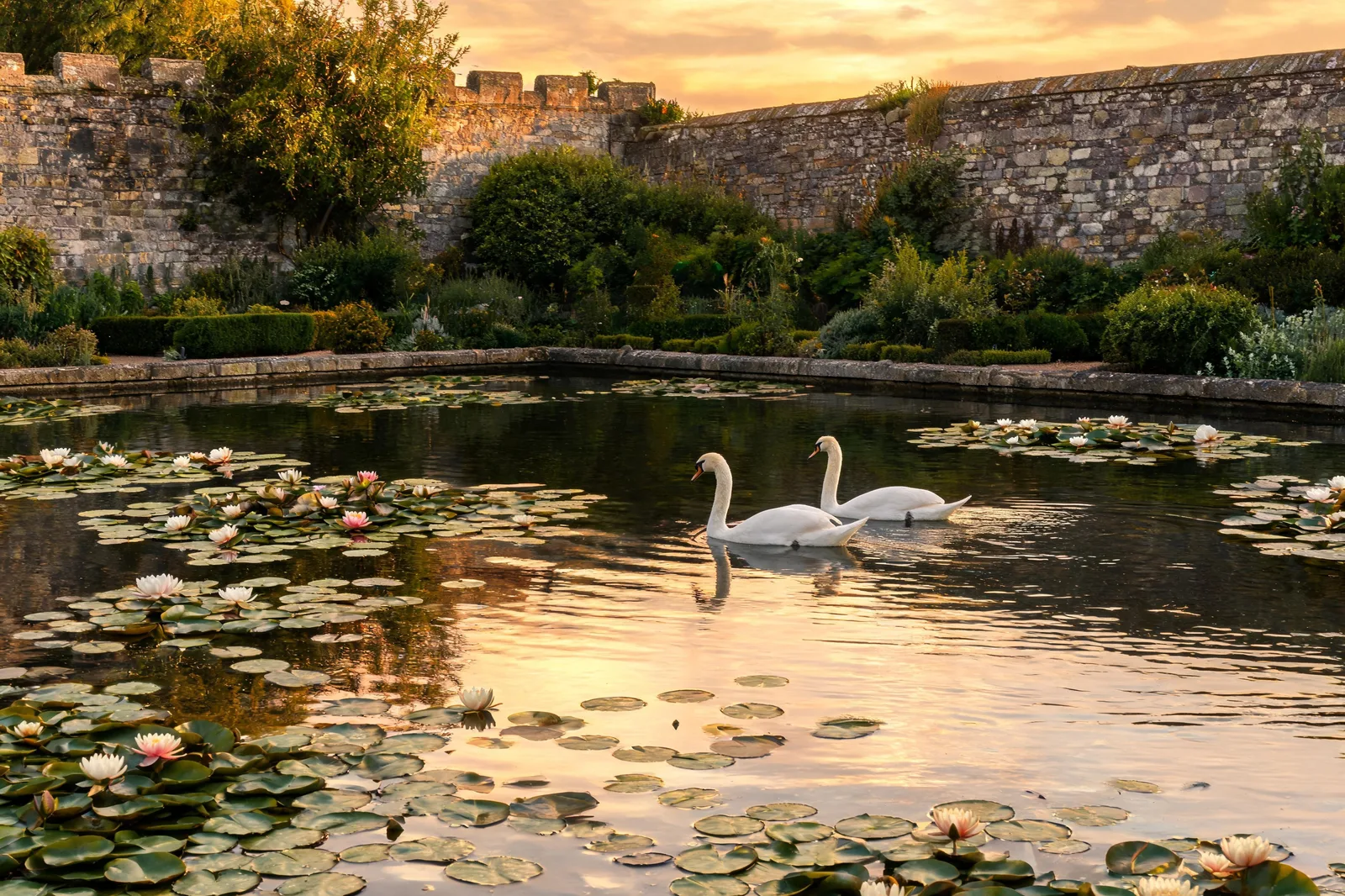
Crowley titles the Six of Cups Pleasure, and the six of cups sun scorpio decan names something the rest of the suit's small cards cannot claim: a planet and a sephirah that happen to be the same light twice over. Mars in Scorpio: The Decan Behind the Thoth Five of Cups left the suit cut open by Mars; the Sun's decan, moving to Scorpio's second face, is where that wound actually starts to heal.
The Second Decan of Scorpio: The Sun Reaching Into Deep Water
Scorpio's second decan, roughly the first half of November, belongs to the Sun. That is an unusual pairing on its own: the Sun is a planet of open vitality, and Scorpio is the sign most associated with what stays hidden, intense and transformative. Tradition holds that the Thoth card answers this tension by making pleasure simple rather than showy — gentle, almost childlike contentment rather than triumphant joy, as if the Sun's light has had to travel down into Scorpio's depth before it can shine back out.
That descent matters for what the card actually claims. This is not the Sun blazing unchallenged, the way it will later in Leo's own cards. Here the Sun is a guest in difficult territory, and the pleasure it produces is earned rather than given freely: warmth returning after the Five's hard cut, not warmth that was never threatened.
Tiphareth on the Tree: The One Sephirah That Doubles Its Planet
Every small card's number ties it to a sephirah, and sixes belong to Tiphareth, the sixth sphere, called Beauty. Tiphareth, Beauty, and the Four Sixes explains that Tiphareth sits at the centre of the Tree of Life and is itself attributed to the Sun — the only sephirah with a direct, one-to-one planetary match. That makes the Six of Cups a special case among the suit's decans: both its ruling planet and its ruling sephirah are solar, so the card concentrates the Sun's qualities rather than simply adding two different influences together.
Applied to Water, that concentrated solar signature becomes a specific kind of pleasure: warmth that restores balance rather than warmth that merely excites. Tiphareth's beauty is harmony among the sephiroth around it, not spectacle, and the Six of Cups reads the same way — simple, centred contentment, often tied to memory or a return to something familiar rather than to anything new.
Reading Pleasure as Recovery, Not Novelty
Treating the card as a decan changes the kind of question a reader can usefully ask. Because the Sun here is recovering ground that Mars cut away in the previous card, the Six of Cups answers questions about restoration better than questions about fresh excitement. It is a strong card for a querent asking whether good feeling can return after a loss, less useful for a querent hoping for something entirely new. The nostalgia readers often notice in this card is not incidental: Tiphareth's beauty is frequently backward-looking, a remembered wholeness restored rather than invented.
Next to a card of ambition or departure, the Six of Cups often marks a choice between moving forward and returning to something that already worked. Neither reading is wrong on its own, but the decan leans toward return: the Sun descending into Scorpio to recover what the suit had before the Five's disruption, not to chart new territory.
Where This Differs from the General Meaning Article
The blog's Six of Cups Tarot Meaning: Nostalgia, Past Connections and Soul Ties covers the card as most querents meet it: nostalgia, past connections, soul ties, read as everyday emotional experience. This piece asks why the Thoth deck assigns that specific warmth to the Six — which needs the Sun's unusual position in Scorpio and Tiphareth's doubled solar signature, not only the picture of swans and lotuses. Crowley's attributions, following the Golden Dawn's decan tables, treat the coincidence of planet and sephirah as meaningful rather than decorative (on the order's method: Hermetic Order of the Golden Dawn).
Practical Notes for Readers
When the Six of Cups appears, name its decan: the Sun moving through Scorpio's second face, recovering light it had to earn rather than light it never lost. Pair that with Tiphareth's doubled solar signature, and the card becomes a description of restored balance rather than a vague nod to nostalgia. The pleasure here is real, but it is pleasure that follows the Five's cut directly — comfort that had to be rebuilt, which is exactly why it feels, to most querents, like coming home.
That order also explains why the Six so often turns up beside memory rather than ambition. A querent drawing it after a difficult season is not being told to chase something new; the Sun's descent into Scorpio argues for recognising what has already been recovered, quietly, before reaching for anything else. Read against the suit's own sequence, that is a modest but genuinely useful claim: pleasure, here, is proof the healing already started.
It is worth noting what this decan does not promise. The Sun in Scorpio is not the Sun at its most public or expansive; Leo, later in the zodiac, will carry that register for the suit of wands instead. Here the Sun's warmth stays private and domestic, closer to the comfort of a familiar room than to any public celebration. A reader who treats the Six of Cups as a card about grand new happiness misreads the decan; it is better used for questions about whether a querent can trust a quieter, smaller kind of good feeling after a difficult stretch, the sort that rebuilds slowly rather than arriving all at once.
Questions
Why is the Six of Cups called Pleasure in the Thoth deck?
Crowley follows the Golden Dawn's attribution of the card to the Sun ruling the second decan of Scorpio, a placement where warmth returns gently after the Five's sharp loss.
Why is the Sun an unusual planet for a Scorpio decan?
The Sun is open and vital, while Scorpio is the sign of what stays hidden and transforms. The card reads as earned, modest pleasure because the Sun has to work through that depth first.
What makes Tiphareth special for this particular six?
Tiphareth, the sephirah of all sixes, is itself attributed to the Sun, the only sephirah with a direct planetary match. The Six of Cups is therefore doubly solar, concentrating rather than mixing its influences.
Does this decan support a reading about new excitement?
Not primarily. The Sun here is recovering ground lost to Mars in the previous card, so the decan favours questions about restored comfort over questions about novelty.
You might also like
 Cups
 Cups
 Cups
© 2026 TAROTS chat (tarots.chat). All rights reserved. No part of this article may be reproduced, distributed or adapted without the owner's written permission.
The Journal
 Kabbalah
 Symbolism
 Career
 Kabbalah
 Kabbalah
 Kabbalah
 Symbolism
 Symbolism
 Kabbalah