Dion Fortune: The Occultist Behind The Mystical Qabalah
by Redazione · 9 October 2026 · 5 min read
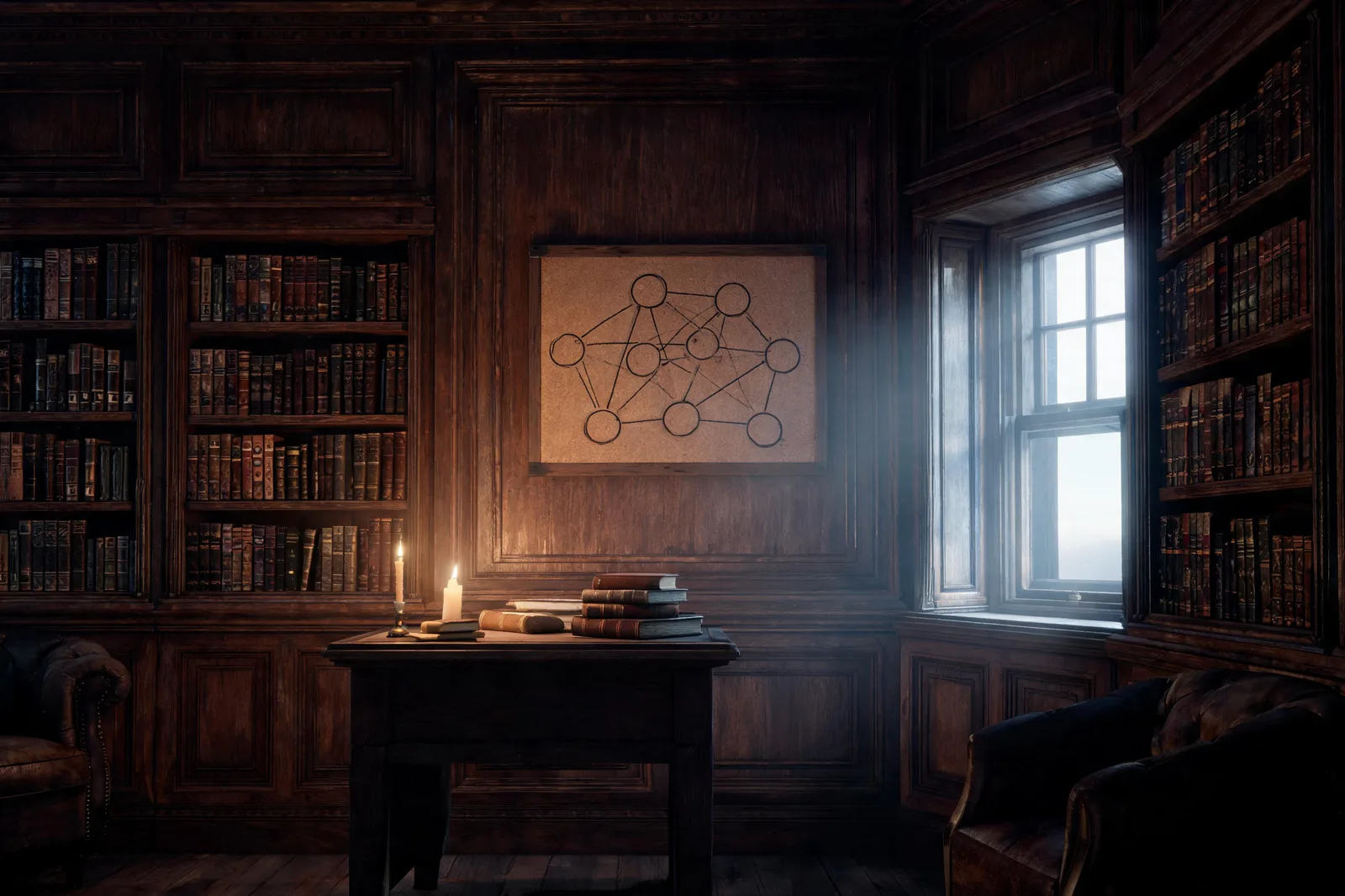
Dion Fortune was the pen name of Violet Mary Firth, a British occultist whose 1935 book The Mystical Qabalah still shapes how modern readers connect the Tree of Life to the tarot. She trained first in psychology, then in magical orders, and spent her life translating esoteric doctrine into plain, usable English. For a Thoth reader, her importance is direct: she built a bridge between the Hebrew Tree and the cards years before Crowley and Harris finished their own deck.
Early Life and the Turn to Occultism
Firth was born in 1890 in Llandudno, Wales, into a family with Christian Science leanings. She studied psychology and worked briefly as a lay psychotherapist, an experience that left her alert to the mind's suggestibility and its hunger for symbol. A breakdown in her twenties, which she later blamed on a psychic attack by a teacher, pushed her toward occult study rather than away from it. She adopted the name Dion Fortune, a shortening of her family motto "Deo, non Fortuna", God not luck, and kept it for the rest of her working life.
She joined the Alpha et Omega, a successor order to the original Golden Dawn current, around 1919. There she met Theosophical teachers and Golden Dawn survivors, absorbed their Qabalistic grading system, and grew frustrated with the order's secrecy and its internal politics. By the mid-1920s she had broken away, convinced the Western Mystery Tradition needed a public face, not another closed temple guarding the same old papers from newcomers.
Founding a Teaching Order
In 1924 Fortune founded the Fraternity of the Inner Light, a working lodge in London later renamed the Society of the Inner Light. It offered a structured course through the ten sephiroth, open to students willing to commit years, not weekends, to the training. The society still exists, and it still teaches from her core texts, a continuity rare among the occult groups of her generation. The next part of this series looks closely at that lodge and its tarot curriculum.
Her method mixed ceremonial practice with visualization, what she called "mental imagery", guided meditations that walked a student path by path up the Tree. The tarot entered this syllabus as a visual key: each trump tied to a path, each path tied to a Hebrew letter, each letter opening a door in the student's own symbolic imagination. This is the same structure Crowley used for the Thoth deck, though Fortune reached a wider lay audience with less obscurity in her prose.
Writing The Mystical Qabalah
Fortune wrote The Mystical Qabalah across the early 1930s, publishing it in 1935 after a serialization in her order's magazine. The book takes the ten sephiroth one at a time, giving each a Hebrew name, a set of correspondences, and a chapter of applied psychology. She deliberately avoided Hebrew scholarship for its own sake: her goal was practical magic, not philology, and she said so plainly in her introduction.
Crucially, she treated the Tree as a map of consciousness, not only of the cosmos. A sephirah was a state the mind could visit, a disposition it could cultivate, not merely a theological rung on a ladder running down from the divine. Readers who had struggled with denser academic Qabalah texts finally had an entry point written in ordinary, confident English. That clarity is why dion fortune remains a set text for serious students of the Western Tree today, Thoth readers included.
Fortune and the Tarot Itself
Fortune rarely wrote about specific tarot cards; her focus stayed on the Tree and its paths. But her correspondences fed directly into how later writers, including Crowley's own circle, discussed the trumps. Her reading of The Tower as a path of sudden structural collapse, clearing ground for new growth, echoes through most Thoth-era commentary on that card. She framed catastrophe as a necessary unmaking before a true rebuilding, not as plain misfortune.
She was also a working novelist, and her fiction, especially The Sea Priestess, dramatized Qabalistic and lunar symbolism for readers who would never open an occult manual. Her novels taught doctrine through story, a method that let magical ideas travel further than any lodge paper could manage alone.
Why She Still Matters to Thoth Readers
Dion Fortune never worked directly with Crowley, and the two kept a wary distance from each other in print. Yet both drew on the same Golden Dawn well, and both insisted the Tree of Life gives the tarot its deepest grammar. A Thoth reader who studies her sephirotic descriptions gains a second, independent voice on the paths the cards travel, less combative in tone than Crowley's own writing but no less exacting in its structure.
Her legacy sits in every course that still teaches the tarot through the Tree rather than through fortune-telling formulas. The discipline she insisted on, years of path work before claiming mastery, remains a useful corrective for anyone tempted to treat a single pull, even an encouraging Ace of Disks — Root of the Powers of Earth, as a shortcut past the slow work of study.
Questions
Who was Dion Fortune?
Dion Fortune was the pen name of Violet Mary Firth, a British occultist and novelist who founded the Society of the Inner Light and wrote The Mystical Qabalah in 1935.
Why did she choose the name Dion Fortune?
She took it from her family motto, Deo, non Fortuna, meaning God, not luck, shortening it into a working pen name she used for the rest of her life.
Did Dion Fortune work with Aleister Crowley?
No. The two occultists moved in overlapping Golden Dawn circles but kept a wary distance, though both treated the Tree of Life as the tarot's deepest structure.
What is The Mystical Qabalah about?
It is a practical guide to the ten sephiroth, giving each a Hebrew name, correspondences, and applied psychology, written for students rather than Hebrew scholars.
This article talks about
You might also like
 Kabbalah
 Kabbalah
 Kabbalah
© 2026 TAROTS chat (tarots.chat). All rights reserved. No part of this article may be reproduced, distributed or adapted without the owner's written permission.
The Journal
 Symbolism
 Symbolism
 Wands
 Swords
 Love
 Love
 Symbolism
 Symbolism
 Kabbalah