Fortune on the Supernal Triangle: Kether, Chokmah, Binah
by Redazione · 9 October 2026 · 3 min read
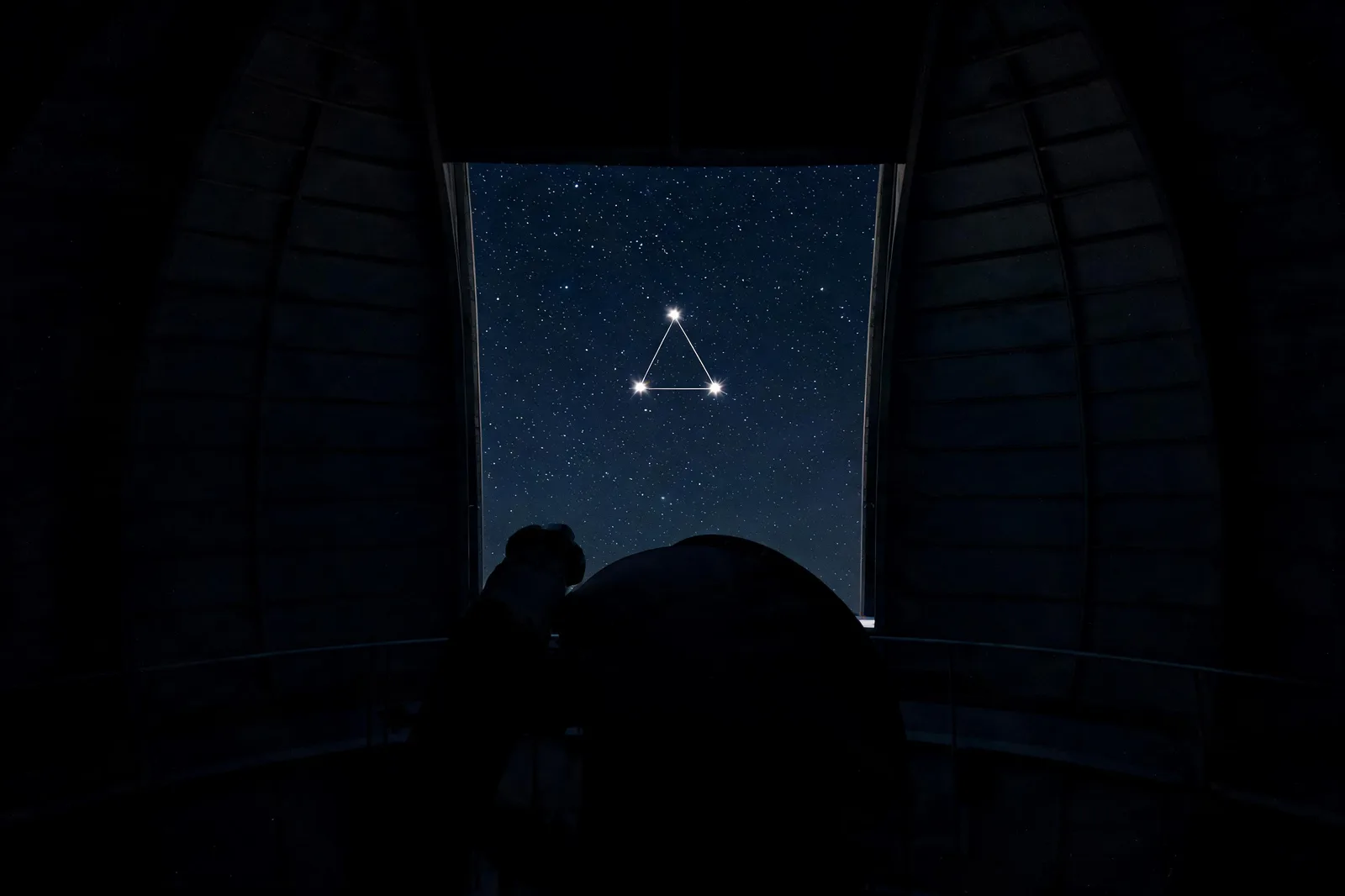
The supernal triangle names the three uppermost sephiroth on the Tree of Life, Kether, Chokmah and Binah, and Dion Fortune treated it as a region apart from the seven spheres below. She warned students not to expect the same kind of clear, applicable description she gave Tiphareth or Netzach; the supernals sit beyond the abyss, closer to pure principle than to lived, daily experience. As The Tree as a Map of Consciousness in Fortune's Qabalah explained, Fortune mapped each sphere to a real state of awareness, and the supernal triangle is where that mapping grows hardest and most careful.
Kether: The Crown Beyond Description
Kether, the first sephirah, represents undifferentiated unity, the point before any division into opposites. Fortune treated it almost apophatically: she described what Kether is not more confidently than what it is, following a long mystical habit of circling a mystery rather than pinning it down. In tarot correspondence, Kether pairs with the four aces, Ace of Wands — Root of the Powers of Fire, Ace of Cups — Root of the Powers of Water and Ace of Disks — Root of the Powers of Earth, each a seed-form of its element before any further shaping.
Fortune's caution here matters for readers: an ace in a spread signals pure, undirected potential, not yet a plan or a feeling with a particular shape. Treating it as a finished outcome misreads what the supernal level actually offers.
Chokmah: Wisdom as Pure Force
Chokmah, the second sephirah, is wisdom understood not as accumulated knowledge but as raw, outward-moving force, the first stirring of will after Kether's stillness. Fortune associated it with the zodiac as a whole, a sphere of dynamic energy not yet shaped by any single form. On the cards, Chokmah corresponds to the twos: Two of Wands — Dominion and Two of Cups — Love, each showing energy just beginning to organise itself into a relationship or a direction.
She treated Chokmah's outward, thrusting quality as needing Binah's answering structure to become anything workable, a pairing that recurs throughout her writing on polarity. Force without form, in her account, simply dissipates.
Binah: The Great Mother and Form
Binah, the third sephirah, gives Chokmah's force its shape, and Fortune wrote about it with unusual warmth, calling it the Great Mother, the womb that receives pure force and returns it as structure. Binah governs Saturn, limitation understood not as punishment but as the necessary boundary that lets anything exist as a distinct thing at all. On the cards, Binah corresponds to the threes, Three of Wands — Virtue and Three of Cups — Abundance, each showing an idea given its first real, if still difficult, form.
Fortune treated the Chokmah-Binah pairing as the Tree's primal polarity, force and form, and she read every later pair of opposites on the Tree, mercy and severity, Netzach and Hod, as an echo of this first division.
Why the Triangle Stays Separate
Fortune placed the abyss, and the hidden sphere Daath, directly beneath the supernal triangle, marking a real discontinuity in her model. Consciousness below the abyss works through contrast, this against that; consciousness at the supernal level, she suggested, works through a unity ordinary thought struggles even to picture. This is one reason she wrote comparatively little about these three spheres relative to the seven below: there was, in her own account, less that could honestly be put into plain English.
For a Thoth reader, the lesson carries forward into practice. An ace, a two or a three at the top of a spread often marks a beginning still too raw to fully name, closer to pure potential as philosophers have long discussed it than to any settled meaning a quick keyword list could supply.
Questions
What is the supernal triangle?
The three uppermost sephiroth on the Tree of Life, Kether, Chokmah and Binah, sitting above the abyss in a region Dion Fortune treated as closer to pure principle than daily experience.
Which tarot cards correspond to the supernal triangle?
The four aces correspond to Kether, the twos to Chokmah, and the threes to Binah, each showing an element in an early, still-forming stage.
Why did Fortune write less about these three spheres?
She considered them harder to describe honestly in plain language than the seven spheres below the abyss, which map more directly onto lived, daily states of mind.
What does Binah represent in Fortune's Qabalah?
Binah is the Great Mother, the sphere of form and limitation that gives Chokmah's raw force a workable shape.
This article talks about
You might also like
 Kabbalah
 Kabbalah
 Kabbalah
© 2026 TAROTS chat (tarots.chat). All rights reserved. No part of this article may be reproduced, distributed or adapted without the owner's written permission.
The Journal
 Symbolism
 Kabbalah
 Symbolism
 Cups
 Kabbalah
 Tarot Journal
 Symbolism
 Symbolism
 Kabbalah