The Motherpeace Tarot: Round Cards and Goddess Spirituality
by Redazione · 9 October 2026 · 5 min read
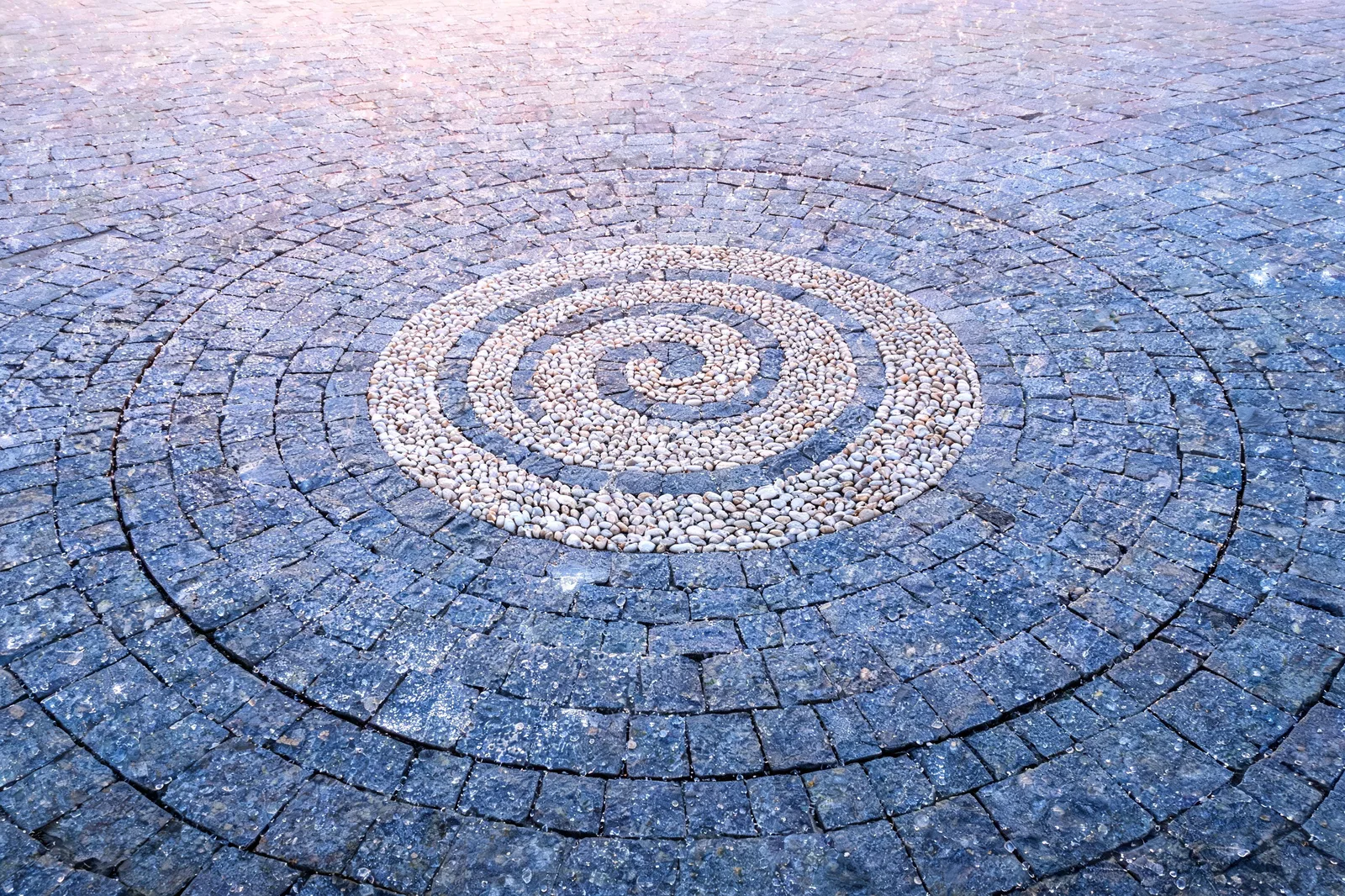
The Motherpeace Tarot is round, not rectangular, and that single decision announced everything else about the deck. Painted by Vicki Noble and Karen Vogel and first published around 1981, it grew out of the feminist spirituality movement of the late 1970s, drawing on prehistoric goddess figurines, Minoan frescoes and imagery borrowed from cultures across the world rather than from the playing-card lineage behind Marseille or Rider-Waite-Smith decks. The circular card was a deliberate break from a format readers had taken for granted since the fifteenth century.
Noble and Vogel were not illustrators by trade in the way Pamela Colman Smith or David Palladini were. Noble came from health activism and goddess-spirituality teaching, Vogel from fine art, and together they built a deck meant to carry an explicit argument: that the tarot's older imagery encoded patriarchal assumptions worth questioning, and that round cards without a fixed "top" could suggest a cyclical, non-hierarchical way of reading rather than a ladder from Fool to World.
Why round cards changed the reading itself
A rectangular card has an obvious orientation, upright or reversed, and a viewer reads it the way they read a page. A round card has no built-in top, so a reader rotates it until a detail feels right side up, which Noble and Vogel treated as part of the method rather than an inconvenience. The shape also let the artists compose scenes as circles and spirals instead of boxes, echoing the circular imagery already common in goddess-movement art: wheels, wombs, the phases of the moon. The The Priestess in this deck sits inside that visual logic comfortably, her authority drawn from older, pre-patriarchal sources rather than from the cloistered, book-holding figure familiar from most twentieth-century decks.
A deck with a book attached
Motherpeace was never meant to stand alone. Noble published an accompanying book not long after the cards appeared, laying out the deck's sources and its feminist reading of Major and Minor Arcana alike, reinterpreting court cards as shapeshifters and the suits through elemental, body-centred associations rather than courtly rank. That pairing of cards and book put Motherpeace closer to a teaching system than to a simple art object, even without any lodge or formal order behind it. Readers were expected to study the companion text, not just shuffle the cards.
Part of a broader turn toward goddess spirituality
The deck landed inside a wider current running through the same years as the The Aquarian Tarot: David Palladini's Art Nouveau Deck and the The Tarot Boom of the 1960s and 1970s: publishers discovering that readers wanted decks that reflected their own politics and identities, not only a fixed esoteric canon. Where Palladini's cards updated the look of an existing structure, Motherpeace rewrote the structure's sources entirely, pulling in prehistoric and non-European imagery that most earlier card designers, including Pamela Colman Smith: The Artist Behind 78 Images, had never drawn on. It is one of the clearest examples in tarot history of a deck built to argue a thesis rather than simply to illustrate one.
The Motherpeace Tarot's reception and lasting reputation
Motherpeace became one of the most recognisable decks associated with 1980s feminist spirituality. It is still in print decades later. Writers still cite it whenever they discuss how the tarot absorbed second-wave feminist ideas. It drew criticism too, particularly over how freely it borrowed imagery from cultures the authors had not grown up in. Tarot scholarship has only grown more careful about that kind of borrowing since. That tension does not erase the deck's historical weight. It showed that the format itself, card shape included, could carry as much meaning as the pictures painted on it.
Later feminist and goddess-themed decks owe it a direct debt, even when they kept the standard rectangular shape. Several explicitly credit Motherpeace as the project that proved a deck could centre women's bodies, prehistoric myth and non-Western cosmology without losing coherence as a reading system. Academic writing on tarot history now treats it as a case study in how a deck can function as cultural argument, not only as a divination tool, alongside other politically motivated decks that followed in its wake during the 1980s and 1990s.
For a reader today, Motherpeace is worth knowing even outside its own tradition. It asks a useful question of any deck: whose assumptions sit inside the images we have learned to trust. More on the feminist spirituality movement that shaped it is on the Goddess movement Wikipedia page.
FAQ
Who created the Motherpeace Tarot? Vicki Noble and Karen Vogel painted the deck together, drawing on goddess-spirituality imagery from many cultures.
Why are the cards round instead of rectangular? The circular shape avoided a fixed "top," which the creators linked to cyclical, non-hierarchical reading rather than a strict upright-reversed system.
Does Motherpeace follow Rider-Waite-Smith card meanings? No. It reinterprets the Major and Minor Arcana through feminist and goddess-spirituality themes rather than the earlier scene-based system.
Is there a book that goes with the deck? Yes. Vicki Noble wrote a companion volume explaining the deck's sources and its reading method in detail.
Questions
Who created the Motherpeace Tarot?
Vicki Noble and Karen Vogel painted the deck together, drawing on goddess-spirituality imagery from many cultures.
Why are the cards round instead of rectangular?
The circular shape avoided a fixed "top," which the creators linked to cyclical, non-hierarchical reading rather than a strict upright-reversed system.
Does Motherpeace follow Rider-Waite-Smith card meanings?
No. It reinterprets the Major and Minor Arcana through feminist and goddess-spirituality themes rather than the earlier scene-based system.
Is there a book that goes with the deck?
Yes. Vicki Noble wrote a companion volume explaining the deck's sources and its reading method in detail.
This article talks about
You might also like
 Symbolism
 Symbolism
 Symbolism
© 2026 TAROTS chat (tarots.chat). All rights reserved. No part of this article may be reproduced, distributed or adapted without the owner's written permission.
The Journal
 Tarot Journal
 Thoth Tarot
 Kabbalah
 Disks
 Major Arcana
 Kabbalah
 Symbolism
 Symbolism
 Kabbalah