Court de Gebelin and the Egyptian Myth of 1781
by Redazione · 7 October 2026 · 8 min read
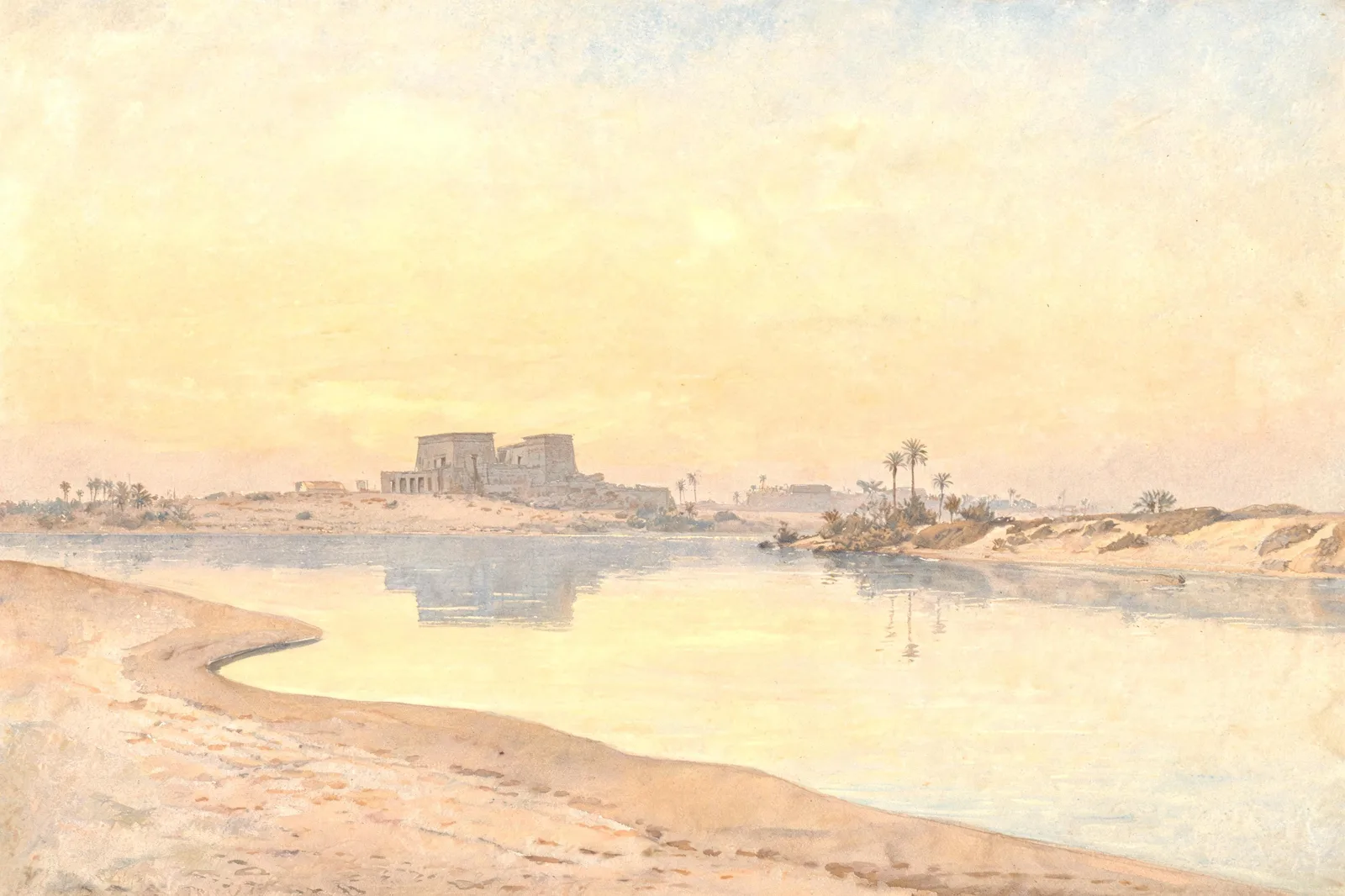
The court de gebelin egyptian tarot myth is the single most consequential error in the whole history of the deck. It is also the one that gave the deck its aura. In 1781, a Protestant pastor from Nîmes named Antoine Court de Gébelin published a claim that changed what the cards were. He said the tarot was not a game. He said it was a surviving fragment of Egyptian priestly wisdom, the ancient Book of Thoth, encoded in pictures. That claim had no evidence behind it. He did not have the hieroglyphs, because no one could read them yet. Champollion was still thirty years away. He had a feeling, and a method of guessing, and the confidence to print both. And it worked. The deck that had been a card game for two hundred years became, in a single volume, a sacred text. Everything after it, from Etteilla's Invention: The First Tarot Interpretation System (Etteilla's Invention) onward, was built on the ground this myth broke.
The man who wrote it
Antoine Court de Gébelin was born in Nîmes on 25 January 1725, and he died in Paris on 10 May 1784. He was a Protestant pastor before he became an occultist. That is the detail most retellings drop. He was not a mystic by training. He was a clergyman who turned his mind to the question of an original, unified knowledge of the ancient world. His great work was Le Monde primitif, analysé et comparé avec le monde moderne, the Primeval World analyzed and compared with the modern world. He published it in parts from 1773, in a series addressed to a list of subscribers that was headed by King Louis XVI. It was an encyclopedic project, ambitious and uneven. It was not a book about the tarot. The tarot was one chapter inside a much larger design.
The chapter that started the court de gebelin egyptian tarot myth
The chapter is titled Du jeu des Tarots, on the game of the tarot. It appeared in volume eight of Le Monde primitif, in 1781. It is a single section inside a vast compendium, not a dedicated study. The Wikipedia entry for Antoine Court de Gébelin is clear that the chapter on the tarot is the one with which his name is indelibly associated, and that it is a single section of the work he published in series. He wrote without any decipherment of the Egyptian language. He wrote without a single piece of historical evidence that the deck was Egyptian. He wrote with a claim that the Egyptian priests had distilled an ancient book of Thoth into these images. That is the entire load-bearing argument. A book that had no reader, in a language that could not be read, had supposedly left its contents in a deck of cards.
The method behind the claim deserves a sentence of its own. De Gébelin reasoned by etymology and by analogy. He took a French word and found a Greek or Hebrew word that sounded close, and called that a discovery. He took a picture in the deck and matched it to an Egyptian image he had seen, and called that a proof. There was no chain of evidence. There was no manuscript, no inscription, no artifact. There was a chain of guesses, each one plausible enough to stand next to the last. That is why it read so well. It had the shape of a demonstration. It was not one. A reader who could not see the absence of evidence, because the absence is hard to see in print, could easily read a reconstruction as a recovery.
The 22 trumps and the 22 letters
The specific move that gave the myth its structure was the numbering. The tarot has twenty-one trumps, and then the Fool. That is twenty-two cards. The Hebrew alphabet has twenty-two letters. Court de Gébelin set the two against each other and made them correspond. The trumps became the letters. The Fool became the twenty-second. This was not his alone. An essay by the Comte de Mellet, included in the same volume of Le Monde primitif, is the one responsible for the mystical connection of the twenty-one trumps and the Fool with the twenty-two letters of the Hebrew alphabet. The University of Manitoba journal article on the tarot in late Enlightenment France traces this pairing and the broader Egyptian claim through the primary literature. The point is not that the pairing is wrong. The point is that it was made, in 1781, by men who had no evidence for it, and it then became the frame that everyone else worked inside. When you read the The Fool (Fool) as the twenty-second letter, you are reading inside that frame. The card did not demand it. The 1781 chapter did.
Why the myth worked
A myth without evidence can still do enormous work, if it arrives at the right moment. Eighteenth-century France was in the grip of Egyptomania. Egypt was fashionable in the salons and in the secret societies. A deck of cards that could be presented as a surviving fragment of Egyptian wisdom fit that moment exactly. It gave a card game a dignity it had never had. It turned a pastime into a relic. And it gave the card readers, Etteilla first of them, a foundation on which to build a reading system. The myth and the method were not separate things. The myth said the deck was a sacred text. The method said therefore it could be read. One needed the other. Without the Egyptian origin, the cards were a game. With it, they were a book.
The timing is the part that matters most. The chapter appeared in 1781. Two years later, in 1783, Etteilla published his reading system. The sequence is not a coincidence. The Egyptian claim created a need, and the reading system filled it. A deck that was a game did not need a method of interpretation. A deck that was a sacred text did. The myth opened a door that had not existed before, and the method was the first thing walked through it. After that the two were inseparable. You could not read the deck as a game, because it was now a book. And you could not read it as a book, because the method told you how. The deck had become a language, and the myth was the grammar.
What modern scholarship says now
The modern answer is short, and it is the opposite of the myth. The tarot is a fifteenth-century Italian card game. Its earliest documented form is a game of tricks. The Egyptian origin has never been verified, because it cannot be. There is no Egyptian source, no manuscript, no artifact that connects the deck to the priests of Memphis. The Book of Thoth is a legendary figure, not a documented text. The Wikipedia entry says it directly. There is no evidence to support the Egyptian lineage. The pairing of the trumps with the Hebrew letters is a seventeenth-century idea, not an Egyptian one. None of this is a dismissal of the deck. It is a correction of its biography. The deck is rich, and the meanings are real to those who use them. But they were authored, not discovered. They were added to a card game by men in the late eighteenth century who had a feeling and a fashion and no evidence.
The scholars who have worked the primary text are blunt about the method. A University of Manitoba journal article, Tarot in Late Enlightenment France, examines the chapter in the original context and finds that the process lacked scientific validity. The deductions, it says, were based on personal intuition and guesswork. The author of that study, writing from the primary sources, does not call the claim a discovery. He calls it a reconstruction built on intuition. That is the honest summary of the myth. It was a reconstruction. It was a good reconstruction, in the sense that it was coherent and seductive. But it was a reconstruction, and it has never been replaced by evidence. Three centuries of tarot have grown out of a single unproven chapter, and none of them has found the Egyptian manuscript that the chapter promised.
What this does to the Thoth deck
The Thoth deck takes the Egyptian frame seriously. It is named for the god, and it is built as if the frame were true. That is a legitimate artistic and spiritual choice. What this history adds is the date. The Egyptian idea is from 1781. The Hebrew letters were laid on the trumps in the same volume. The tree and the planetary layer came after, in the nineteenth and twentieth centuries. The Thoth deck is the most complete expression of a tradition that began as a single unproven chapter in an encyclopedia. Knowing that does not subtract from the deck. It tells you exactly what layer you are reading. You are reading a meaning that was invented, in a specific year, by a specific man, on the strength of a feeling. And you are reading it well. That is the difference between a deck and a tradition, and the Thoth deck lives in the second.
Questions
What did Court de Gébelin claim about the tarot in 1781?
He claimed the tarot was a surviving fragment of Egyptian priestly wisdom, the ancient Book of Thoth, encoded in pictures. The claim appeared in volume eight of Le Monde primitif.
Did Court de Gébelin have evidence for the Egyptian origin?
No. He wrote before Champollion could read hieroglyphs, with no manuscript or artifact. His method was etymology and analogy, which modern scholarship calls intuition and guesswork.
Who connected the 22 trumps to the 22 Hebrew letters?
An essay by the Comte de Mellet, included in the same volume of Le Monde primitif. The pairing is a seventeenth-century idea, not an Egyptian one.
What does modern scholarship say now?
The tarot is a fifteenth-century Italian card game. The Egyptian origin has never been verified, because it cannot be. The myth is a reconstruction, not a recovery.
Does this history subtract from the Thoth deck?
No. It gives you the date on each layer. The Egyptian idea is from 1781. The letters, tree, and planetary layer came after. Knowing the order tells you exactly what you are reading.
This article talks about
- #series-before-the-esotericists-the-tarot-as-a-game-1450-1780
- #tarot decks
- #tarot symbolism
- #thoth tarot
You might also like
 Thoth Tarot
 Thoth Tarot
© 2026 TAROTS chat (tarots.chat). All rights reserved. No part of this article may be reproduced, distributed or adapted without the owner's written permission.
The Journal
From the Journal
Chosen for this page
 Thoth Tarot
A Game Called Trionfi: What the Visconti-Sforza Deck Actually Is
10 min read
More in Thoth Tarot Thoth Tarot
 Thoth Tarot
 Kabbalah
 Major Arcana
 autumn
 Kabbalah