The Nine of Swords, Cruelty: Mars in Gemini
by Redazione · 9 October 2026 · 5 min read
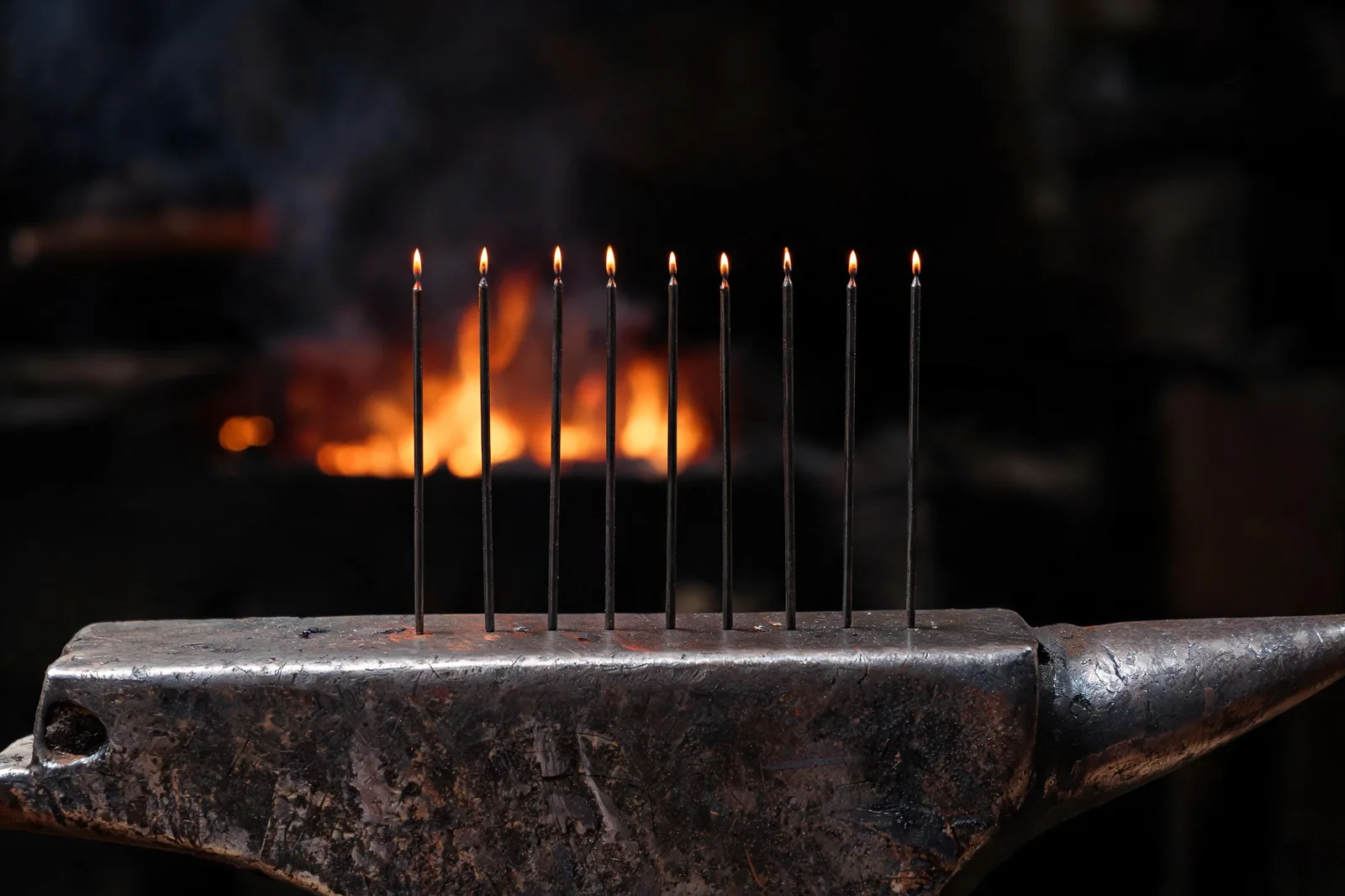
Crowley titled the Nine of Swords Cruelty, the bluntest word in the whole suit. After The Eight of Swords, Interference: Jupiter in Gemini left the mind merely overloaded, the nine of swords cruelty pairing shows what that same intellect can do once it stops being confused and starts being deliberate. This is Thoth's clearest picture of thought used as a weapon, pointed and precise, with none of the Eight's accidental tangle left in it.
The Decan: Mars in Gemini
The Golden Dawn placed the Nine of Swords in the second decan of Gemini, roughly 1 to 10 June, ruled by Mars. Gemini's duality supplies the words, the angles, the endless capacity to argue two sides of anything; Mars supplies the will to use that duality as an attack. Mars is the planet of aggression and cutting force, and inside Gemini's airy cleverness it rarely produces a blunt blow. It produces something sharper and more targeted: words chosen to wound precisely, repeated until they land. Tradition holds that this decan is the suit's harshest, because Mars here has Gemini's full vocabulary to draw on rather than a single weapon. Compare it to the Eight's Jupiter: that decan multiplied signals until the mind could not sort them; this one narrows all of Gemini's range down to a single, exact point of attack, which is a different and more deliberate kind of difficulty.
Yesod and the Image That Will Not Let Go
Every nine in the Thoth deck answers to Yesod, the ninth Sephirah, called Foundation. Yesod is the sphere of the image-making faculty, of dream, reflection and the patterns the mind replays beneath ordinary awareness. Yesod, Foundation, and the Four Nines traces how each suit's nine shows an idea reaching its fullest, most repeated form just before the Ten completes it. In Swords, Yesod's gift for reflection becomes an image that keeps recurring on its own terms: a cutting remark relived, a calculated unkindness turned over and over. The card's cruelty is as much about repetition as about the original cut — Yesod replaying what Mars and Gemini together made sharp enough to stick. Yesod sits directly above Malkuth, the final, material Sephirah, which is one reason the Nines across the deck often feel so close to completion already — whatever they carry is nearly ready to become fact, for better or worse, once the Ten arrives.
Reading the Image: Blades Arranged Like a Private Rehearsal
Harris painted the Nine of Swords with its blades set close and vertical, dark and deliberate, in a composition that reads as confined and inward rather than open to view. Unlike the Eight's chaotic crosshatch, this arrangement feels ordered with intent — a precise, almost ceremonial display rather than an accident. Crowley's own commentary names this as the suit's picture of calculated unkindness: not rage breaking out, but intellect applied coldly, aware of exactly where it is aimed. It is worth separating this firmly from a clinical account of inner suffering, which belongs to other fields entirely. The card describes a quality of mind — deliberate harm, or its replay — not a diagnosis, and no tarot reading stands in for one. Readers who recognize something more serious in their own life are better served by someone qualified in that field than by any card, however sharply it names the pattern.
Cruelty as a Symbol, Not a Sentence
Treated as symbolism rather than prophecy, the Nine of Swords is useful precisely because it names something readers already recognize: a remark made to wound, a grudge nursed past any practical purpose, a pattern of harm that keeps circling back to the same target. The card does not say this cruelty is permanent or that the person who drew it is condemned to it. Thoth's design, severe as it is, sits inside a suit that still has a Ten and a full set of court cards ahead of it — the story is not over at the Nine, however sharp this particular chapter reads. Comparing it with the suit's earlier nines of recovery, the Six, is instructive: that card proved the mind can build something reliable; this one shows what the same precision costs when it is aimed to harm instead.
The Nine of Swords in a Reading
Set beside Swords Suit Symbolism in the Thoth Tarot: Air, Intellect and Conflict, the Nine of Swords marks Air's capacity for harm at its most concentrated and least accidental. In Celtic Cross, it often names the sharpest, most deliberate element in a difficult situation, worth naming honestly rather than softening. A TAROTS chat session treats this card as a symbol of intellect turned pointed and cold, asking where that sharpness came from and whether it still serves anyone, without turning the card into a verdict on anyone's character. The series closes next with the Sun in Gemini, where the suit's long account finally comes due, and every decan from the Two's uneasy peace onward is weighed together in one last, unambiguous card.
Questions
What does the Nine of Swords mean in the Thoth Tarot?
Crowley titled it Cruelty: thought used deliberately as a weapon, a calculated unkindness rather than a chaotic or accidental harm.
Why is the Nine of Swords linked to Mars in Gemini?
The Golden Dawn assigned the second decan of Gemini, roughly 1 to 10 June, to Mars. Mars's aggression, given Gemini's full vocabulary, becomes precise rather than blunt.
What Sephirah governs the Nine of Swords?
Yesod, the ninth Sephirah, called Foundation. It governs the image-making faculty, and in the suit of Swords it replays a sharp thought until it becomes a fixed pattern.
Is the Nine of Swords a card about mental health?
No. It is read here purely as a symbol of calculated unkindness in a Thoth suit built on intellect and conflict, not as commentary on any health condition.
This article talks about
You might also like
 Swords
 Swords
 Swords
© 2026 TAROTS chat (tarots.chat). All rights reserved. No part of this article may be reproduced, distributed or adapted without the owner's written permission.
The Journal
 Kabbalah
 Kabbalah
 Thoth Tarot
 Relationships
 Love
 Symbolism
 Symbolism
 Symbolism
 Kabbalah