From Parlor Game to Sacred Text: The 1780s Turning Point
by Redazione · 7 October 2026 · 8 min read
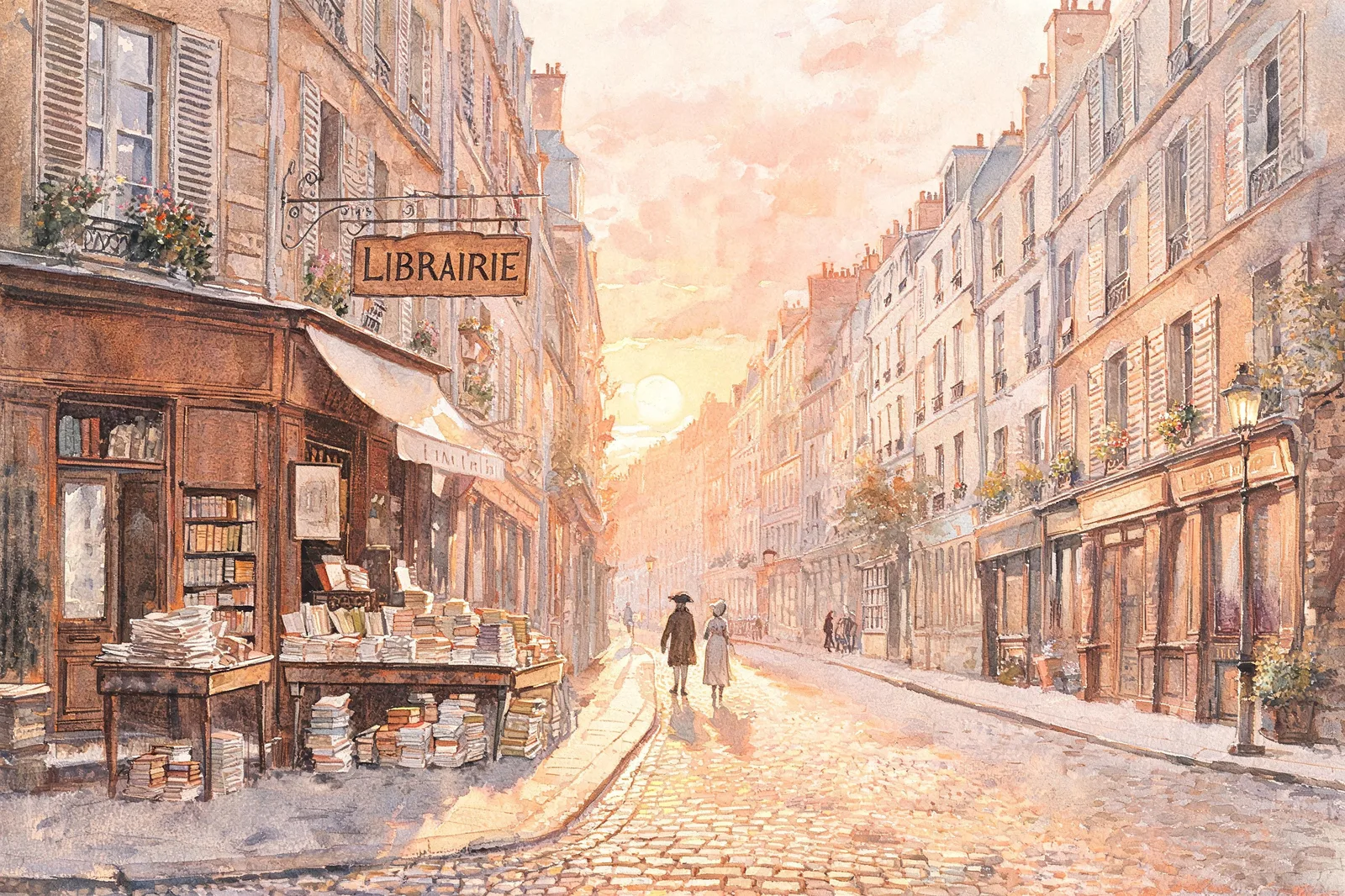
The tarot esoteric history begins in the 1780s, in Paris, and it begins with a card game. That is the whole of the story the series has been building. For two centuries the tarot was a trick-taking game, a standard pack of cards printed in runs and played for points. The esoteric tarot, the deck as a book of wisdom, the major arcana as a map of the soul, none of that existed before 1781. It was invented, in a narrow window of about a decade, by men who had the Marseille pattern and a feeling and no evidence. This is the fifth and final part of the series «Before the Esotericists: The Tarot as a Game, 1450-1780». It is the synthesis. It takes what the previous parts showed, the game, the pattern, the Egyptian myth, the first reading system, and puts it in the order that actually happened.
The state of the deck before 1781
Before 1781, the tarot was a card. It was a standard pattern, the marseille tarot pattern, that the The Card Before the Deck Was Esoteric: Marseille Pattern and the Game's Rules (Marseille Pattern) article set out. It was a seventy-eight-card pack, Italian in its suits, played as a trick-taking game. The cards had names, but the names were playing names. The Fool was the matto. The Death card was il Tredici, or lo Specchio, or Uguaglianza, depending on where you were. Those were local nicknames for a card in a game, not the titles of a sacred text. There was no reading system. There was no claim that the deck was a book. There was no Egyptian origin. There was no Book of Thoth. There was a game, and a standard pack, and players who knew the rules.
That is the baseline. Everything the esoteric tradition calls history, from the moment it claims to have history, is built on top of this baseline. The deck did not change. The pattern is the same pattern that is printed today, in the Marseille deck and in the derivatives of the Rider-Waite deck. What changed was not the deck. What changed was what people thought the deck was. And that change happened in the 1780s, in Paris, in a narrow window.
The 1780s: the window in tarot esoteric history
The window is roughly 1781 to 1791. Inside it, two things happened, in that order. First, a claim. In 1781, Antoine Court de Gébelin wrote the chapter of Le Monde primitif that declared the tarot a surviving fragment of Egyptian wisdom, the ancient Book of Thoth, encoded in pictures. The Court de Gebelin and the Egyptian Myth of 1781 (Court de Gébelin) article showed how the claim was built, on etymology and analogy, with no manuscript, no artifact, and no reading of the Egyptian language. The claim was not a discovery. It was a reconstruction. But it was a coherent reconstruction, and it arrived at the moment France was in the grip of Egyptomania. It gave the deck a dignity it had never had. It turned a pastime into a relic. The Wikipedia entry on Court de Gébelin is direct that the chapter on the tarot is the one with which his name is indelibly associated, and that it is a single section of a larger work, not a dedicated study.
Second, a method. In 1783, Jean-Baptiste Alliette, who wrote under the name Etteilla, published the first tarot reading system. The Etteilla's Invention: The First Tarot Interpretation System (Etteilla) article showed what the method was, a system of upright and reversed meanings, suited to a deck, built on the Marseille pattern because that was the deck he had. The method did not create the meanings out of nothing. It took the pictures that the game already had and assigned them a meaning. The Fool, the Magician, the High Priestess, these were already there as cards in the pack. Etteilla gave them a reading. The Wikipedia entry on Etteilla is clear that he was the first to produce a tarot deck designed specifically for divination, and that the system of upright and reversed meanings is the one that every later reading inherits.
The two events are not independent. The claim created a need, and the method filled it. A deck that was a game did not need a method of interpretation. A deck that was a sacred text did. The Egyptian claim opened a door that had not existed before, and the reading system was the first thing walked through it. After that the two were inseparable. You could not read the deck as a game, because it was now a book. And you could not read it as a book, because the method told you how. The deck had become a language, and the myth was the grammar, and the method was the conjugation.
What the window produced
The window produced three things, and all three are still with us. The first is the claim of antiquity. The tarot, in the telling, is older than the deck. It is a surviving fragment of a wisdom tradition, Egyptian, Hebrew, or both. That claim is the foundation of the esoteric tarot. It is why the deck is treated as a text to be decoded, not a game to be played. It is why a reader pulls a card and reads a meaning rather than playing a trick. The claim is the premise, and the premise is from 1781.
The second is the reading system. The method of upright and reversed meanings, the suited meanings, the trumps as a fixed sequence, all of it descends from Etteilla. Every later reading system, from the Golden Dawn to the Rider-Waite to the Thoth deck, is a descendant of that 1783 book. The system is not a discovery of what the cards meant. It is an invention of what the cards could mean. And it was invented by a man who had a deck and a method, not a sacred text.
The third is the separation of the deck from the game. Before the window, the deck and the game were the same thing. You had the deck to play the game. After the window, the deck and the game began to diverge. The deck became a book. The game became a pastime. Around 1900, French players largely abandoned the Marseille pattern for the Tarot Nouveau, and the Marseille pattern was left to the cartomancers. The game and the reading, which once lived in the same pack, ended up on two different packs. The window produced the separation that makes the esoteric tarot possible. Without it, there would be no deck to read, because the deck would still be a game.
The order that matters
The order is the part the esoteric tradition never tells. It tells the story as a recovery. The deck is a book of wisdom. The esotericists discovered what the deck meant. The meanings were always there. That is the story, and it is backwards. The actual order is the reverse. The deck was a game. The meanings were invented. The game came first. The meanings came second. The deck did not carry the meanings. The meanings were put on the deck.
That order changes what you are doing when you read a card. If the meanings were discovered, you are reading a text that was always there. If the meanings were invented, you are reading a text that was written, in the 1780s, by men who had a feeling and a fashion and no evidence. Neither is more or less real. The meanings work. They have worked for two and a half centuries. But they have a date. They have an author. They have a chain of invention that starts in Paris in 1781 and runs through 1783 and out to the present. The order is the biography of the deck, and the biography is that it was a game, and then it was a book.
What the series shows, in one line
The tarot was a card game for two centuries before anyone read it mystically. The esoteric meanings were invented from 1781 onward, and every later attribution descends from that invention rather than from the cards. That is the thesis of the series, and it is the whole of the tarot esoteric history. The deck did not become a book of wisdom because it was one. It became a book of wisdom because a man in 1781 said it was, and a man in 1783 showed how to read it, and two and a half centuries have lived inside that frame ever since. The frame is real. The meanings are real. The origin of both is the 1780s. And knowing that does not subtract from the reading. It gives it a date, an author, and a lineage. It tells you exactly what you are holding, and where every layer of it came from.
That is the turning point. It is not a moment when the deck changed. It is a moment when the deck was told it had always been something else, and the telling stuck. The card game became a sacred text not because it was one, but because it was made one, and the making was good enough to last. The tarot esoteric history is the history of that making, and it begins, and it begins, in Paris, in the 1780s, with a deck that was a game.
Questions
When did the tarot esoteric history begin?
In the 1780s in Paris. Court de Gébelin's 1781 claim that the deck was ancient Egyptian wisdom, followed by Etteilla's 1783 reading system, started the esoteric tradition.
Was the tarot a game before it was esoteric?
Yes. For two centuries it was a trick-taking card game, the Marseille pattern. The esoteric meanings were invented from 1781 onward, not discovered.
What did the 1780s produce?
Three things: the claim of antiquity, the reading system, and the separation of the deck from the game. All three are still the foundation of the esoteric tarot.
Did the deck itself change?
No. The pattern is the same standard pack. What changed was what people thought it was, from a game to a sacred text.
Does knowing the origin subtract from a reading?
No. It gives the reading a date, an author, and a lineage. The meanings are real, and their origin is the 1780s.
- #series-before-the-esotericists-the-tarot-as-a-game-1450-1780
- #tarot decks
- #tarot symbolism
- #thoth tarot
You might also like
 Thoth Tarot
 Thoth Tarot
© 2026 TAROTS chat (tarots.chat). All rights reserved. No part of this article may be reproduced, distributed or adapted without the owner's written permission.
The Journal
From the Journal
Chosen for this page
 Thoth Tarot
A Game Called Trionfi: What the Visconti-Sforza Deck Actually Is
10 min read
More in Thoth Tarot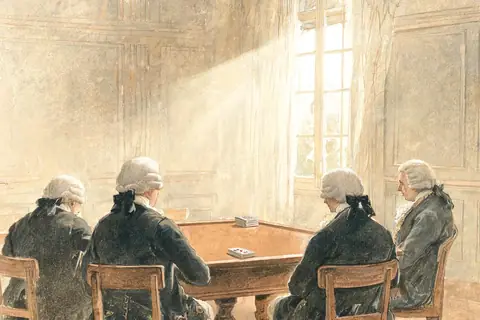 Thoth Tarot
The Card Before the Deck Was Esoteric: Marseille Pattern and the Game's Rules
9 min read
More in Thoth Tarot Thoth Tarot
 Thoth Tarot
 Kabbalah
 Kabbalah
 Symbolism