W. B. Yeats and the Golden Dawn Tarot
by Redazione · 9 October 2026 · 5 min read
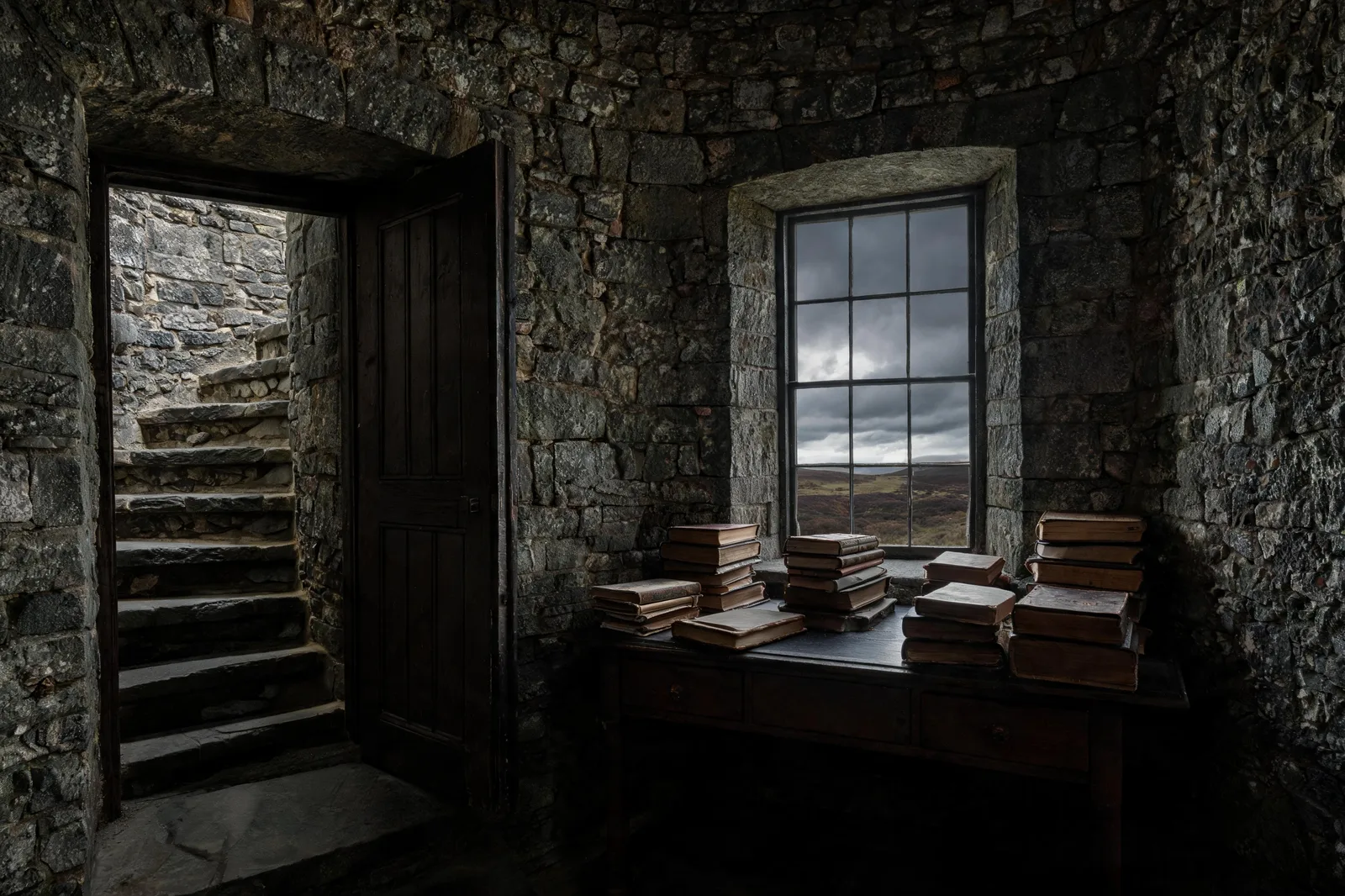
Yeats tarot study ran far deeper than the borrowed symbolism T. S. Eliot's Tarot in The Waste Land traced through Eliot's poem. Where Eliot openly admitted inventing cards for poetic convenience, Yeats studied the tarot as part of a real curriculum, inside the Hermetic Order of the Golden Dawn, which he joined in London in 1890 under the magical motto Daemon est Deus Inversus.
Yeats rose through the order's grades over the following decade, taking its teaching on the tarot, the Tree of Life and ceremonial magic seriously enough to practise ritual work alongside his literary career rather than treating occultism as a passing curiosity. He remained a committed member for roughly three decades, well past the point where many literary contemporaries had drifted away from organised esoteric societies, and he continued privately practising magic long after the order itself fractured.
Friendship with Pamela Colman Smith
Yeats's occult circle overlapped directly with the artist who would later define the tarot's visual language for most English-speaking readers. Pamela Colman Smith: The Artist Behind 78 Images illustrated Yeats's poetry collection The Wind Among the Reeds years before she painted the deck now called the Rider-Waite-Smith tarot, and both moved in the same London artistic and esoteric circles that fed into the Golden Dawn's membership. Smith was never as central to the order's ceremonial life as Yeats, but their working relationship shows how tightly the literary, artistic and occult worlds of 1890s London were woven together.
A system builder, not a casual borrower
Yeats's own mature occult project, laid out in his 1925 book A Vision, built an elaborate personal cosmology around phases of the moon, historical cycles and opposing psychological types, developed partly through automatic writing sessions with his wife George. The structure owes more to astrology and Golden Dawn-style systematic correspondence than to any single tarot card. Still, the underlying impulse matches the tarot's own logic closely: a wheel of recurring stations, each representing a distinct phase of experience, not unlike Fortune read as a cycle rather than a single fixed meaning.
Defending the order's authority
Yeats's commitment to the Golden Dawn was tested directly in 1900, when a dispute over the order's leadership brought him into open conflict with a younger member soon to become far more famous in tarot history than any dispute over a London vault. That episode, often called the Battle of Blythe Road, belongs to a different telling than this one. What matters here is that Yeats sided firmly with institutional continuity and the order's existing teaching structure, a position consistent with how seriously he treated the system's authority throughout his involvement.
Tarot imagery in the yeats tarot poems
Direct tarot references are rarer in Yeats's verse than readers might expect from so committed an initiate, appearing more as structural influence than explicit card-by-card symbolism. Towers recur throughout his work, most famously in the collection The Tower, carrying associations of isolation, historical weight and hard-won wisdom. These overlap suggestively with The Tower's traditional meanings of sudden collapse and revelation, though Yeats drew the image as much from his own residence at Thoor Ballylee as from any card. His poetry works by accumulated symbolic resonance rather than by naming specific trumps, a more oblique method than Eliot's direct, if inaccurate, citation of named cards.
A common misreading of Yeats's occultism
Literary critics for decades treated Yeats's occult involvement as an embarrassing eccentricity best minimised beside his public reputation as a serious poet and senator of the Irish Free State. That framing gets the relationship backwards. Yeats himself insisted, across letters and essays, that his magical practice was not decoration for his poetry but a primary source of its imagery and structure: the symbols were not invented for metaphor's sake but studied as if they described something real.
Later scholarship, drawing on the Golden Dawn's surviving papers and Yeats's own private magical diaries, has largely reversed the older dismissive view. Readers who skip the occult material to focus only on the published poems miss how deliberately he built correspondences between ritual grades, tarot-linked symbolism and recurring images in his verse. A poem like "The Second Coming," with its gyre widening beyond control, reads differently once a reader knows Yeats meant the gyre as a real structural principle, borrowed from the same tradition of systematic correspondence that organised the Golden Dawn's tarot teaching, not as a loose metaphor reached for on the page.
Why the comparison matters
Setting Yeats beside Eliot clarifies two very different relationships a major poet can have with the tarot: one treating it as lived practice and lifelong study, the other as borrowed atmosphere for a single poem. Both produced major literary work touched by the cards, but only one would have recognised, and corrected, an error in the deck's actual structure. The two models persist in how later writers use the tarot today, some studying the system closely before building it into fiction or verse, others reaching for a familiar card name the way Eliot once did, as shorthand a reader will recognise without either writer needing deep grounding in the tradition itself.
For a fuller account of his life and occult involvement, see the Wikipedia article on W. B. Yeats.
Questions
Was W. B. Yeats a member of the Golden Dawn?
Yes. He joined the Hermetic Order of the Golden Dawn in London in 1890 and remained an active, ritually engaged member for roughly three decades.
Did Yeats work with Pamela Colman Smith?
Yes. Smith illustrated Yeats's poetry collection The Wind Among the Reeds years before she painted the deck now known as the Rider-Waite-Smith tarot.
Does Yeats's poetry mention tarot cards directly?
Rarely by name. His tower imagery, especially in the collection The Tower, resonates with the Tower trump's themes of collapse and revelation more than it cites the card explicitly.
What is Yeats's A Vision about?
A 1925 book laying out his own occult cosmology of lunar phases and historical cycles, developed partly through automatic writing sessions with his wife George.
This article talks about
You might also like
 Symbolism
 Symbolism
 Symbolism
© 2026 TAROTS chat (tarots.chat). All rights reserved. No part of this article may be reproduced, distributed or adapted without the owner's written permission.
The Journal
From the Journal
Chosen for this page
 Love
 Love
 Thoth Tarot
The Card Before the Deck Was Esoteric: Marseille Pattern and the Game's Rules
9 min read
More in Thoth Tarot Symbolism
 Love
 Kabbalah
 Symbolism
 Symbolism
 Kabbalah