Jodorowsky's Tarot: Restoring the Marseille Deck with Camoin
by Redazione · 9 October 2026 · 5 min read
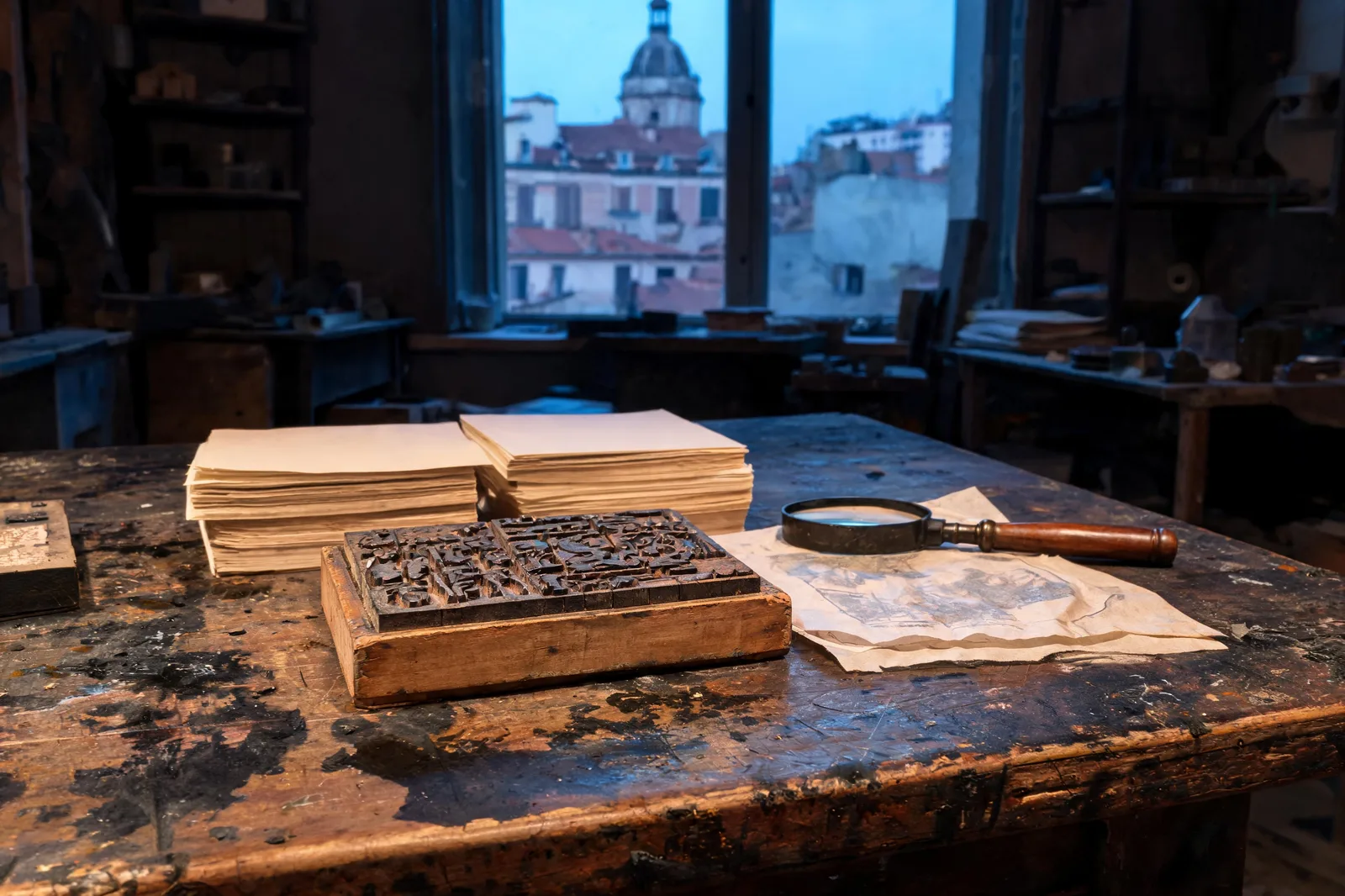
Jodorowsky's tarot is not a new deck so much as an attempt to undo centuries of printing drift and recover an older one. Alejandro Jodorowsky, the Chilean-French filmmaker behind El Topo and The Holy Mountain, spent years working with Philippe Camoin. Camoin was heir to a Marseille card-printing house with roots in the nineteenth century. Together they compared dozens of historical Tarot de Marseille editions, trying to reconstruct what they believed was the tradition's original, uncorrupted form. The result, published in the late 1990s as the Camoin-Jodorowsky Tarot de Marseille, reads less like an artist's new vision and more like a restoration project applied to a deck instead of a painting.
Jodorowsky had been reading and teaching the tarot informally for decades before the restoration project, treating it as a tool for what he called "psychomagic" and later psychogenealogy rather than as fortune-telling. His interest in the Marseille pattern specifically, rather than Rider-Waite-Smith or Thoth, set him apart from most of the other twentieth-century figures this series has covered. He argued that the woodblock-printed Marseille cards, precisely because they were mass-produced by unglamorous commercial printers rather than painted by esoteric initiates, preserved an older symbolic logic more faithfully than any single artist's reinterpretation could.
Comparing printers instead of painting a deck
The restoration method itself was unusual for a tarot project. Camoin and Jodorowsky gathered surviving Marseille decks from different printers and periods, including the eighteenth-century work associated with Nicolas Conver and the Tarot de Marseille of 1760. They compared details card by card: a line here worn down by a damaged printing block, a colour there simplified by a cheaper printing process. Where editions disagreed, they tried to judge which variant was an error introduced later and which preserved the earlier pattern. The project treated the deck the way a text critic treats a manuscript tradition, looking for the reading most likely to be original rather than inventing a preferred one.
What the Jodorowsky tarot restoration changed, card by card
Several results stand out. The The Fool regained details the pair considered later simplifications. Colour choices across the Major Arcana were adjusted too, to match what Camoin and Jodorowsky took as the printers' original palette. Later substitutions had crept in, they argued, whenever certain pigments became expensive or unavailable. None of this amounted to a redesign. The changes were meant to be invisible to a casual viewer and significant only to someone comparing printings side by side, which is exactly the audience Jodorowsky's own later writing addressed.
A common misconception about the project
Readers sometimes assume Camoin and Jodorowsky painted a new interpretive deck, the way Palladini or Niki de Saint Phalle did. That misreads the project entirely. Nothing in the restored deck is an invention credited to either man; every choice was presented as a decision about which historical printing to trust, argued from comparison rather than from personal symbolism. A reader drawn to their deck for its "authenticity" should understand that claim as a scholarly position open to debate, not as a settled fact closing the question.
The Way of Tarot and a teaching built around the deck
Jodorowsky later wrote at length about the restored deck and his reading method, most fully in a book co-written with Marianne Costa and published in English as The Way of Tarot. The book treats each Marseille card as a meditation object and reading tool simultaneously, encouraging long, slow study of a single card rather than quick divinatory answers. That approach echoes, at a distance, the older teaching traditions behind the Golden Dawn and its heirs, even though Jodorowsky worked entirely outside any lodge structure, publishing his method openly rather than restricting it to initiates.
A restoration, not a revival
It is worth separating Jodorowsky's project from the broader wave covered elsewhere in this series, including the The Motherpeace Tarot: Round Cards and Goddess Spirituality and other decks that reimagined the cards for new audiences. Camoin and Jodorowsky were not trying to modernise the Marseille tarot or adapt it to a new spiritual movement. They presented their work as recovery, a claim historians of the deck treat with appropriate caution, since no single "original" Marseille printing survives intact enough to settle every disputed detail with certainty. Tradition holds that their reconstruction is informed and serious scholarship by two people who knew the material intimately, even where some choices remain interpretive rather than strictly documentary.
The Camoin-Jodorowsky Tarot de Marseille remains in print and widely used by readers who prefer the older pattern to Rider-Waite-Smith's illustrated scenes. More on Jodorowsky's wider body of work is on his Wikipedia page.
FAQ
Did Jodorowsky design a new tarot deck? No. He worked with Philippe Camoin to restore an existing pattern, the Tarot de Marseille, comparing historical printings rather than painting new imagery.
What is psychomagic and how does it relate to the tarot? Psychomagic is Jodorowsky's own therapeutic method using symbolic acts; he connected it to tarot study as a tool for self-examination rather than prediction.
Is the Camoin-Jodorowsky deck the same as Nicolas Conver's 1760 deck? It draws on Conver's edition among several historical sources but is a comparative reconstruction, not a direct reprint of any single printer's deck.
What book explains Jodorowsky's reading method? The Way of Tarot, written with Marianne Costa, lays out his approach to meditating on and reading the restored Marseille cards.
Questions
Did Jodorowsky design a new tarot deck?
No. He worked with Philippe Camoin to restore an existing pattern, the Tarot de Marseille, comparing historical printings rather than painting new imagery.
What is psychomagic and how does it relate to the tarot?
Psychomagic is Jodorowsky's own therapeutic method using symbolic acts; he connected it to tarot study as a tool for self-examination rather than prediction.
Is the Camoin-Jodorowsky deck the same as Nicolas Conver's 1760 deck?
It draws on Conver's edition among several historical sources but is a comparative reconstruction, not a direct reprint of any single printer's deck.
What book explains Jodorowsky's reading method?
The Way of Tarot, written with Marianne Costa, lays out his approach to meditating on and reading the restored Marseille cards.
This article talks about
You might also like
 Symbolism
 Symbolism
 Symbolism
© 2026 TAROTS chat (tarots.chat). All rights reserved. No part of this article may be reproduced, distributed or adapted without the owner's written permission.
The Journal
 Career
 Swords
 Thoth Tarot
 Symbolism
 Thoth Tarot
 Symbolism
 Symbolism
 Symbolism
 Kabbalah