Salvador Dalí's Tarot: A Surrealist's Private Mythology
by Redazione · 9 October 2026 · 5 min read
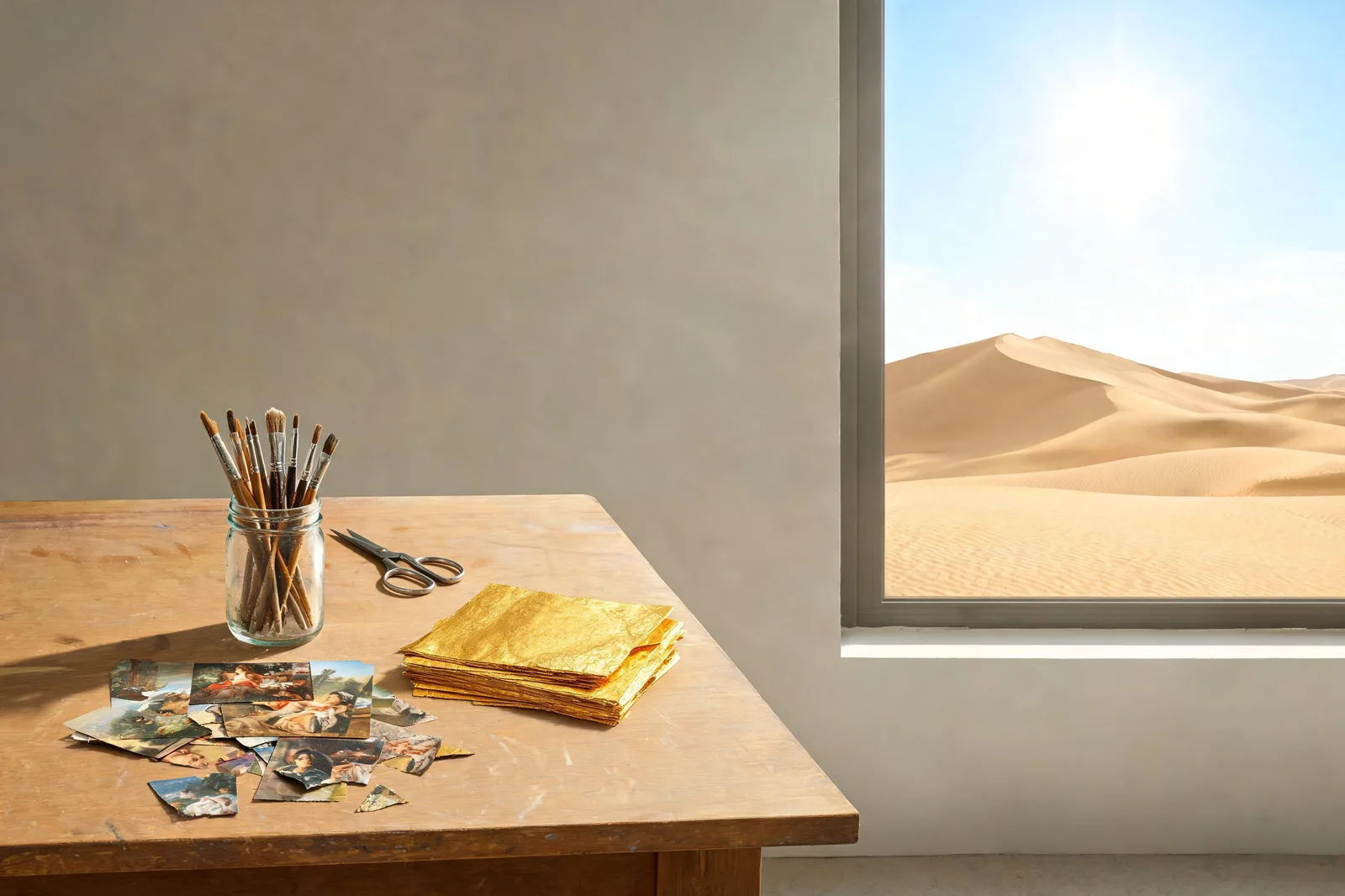
The Salvador Dalí tarot deck began as a film prop and ended as one of the strangest, most personal decks ever printed. Dalí painted his own seventy-eight-card set between the early 1970s and 1984, reworking Old Master reproductions and his own earlier canvases into a single surrealist vision of the trumps and the suits.
The project's origin was commercial. Producers of the 1973 James Bond film Live and Let Die approached Dalí to design a tarot deck for the plot's fortune-telling subplot, but budget and timeline disagreements ended that arrangement before filming; the production used a more conventional deck instead, created by another artist. Dalí, already deep into the concept, kept working on his own version regardless of the lost commission, eventually publishing it independently a decade later — a far longer road to print than The Thoth Deck's First Printing in 1969 describes for Harris and Crowley's deck, though for entirely different reasons.
Collage as method
Rather than paint every figure from scratch, Dalí built most of his cards from collage: cut reproductions of Old Master paintings, his own earlier works, and found imagery, layered and overpainted until the seams mostly vanished. The Empress reuses a portrait of his wife and muse Gala; the Magician's face is Dalí's own, moustache unmistakable even amid gold leaf and surreal ornament. This method let him work at a scale no single artist could paint from scratch across seventy-eight cards while keeping each composition recognisably his, dense with personal reference rather than generic symbolism.
The technique also let Dalí fold his entire back catalogue into the project. Figures and motifs from paintings he had completed decades earlier resurface across the suits, so a collector familiar with his wider body of work can trace references a casual reader would miss entirely. The deck functions, in that sense, almost as a retrospective disguised as a fortune-telling tool, each card doubling as a small anthology of its maker's obsessions.
Reading the salvador dali tarot major arcana
The trumps carry his signature motifs directly: melting forms, desert landscapes, and ornate gold borders recalling religious icons more than traditional tarot printing. The Tower in his version loses none of the trump's violence, rendered through Dalí's taste for catastrophic, dreamlike imagery; other cards, including The Fool, show his interest in classical and religious painting pressed into a divinatory frame. Where Lady Frieda Harris: Five Years Painting the Thoth Deck encoded esoteric correspondence through careful geometric structure, Dalí worked by instinct and personal mythology, with far less interest in Golden Dawn attribution schemes.
A late addition to a surrealist tradition
Dalí's deck arrived after decades of surrealist fascination with the tarot as a structure for chance and symbol, a current this series' next part follows through André Breton's own Marseille-based card games. Dalí was never a committed member of Breton's circle by the time he made this deck — their relationship had soured by the 1940s over Dalí's political sympathies and commercial instincts — but the shared interest in the tarot as raw material for a personal iconography connects both artists' projects more than their public feud suggests.
Reception and limited availability
The deck was published in a relatively limited print run through a European publisher associated with Dalí's later commercial ventures, and it has circulated since mainly among collectors of his work rather than as a mainstream reading deck. Its density works against quick intuitive reading: a newcomer to tarot faces as much Dalí iconography to learn as traditional symbolism, making it better suited to an experienced reader curious about the artist's reinterpretation than to someone learning the cards for the first time.
Original printings are now sought mainly by collectors of twentieth-century surrealist ephemera, a market driven more by Dalí's name than by any reading community's demand for a new deck. That collector interest has, if anything, kept the deck further from everyday use: a prized object changes hands carefully, not shuffled nightly across a kitchen table.
What the deck says about authorship
Every deck in this series raises the same question in a different form: whose vision does a tarot deck actually carry, the system's or the artist's? Pamela Colman Smith subordinated her style to Waite's instructions; Harris negotiated hard with Crowley but still worked from his written briefs. Dalí answered to no commissioning magician at all by the time he finished the project, and the result shows: a deck that uses tarot structure mainly as scaffolding for an artist's own obsessions, Gala's face recurring as often as any traditional emblem.
That freedom is also the deck's limitation as a working tool. A system of correspondences, however imperfect, gives a reader something stable to return to across different cards and different sittings; Dalí's collage logic gives instead a gallery of private references that reward connoisseurship more than consistent practice. Readers drawn to this series for its history rather than for a new deck to shuffle will still find the comparison useful: it marks one clear edge of how far a tarot deck can drift from divinatory structure toward pure personal art before the two purposes start to pull apart.
For a fuller account of his career and major works, see the Wikipedia article on Salvador Dalí.
Questions
Why did Salvador Dalí make a tarot deck?
He began it as a commission for the 1973 James Bond film Live and Let Die, then continued the project independently after the film used a different deck, finishing it around 1984.
How did Dalí create the images for his tarot deck?
He built most cards from collage, combining cut reproductions of Old Master paintings and his own earlier works, overpainted until the seams largely disappeared.
Does the Salvador Dalí tarot deck include his wife Gala?
Yes. Gala's face appears as the Empress, and Dalí used his own face for the Magician.
Is the Dalí tarot deck good for beginners?
Not especially. Its dense personal iconography asks a reader to learn Dalí's own symbolism alongside traditional tarot meanings, so it suits an experienced reader more than a newcomer.
This article talks about
You might also like
 Symbolism
 Symbolism
 Symbolism
© 2026 TAROTS chat (tarots.chat). All rights reserved. No part of this article may be reproduced, distributed or adapted without the owner's written permission.
The Journal
From the Journal
Chosen for this page
 Major Arcana
The Chariot Tarot Card Meaning in the Thoth Deck: Victory, Willpower and Direction
3 min read
More in Major Arcana Thoth Tarot
A Game Called Trionfi: What the Visconti-Sforza Deck Actually Is
10 min read
More in Thoth Tarot Thoth Tarot
 Thoth Tarot
 Kabbalah
 Symbolism
 Symbolism
 Symbolism
 Kabbalah