André Breton and the Surrealist Game of Marseille
by Redazione · 9 October 2026 · 5 min read
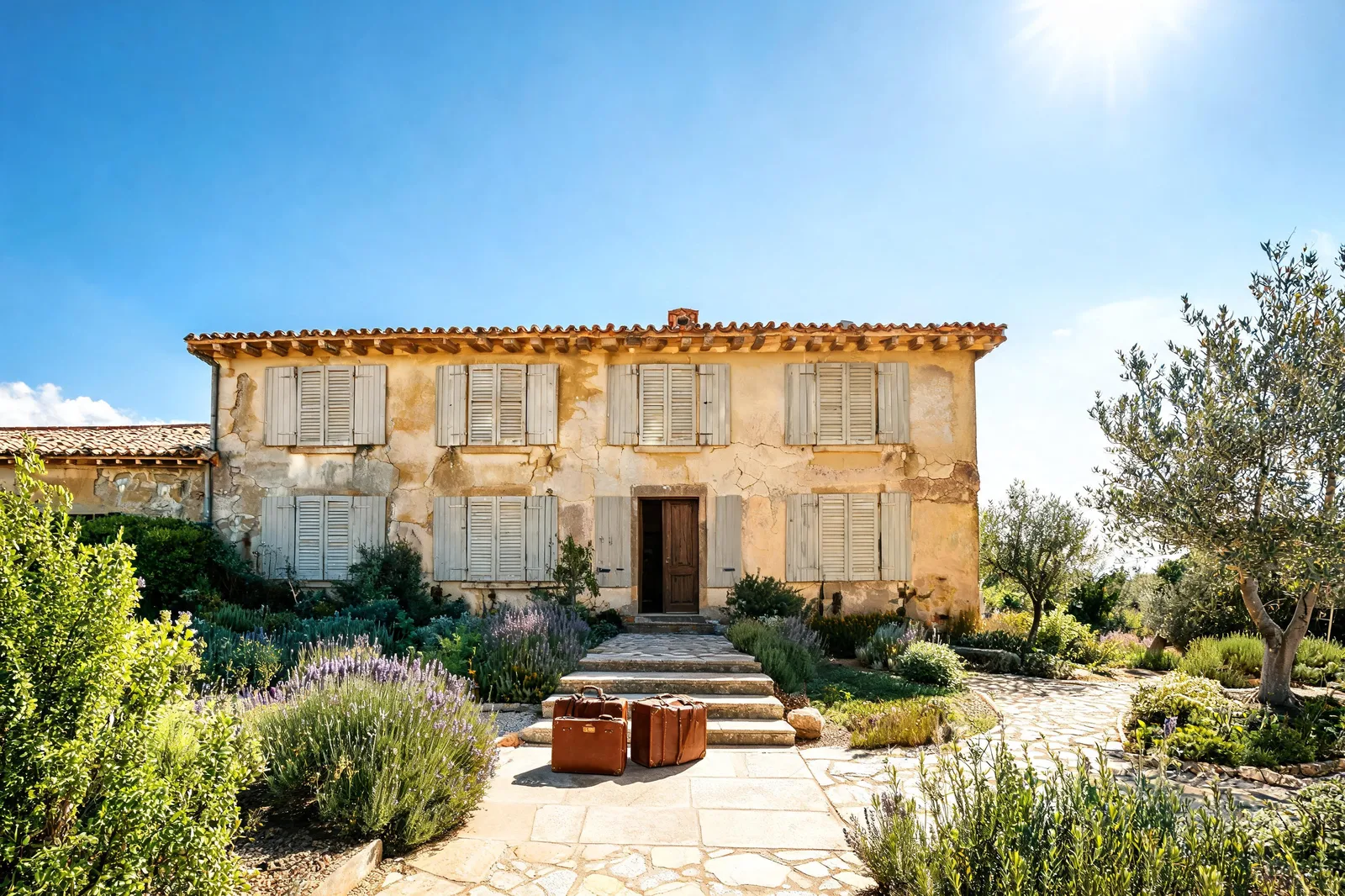
André Breton's surrealist tarot was not made in a Paris studio but in a requisitioned villa outside Marseille, while its makers waited for exit visas that might never come. In the winter of 1940 to 1941, with France occupied and the group's own politics making them targets, Breton and a circle of fellow artists at the Villa Air-Bel invented an entirely new deck: the Jeu de Marseille, a card game that replaced every traditional figure with the surrealists' own pantheon of heroes.
The villa itself was no ordinary refuge. It housed a cluster of artists and writers sheltered by Varian Fry's American rescue network, which smuggled European intellectuals threatened by the Nazi occupation and Vichy collaboration out through Marseille's port. Waiting for passage, with little to do and constant anxiety about arrest, the group turned to collaborative art as both distraction and statement.
Fry's operation worked on a shoestring and against open hostility from Vichy police, who viewed the villa's residents with suspicion. Daily life mixed real danger with long stretches of enforced idleness: ration queues, forged papers, and rumours about which ship might finally carry a name on its passenger list. Games, drawing sessions and collaborative projects filled that waiting time, and the deck grew directly out of those sessions rather than from any planned commission.
New suits for a new pantheon
The Jeu de Marseille kept the traditional four-suit structure but renamed and redesigned every element. Hearts became Love; Spades became Dream, marked by a black star rather than the usual pike shape; Diamonds became Revolution, represented by a wheel or a flame; Clubs became Knowledge, symbolised by a lock. Each suit's court cards replaced kings, queens and jacks with figures the surrealists considered genii of that domain: Baudelaire for Love, Freud for Dream, revolutionary and philosophical figures for Revolution, and various writers and thinkers for Knowledge. From the Golden Dawn to Waite and Crowley: Two Heirs, Two Decks shows how the Golden Dawn's heirs reworked Hebrew and astrological correspondence; the Marseille group instead built a wholly secular, politically charged set of correspondences from their own intellectual lineage.
Collaborative authorship
No single artist painted the deck. Breton worked alongside Max Ernst, André Masson, Óscar Domínguez, Jacqueline Lamba, Victor Brauner, Wifredo Lam and others present at the villa, each contributing designs for different cards. This matched surrealist practice more broadly: the movement prized collective and chance-driven creation, from exquisite corpse drawings to automatic writing, over a single author's controlled vision. A tarot deck built by committee, improvised from whatever materials a besieged group of refugees could find, fit that ethos naturally.
Why cards, and why then
Playing cards and tarot had long interested the surrealists as objects already saturated with symbolism and chance, ready-made vehicles for reinterpretation without needing an original invented structure. Making a new deck let the group assert creative control over their own circumstances at a moment when almost nothing else was within their control: not their visas, not their safety, not their ability to work in their usual materials and settings. The deck became, in effect, a form of resistance through continued cultural production, asserting that invention and imagination survived even displacement and danger.
A surrealist tarot meant to provoke, not divine
Unlike the decks covered elsewhere in this series, the Jeu de Marseille was never intended as a divinatory tool. It functioned as a playable card game and, more importantly, as a manifesto in object form: a demonstration of what surrealist thought looked like applied systematically to an existing structure. Readers encountering Salvador Dalí's Tarot: A Surrealist's Private Mythology, made decades later by an artist who had split from Breton's circle, can see a rough continuity of impulse — using tarot's inherited form as scaffolding for a personal or collective iconography — even though Dalí and Breton's politics and aesthetics diverged sharply by the 1940s.
Legacy of the Marseille game
Original examples of the deck survive in museum collections, and reproductions have circulated among surrealism scholars and collectors since. Its influence is more conceptual than commercial: few readers use the Jeu de Marseille for cartomancy, but its example — take an inherited symbolic structure and rebuild its figures entirely around a movement's own values — recurs whenever artists since have made a deck to express a specific worldview rather than to serve existing esoteric tradition.
The circumstances of its making also changed how later historians read it. A deck produced in comfort, by artists free to work in their usual studios, would read as one more surrealist experiment among many. Made instead under the threat of arrest and deportation, by a group whose exit from France was never guaranteed, the Jeu de Marseille carries a documentary weight few decks in this series share: proof that a specific group of people, at a specific and dangerous moment, chose to spend some of their last uncertain days in France reinventing a deck of cards together.
For wider context on the movement and its wartime displacement, see the Wikipedia article on André Breton.
Questions
What is the Jeu de Marseille?
A hand-made card deck created by André Breton's surrealist circle in late 1940 and early 1941, while they sheltered at the Villa Air-Bel awaiting exit visas from occupied France.
Who made the surrealist Jeu de Marseille deck?
A group including Breton, Max Ernst, André Masson, Óscar Domínguez, Jacqueline Lamba, Victor Brauner and Wifredo Lam, each designing different cards collaboratively.
How did the surrealists change the traditional suits?
They renamed the four suits Love, Dream, Revolution and Knowledge, and replaced kings, queens and jacks with figures such as Baudelaire and Freud.
Was the surrealist tarot used for fortune telling?
No. It was designed as a playable card game and an artistic statement, not as a divinatory tool.
You might also like
 Symbolism
 Symbolism
 Symbolism
© 2026 TAROTS chat (tarots.chat). All rights reserved. No part of this article may be reproduced, distributed or adapted without the owner's written permission.
The Journal
From the Journal
Chosen for this page
 Cups
 Thoth Tarot
The Fool and the Aleph: A Close Reading of The Book of Thoth
9 min read
More in Thoth Tarot Disks
 Career
 Kabbalah
 Love
 Symbolism
 Symbolism
 Kabbalah