The Eight of Disks: Prudence and Slow Progress
Sun in Virgo and the quiet repetition that actually builds a skill.
by Redazione · 9 October 2026 · 5 min read
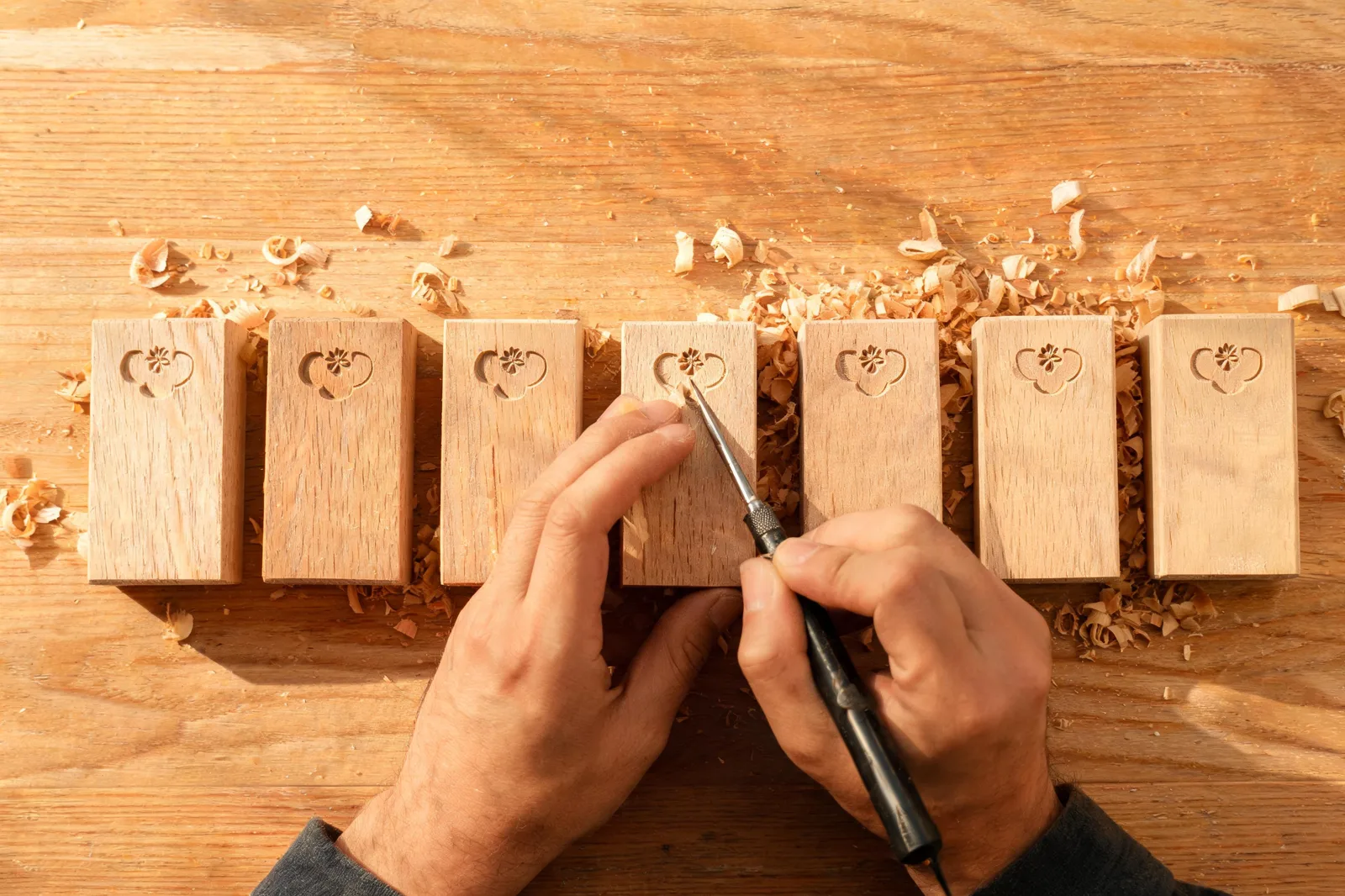
Small, careful, repeated: that is the whole method behind Eight of Disks prudence. Where The Three of Disks: Works and Craft showed labour tested against a shared standard, this card shows the stage before anyone else is watching, the quiet repetition that makes a skill reliable. It belongs to anyone building a craft one careful piece at a time, and it rewards patience over a single dramatic effort.
Sun in Virgo: Precision Without Flourish
Crowley titled this card Prudence and placed it under the Sun in Virgo, a pairing that looks modest next to Mars or Jupiter cards but carries its own quiet force. The Sun gives vitality and clarity; Virgo gives attention to detail, a willingness to refine the same small motion until it is right. Together they describe competence built through repetition rather than inspiration: eight disks arranged in a careful pattern, each one a small, deliberate act rather than a single grand gesture.
This is a different kind of card from the suit's more dramatic entries. It does not show triumph, loss or a turning point. It shows the unglamorous middle of learning a trade, where most of the actual skill gets built. A reading that turns this card up over a work question is usually naming exactly that stage, whether the reader recognises it yet or not.
Eight of Disks Prudence at Work
In a career spread, this card often appears when someone is deep in the repetitive part of mastering something: a trade, a technical skill, a role that rewards getting small things right consistently. It can describe an apprenticeship, a probation period, or simply the unglamorous stretch of a job where competence is built quietly rather than announced. The card carries no judgement about whether this stage is enjoyable. It only names that this is where skill actually accumulates.
A reader who sees this card paired with restlessness or frustration might ask whether they are undervaluing the slow work they are already doing, mistaking its lack of drama for a lack of progress. Prudence, in Crowley's sense, is not caution born of fear; it is the discipline of doing a small thing correctly, over and over, until it becomes reliable.
Comparing It to the Suit's Other Workers
Against Three of Disks — Works, which shows a design already judged by others, the Eight of Disks shows the private repetition that makes such judgement possible later. Against Knight of Disks, whose patience plays out over a long season rather than a single task, the Eight shows patience applied to the smallest unit of practice: one careful repetition at a time. Reading these cards together in a spread about a long project can map out an entire arc, from quiet practice to tested structure to sustained, season-length effort.
The Eight of Disks also differs from showy cards like The Chariot. Where the Chariot drives a single will toward a visible goal, the Eight of Disks works in the background, unseen by anyone except the person doing the repeating. Both are valid ways to read ambition at work, but they describe very different temperaments and very different timelines.
What This Card Asks of a Reader
A spread that produces the Eight of Disks is rarely answering "when will this pay off." It is naming a present-tense discipline: keep doing the small thing correctly, and trust that the accumulation matters even when no one outside is watching yet. This is not a guarantee of reward, and a careful reading never promises one. It is, instead, a description of where real skill actually comes from in almost every trade: not a single flash of talent, but thousands of careful repetitions that eventually become second nature.
For a reader weighing whether to keep grinding at something unglamorous, this card offers a useful reframe. The absence of drama is not the absence of progress. Prudence, read this way, becomes less about caution and more about respect: respect for a craft that only yields to patient, repeated attention, and respect for the version of oneself that keeps showing up for it, one careful disk at a time.
A Question Worth Asking Alongside the Card
Tradition holds that guild apprentices spent years on the plainest tasks before touching the finer work, not as punishment but because the hand needed the repetition before the eye could be trusted. A reader who draws the Eight of Disks in a career spread can borrow the same logic: ask what the smallest, most repeatable unit of the current task actually is, and whether it has been practised enough to become reliable. That question rarely has a dramatic answer, and the card does not want one. It wants an honest inventory of practice, not a verdict on talent.
This also makes the card a useful check against impatience. A reader expecting a single breakthrough moment may read the Eight of Disks as disappointing, a card without a climax. Read on its own terms, it is closer to reassurance: the quiet stretch is not a detour from the real work. For a trade built on precision, it usually is the real work, and the reading's job is only to name that plainly, never to promise when the patience will be noticed.
Questions
What does the Eight of Disks mean for work?
It points to the quiet, repetitive stage where a skill is actually built, one careful attempt at a time.
What is the astrology of the Eight of Disks?
The Thoth tradition places it under the Sun in Virgo, pairing vitality with precise, detail-oriented attention.
Is Prudence a warning card in tarot?
Not in the Thoth tradition. It describes patient, careful repetition rather than caution born of fear.
How is the Eight of Disks different from the Three of Disks?
The Three shows work already tested against a shared standard; the Eight shows the private repetition that comes before that test.
This article talks about
You might also like
 Disks
 Disks
 Disks
© 2026 TAROTS chat (tarots.chat). All rights reserved. No part of this article may be reproduced, distributed or adapted without the owner's written permission.
The Journal
 Kabbalah
 Kabbalah
 Disks
 Wands
 Symbolism
 Swords
 Symbolism
 Symbolism
 Kabbalah