The Tarot Museum of Riola: Italy's Only Dedicated Collection
by Redazione · 9 October 2026 · 5 min read
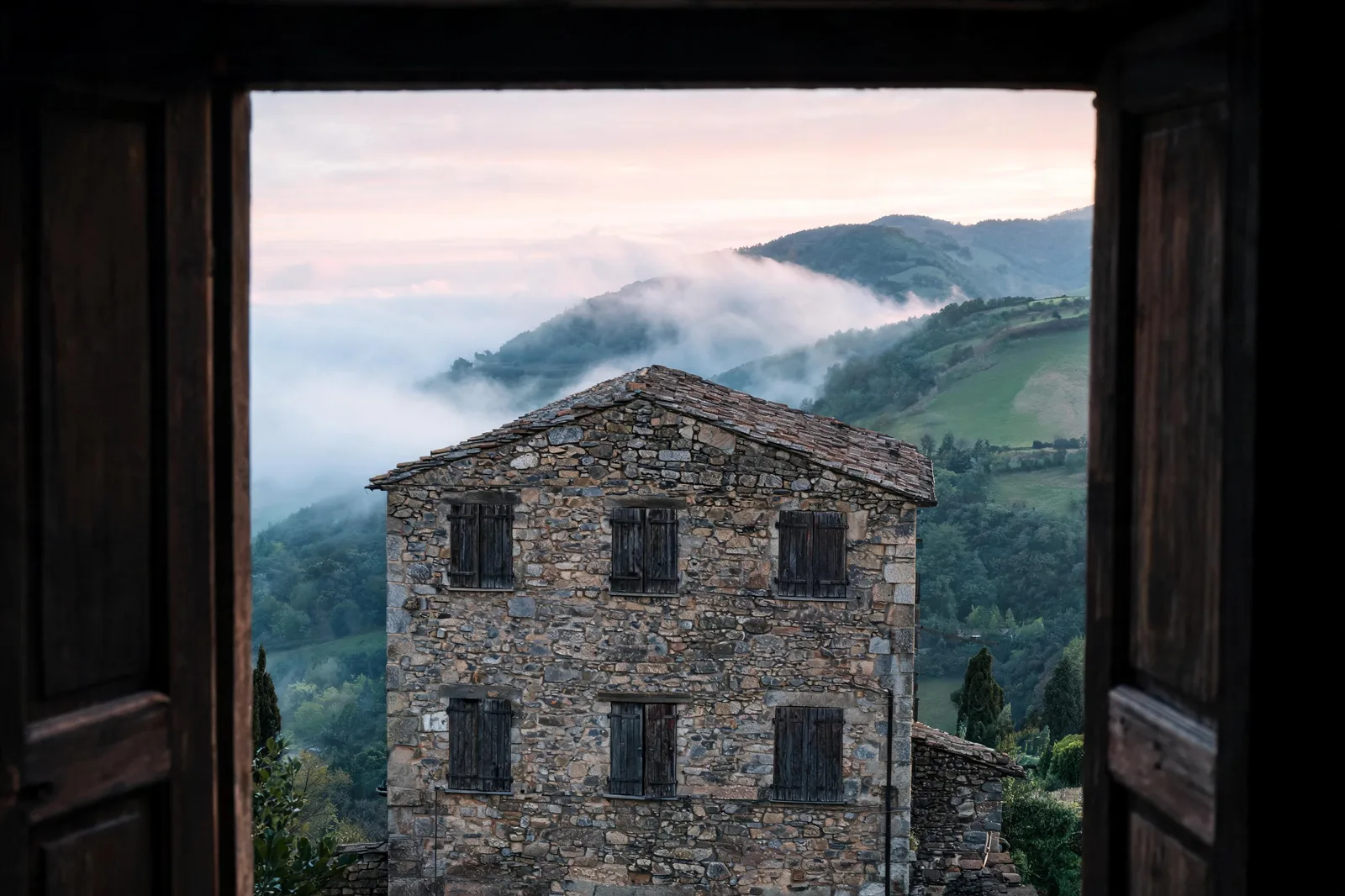
Visitors searching for the tarot museum Riola holds find a seventeenth-century stone building, usually described as the only museum in Italy dedicated entirely to tarot and playing cards. Founded by Morena Poltronieri and Ernesto Fazioli, it opened in 2007 in the village of Riola di Vergato, in the Bolognese Apennines, a stretch of hill country better known to most visitors for Alvar Aalto's modern church nearby than for occult history. The museum's presence there is partly an accident of local enthusiasm rather than any deep historical link between the village and the cards.
Poltronieri and Fazioli built the collection around a premise this series keeps returning to: that the tarot has drawn serious visual artists, not only occultists and cartomancers, for most of its printed history. Rather than focusing narrowly on divinatory decks, the museum collects paintings, prints and full card sets by named fine artists who treated the Major Arcana as subject matter in its own right.
Artists on the walls, not just decks in cases
The museum's holdings reportedly include work connected to Renato Guttuso, Franco Gentilini and Enrico Baj, three Italian painters associated with twentieth-century modern art movements, alongside tarot-themed work by figures such as Hermann Haindl and Osvaldo Menegazzi, both well known within the hobby of designer tarot decks. Rachel Pollack and Robert Place, whose scholarly and artistic writing on the tarot shaped readers internationally, are also represented. The effect is closer to a small gallery of symbolist and modern art organised around one recurring theme than to a cabinet of curiosities for diviners.
Why the tarot museum Riola built matters to this series
A museum of this kind argues, implicitly, for everything this series on the cards' history has tried to show directly: that the tarot's cultural life runs through painters, publishers and collectors as much as through readers and occultists. The Lo Scarabeo: The Turin Publisher Behind Hundreds of Decks story covered the industrial side of that same claim, showing how an Italian publisher turned the deck into a mass-market object. The Riola museum preserves the opposite end of the same spectrum, the singular, hand-made or limited artist's edition that a large print run was never meant to produce. Seeing both sides together gives a fuller picture of how modern Italy, in particular, became a centre of tarot publishing and collecting.
A small museum, visited by appointment
The museum is modest in scale compared to major European art institutions, and visits are typically arranged by appointment rather than through daily open hours. That keeps its audience closer to dedicated enthusiasts and researchers than to casual tourists passing through the Apennines. It also hosts temporary exhibitions, talks and small conferences connecting tarot imagery to art history, philosophy and cinema, continuing the founders' original premise that the cards reward the same kind of sustained attention given to any other strand of symbolist art.
A common misconception about the collection
Visitors sometimes assume the museum functions as a working reading room, staffed by cartomancers offering consultations on site. It does not. The Riola collection is a curatorial project, closer in spirit to the Niki de Saint Phalle's Tarot Garden: Twenty-Two Trumps in Tuscany than to any divination parlour: both treat the Major Arcana as material for serious art-historical display rather than as tools for a paying client's reading. Scholars and collectors visit to study attributions, printing techniques and an artist's working method, not to receive a spread. That distinction matters for anyone planning a visit expecting a live demonstration of tarot reading rather than an exhibition of painted and printed cards.
The confusion is understandable. Most visitors' only prior encounter with tarot is a reading, whether at a market stall or through a service like this one, so a museum labelled with the same word naturally invites the same expectation. Framing the collection honestly, as an art and publishing archive rather than a place of practice, helps first-time visitors plan a trip that matches what they will actually see: glass cases of printed decks, framed paintings, and research material rather than a reader waiting at a table.
A reminder that history survives locally
Much of this series has covered figures and movements with international reach: Golden Dawn teachings, Hollywood tie-ins, a publishing house distributing worldwide. The Tarot Museum of Riola is a useful counterweight. Tradition holds it is the only Italian institution built specifically around this subject, which says something about how niche serious tarot scholarship still is even in a country with centuries of card-printing history behind it. A single building in a small Apennine village remains, by most accounts, the country's dedicated custodian of that history.
More detail on the museum's collection and visiting arrangements is on the Italian Wikipedia page for the Museo dei tarocchi.
FAQ
Where is the Tarot Museum of Riola located? In Riola di Vergato, a village in the Bolognese Apennines in Emilia-Romagna, Italy.
Who founded the museum? Morena Poltronieri and Ernesto Fazioli founded it, opening it in 2007.
What does the museum collect? Tarot and playing-card decks alongside fine-art paintings and prints by artists who treated the Major Arcana as subject matter.
Can visitors drop in without planning ahead? Visits are generally arranged by appointment rather than through standard daily opening hours, so checking ahead is recommended.
Questions
Where is the Tarot Museum of Riola located?
In Riola di Vergato, a village in the Bolognese Apennines in Emilia-Romagna, Italy.
Who founded the museum?
Morena Poltronieri and Ernesto Fazioli founded it, opening it in 2007.
What does the museum collect?
Tarot and playing-card decks alongside fine-art paintings and prints by artists who treated the Major Arcana as subject matter.
Can visitors drop in without planning ahead?
Visits are generally arranged by appointment rather than through standard daily opening hours, so checking ahead is recommended.
You might also like
 Symbolism
 Symbolism
 Symbolism
© 2026 TAROTS chat (tarots.chat). All rights reserved. No part of this article may be reproduced, distributed or adapted without the owner's written permission.
The Journal
 Symbolism
 Swords
 Tarot Journal
 Love
 Kabbalah
 Kabbalah
 Symbolism
 Symbolism
 Kabbalah