The Tower in a Love Reading: Endings That Clear the Ground
A tower love reading looks at collapse as relief, not only loss
by Redazione · 9 October 2026 · 5 min read
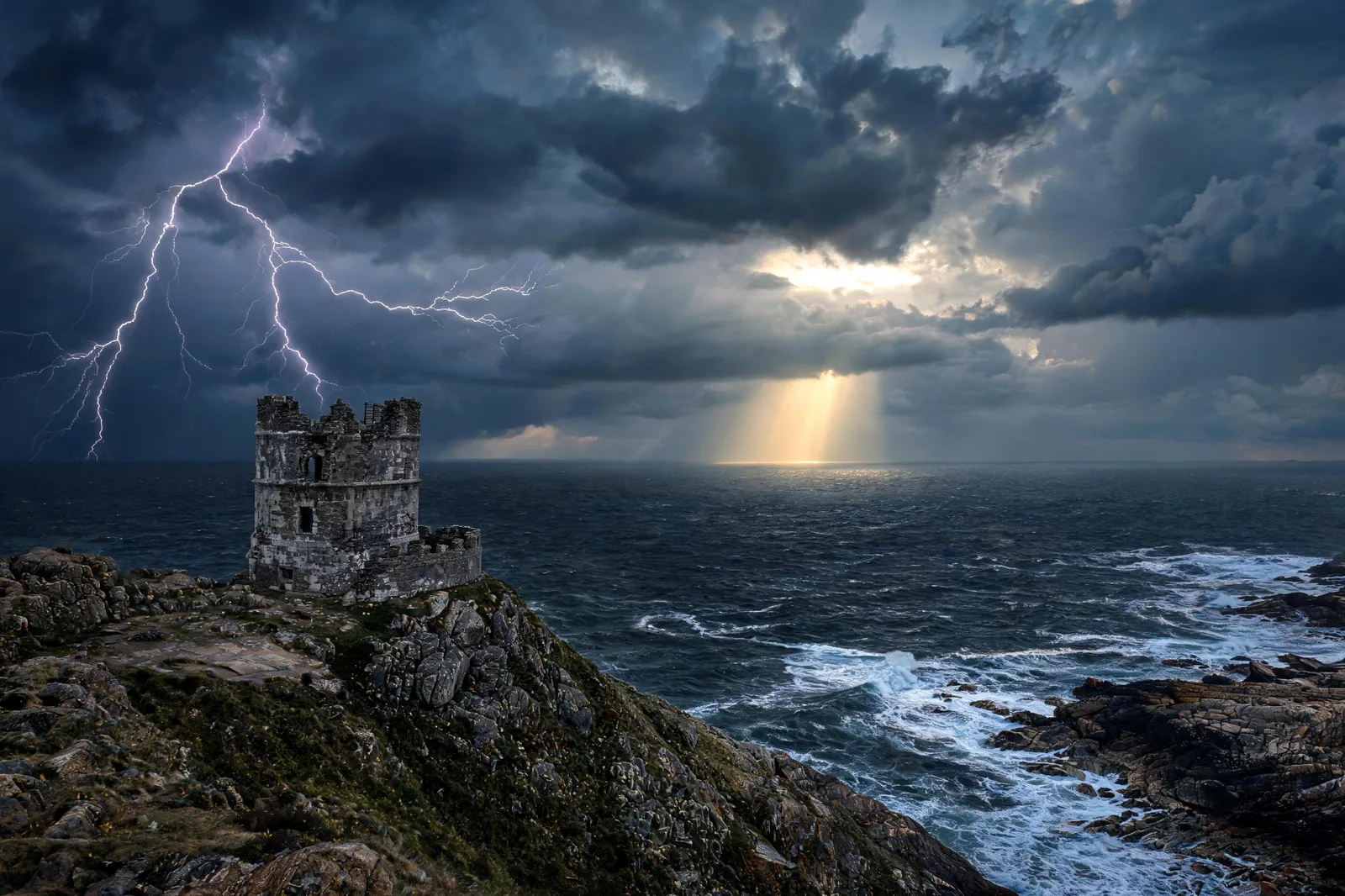
A tower love reading rarely describes a relationship ending badly so much as a structure that was already unstable finally giving way. The Tower is one of the most feared cards in the deck, but in matters of the heart it is often more honest than frightening: it shows where a false foundation has been propping up something that needed to change shape, or end, for a long time.
The previous article in this series followed Venus Across the Deck: The Empress, Love and the Sevens through the Empress and the sevens, tracing attraction at its most settled and its most excessive. The Tower sits at the opposite end of that spectrum. Where Venus softens, the Tower breaks. Both are part of an honest love practice, because not every relationship question deserves a gentle answer.
What the Tower Actually Depicts
Crowley and Harris painted a lightning bolt striking a fortified tower, figures falling from its heights, flames bursting from its windows. The image draws on the biblical Tower of Babel and older alchemical pictures of purification through fire. Structurally, the message is consistent across traditions: something built on a flawed premise cannot stand indefinitely, and the collapse, however sudden it looks, has usually been building for a long time underneath the surface.
In a love reading, this translates directly. The Tower rarely causes a breakup by itself; it describes the moment a long-accumulating pressure, unspoken resentment, a mismatch in values, an avoided conversation, finally becomes visible. The lightning is dramatic. The cracks in the foundation were already there.
Reading the Tower Without Panic
A client who draws the Tower in a relationship spread is often frightened by its reputation before considering what it is actually showing. A careful reader slows the moment down with a few grounding questions:
- What structure in this relationship might already be more fragile than it looks from the outside?
- Is the pressure building toward a single dramatic event, or several smaller honest conversations?
- What would be left standing after the unstable part falls away?
That third question matters most. The Tower clears ground; it does not salt the earth afterward. Readers who stop at "this will end badly" miss the card's actual function, which is closer to structural inspection than to doom.
The Tower as Relief, Not Only Loss
Many clients, once the initial fear passes, recognise the Tower's arrival as relief. A relationship held together by avoidance, by fear of being alone, or by sunk-cost thinking, can feel like a weight the person has been carrying without naming it. The Tower names it. It says, plainly, that the current shape of things cannot continue as it is, and that this is not automatically a tragedy.
This reading sits comfortably with the ethical rule set out at the start of this series: the cards describe, the person decides. The Tower does not tell a client to leave a relationship, and it does not tell them to stay and fight for it either. It shows where pressure has built up, and leaves the response, whether that is a hard conversation, a quiet change, or in some cases a full ending, entirely in the client's hands.
Pairing the Tower with Supporting Cards
The Tower rarely appears alone in a love spread, and its companions shape how sharply it should be read:
- Alongside a Cup card, the collapse likely involves an emotional truth coming to the surface at last.
- Alongside a Sword card, a difficult conversation is probably the trigger, not an external event.
- Alongside a Disk card, practical pressures, money, distance, competing obligations, may be the real fault line.
- Alongside the Star, which traditionally follows the Tower in sequence, the reading points toward renewal arriving relatively soon after the break.
This sequencing matters for how a reading lands. A Tower pulled on its own, with no supporting context, deserves a calm, structural interpretation rather than an alarmed one. Readers who have studied the older history of card divination, including the long-running European tradition traced on Wikipedia's page on cartomancy, will recognise this caution: dramatic images have always needed careful, unhurried reading rather than reflexive fear.
A Practical Way to Sit With the Card
If the Tower appears in your own reading, resist the urge to act within the hour. Write down what the card showed, then set it aside for a day before deciding anything. Pressure cards reward patience more than any other kind, because the clarity they offer tends to arrive once the initial shock has settled. Ask yourself plainly what has already changed, rather than what you fear might change next; the Tower describes a present fact more often than a future threat.
Carrying the Lesson Forward
A tower love reading asks the client to look honestly at what is already cracking, rather than waiting for a storm to force the question. Handled with care, it becomes one of the more compassionate cards in a love spread, because it refuses to let a shaky structure masquerade as a stable one any longer. The next article in this series turns to a harder emotional territory still: reading for an ex-partner without feeding either false hope or needless fear.
Questions
Does the Tower always mean a breakup?
Not always. It usually shows a structure that is already unstable becoming visible, which can mean a breakup, a hard conversation, or a major honest shift within the relationship.
Is the Tower a bad card in a love reading?
It can feel alarming, but many clients experience its arrival as relief, since it names pressure that was already building rather than creating new damage.
What comes after the Tower in a reading?
Traditionally the Star follows, suggesting renewal and a calmer outlook once the unstable structure has fallen away.
How should I read the Tower paired with other cards?
Look at the suit of the surrounding cards: Cups suggest an emotional trigger, Swords a difficult conversation, and Disks a practical pressure like money or distance.
This article talks about
You might also like
 Love
 Love
 Love
© 2026 TAROTS chat (tarots.chat). All rights reserved. No part of this article may be reproduced, distributed or adapted without the owner's written permission.
The Journal
 Love
 Wands
 Major Arcana
 Kabbalah
 Love
 Spirituality
 Symbolism
 Symbolism
 Kabbalah