Swedenborg's Correspondences and Tarot Symbolism
How an eighteenth-century visionary's method still shapes correspondence tables
by Redazione · 9 October 2026 · 5 min read
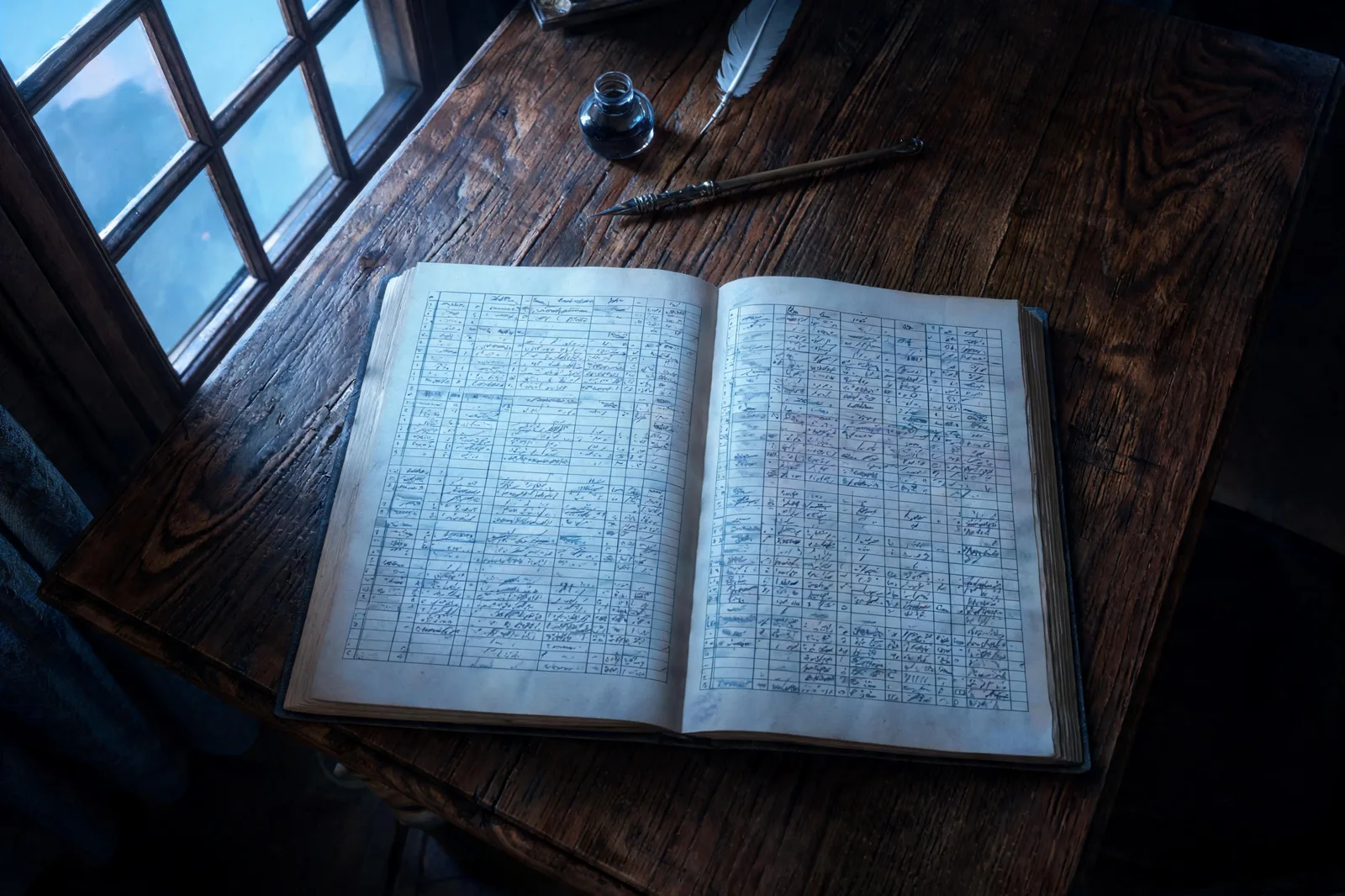
A scientist who became a visionary
Swedenborg correspondences describes the doctrine, central to Emanuel Swedenborg's theology, that every object, event and relationship in the natural world exists because it corresponds to something in the spiritual world, linked not by arbitrary symbol but by a real, orderly connection running through all levels of creation. Swedenborg was a Swedish scientist and inventor of real standing before, in his fifties, he began reporting direct visionary access to heaven, hell and the spiritual meaning hidden inside scripture. The previous article in this series followed Jacob Boehme's necessary opposites through Jacob Boehme's Mysticism and the Tree of Light; Swedenborg offers a calmer, far more systematic version of the same underlying conviction, that the visible world is never only itself.
He wrote an enormous, highly organised body of theological work describing these correspondences in exhaustive, almost bureaucratic detail, a style strikingly different from Boehme's turbulent prose. Where Boehme wrote as a man wrestling with a vision too large for ordinary language, Swedenborg wrote as a trained scientist cataloguing an observed order, volume after volume, as methodically as he had once catalogued minerals and mechanisms.
What a correspondence actually claims
For Swedenborg, a correspondence is not a metaphor chosen by a poet for effect. It is a built-in feature of creation: light genuinely corresponds to truth, warmth genuinely corresponds to love, water genuinely corresponds to spiritual truth cleansing the mind, because the natural world was created precisely to mirror the spiritual one at every point. The Empress, surrounded by abundant natural growth, sits comfortably inside this doctrine: her fertility is not simply decorative scenery but a direct correspondence to a spiritual principle of generative love made visible in material form. Swedenborg read the whole of scripture this way too, treating its literal stories as a surface correspondence to a deeper spiritual sense, a method he called the "internal sense" of the Word.
This is a stronger claim than ordinary symbolism. A symbol is agreed upon; a correspondence, in Swedenborg's system, is simply how reality is actually built, whether or not anyone notices it.
From Swedenborg to the Golden Dawn's tables
Emanuel Swedenborg never wrote about tarot, playing cards, or ceremonial magic of the kind the Golden Dawn later practised; his own followers mostly kept a respectable theological distance from occultism. Yet his central insight, that a vast, orderly table of correspondences links every level of existence, planet to metal, colour to emotion, number to idea, gave nineteenth-century occultists a working model for exactly the kind of elaborate correspondence tables later published as Golden Dawn Tarot Correspondences Explained. Swedenborg supplied the conviction that such tables could, in principle, be built at all: that the universe really is legible this way, level mirroring level, if only the right method of reading is applied with sufficient discipline.
Later compilers borrowed the ambition more than the specific content, assembling planetary, elemental and Hebrew-letter correspondences from many sources, but the underlying confidence that correspondence itself is real, not invented, traces back through exactly this eighteenth-century project.
Why this current still matters to a reader
A reader who treats a card's symbols as a fixed, legible system, this colour, that number, this creature, each carrying a specific, non-arbitrary meaning, is working inside a correspondence framework whether or not Swedenborg's name ever comes up. Tradition holds that correspondence tables reward patient study precisely because, as Swedenborg insisted, they are not a code invented for convenience but an attempt to notice a connection genuinely already there.
This also explains why serious tarot teaching resists shortcuts. A card's red robe or raised hand is not a decoration a reader may swap out for a more convenient image; in a correspondence-minded tradition, that detail is load-bearing, carrying real information the way a word carries meaning in a sentence. Treating the deck this way turns study into something closer to learning a second language than memorising a short list of fortune-telling cues, which is exactly how Swedenborg wanted scripture itself to be read: slowly, attentively, level by level, never skimmed for a quick answer.
The next and final article in this series turns to Theosophy, the movement that gathered many of these earlier currents into one global synthesis at the turn of the twentieth century.
FAQ
Did Swedenborg practise magic or divination? No. He was a Lutheran-influenced visionary theologian; his followers generally avoided occult practice, though later occultists drew freely on his ideas.
What does "correspondence" mean in Swedenborg's theology? A real, built-in link between a natural object or event and a specific spiritual meaning, not a symbol chosen arbitrarily by a reader or writer.
Did Swedenborg influence the Golden Dawn directly? Not by direct citation in most of its documents, but his doctrine of universal correspondence shaped the wider climate that made such correspondence tables seem plausible.
Is Swedenborgianism still practised today? Yes, in small denominations descended from his followers, though its relationship to the later occult uses of his ideas remains distant and largely incidental.
Questions
Did Swedenborg practise magic or divination?
No. He was a Lutheran-influenced visionary theologian; his followers generally avoided occult practice, though later occultists drew freely on his ideas.
What does "correspondence" mean in Swedenborg's theology?
A real, built-in link between a natural object or event and a specific spiritual meaning, not a symbol chosen arbitrarily by a reader or writer.
Did Swedenborg influence the Golden Dawn directly?
Not by direct citation in most of its documents, but his doctrine of universal correspondence shaped the wider climate that made such correspondence tables seem plausible.
Is Swedenborgianism still practised today?
Yes, in small denominations descended from his followers, though its relationship to the later occult uses of his ideas remains distant and largely incidental.
This article talks about
You might also like
 Spirituality
 Spirituality
 Spirituality
© 2026 TAROTS chat (tarots.chat). All rights reserved. No part of this article may be reproduced, distributed or adapted without the owner's written permission.
The Journal
 Kabbalah
 Love
 Major Arcana
 Kabbalah
 Learn Tarot
 Spirituality
 Symbolism
 Symbolism
 Kabbalah