Agrippa's Three Books of Occult Philosophy
The elemental, celestial and divine ladder behind the Thoth deck's layers
by Redazione · 9 October 2026 · 5 min read
A system, not a spellbook
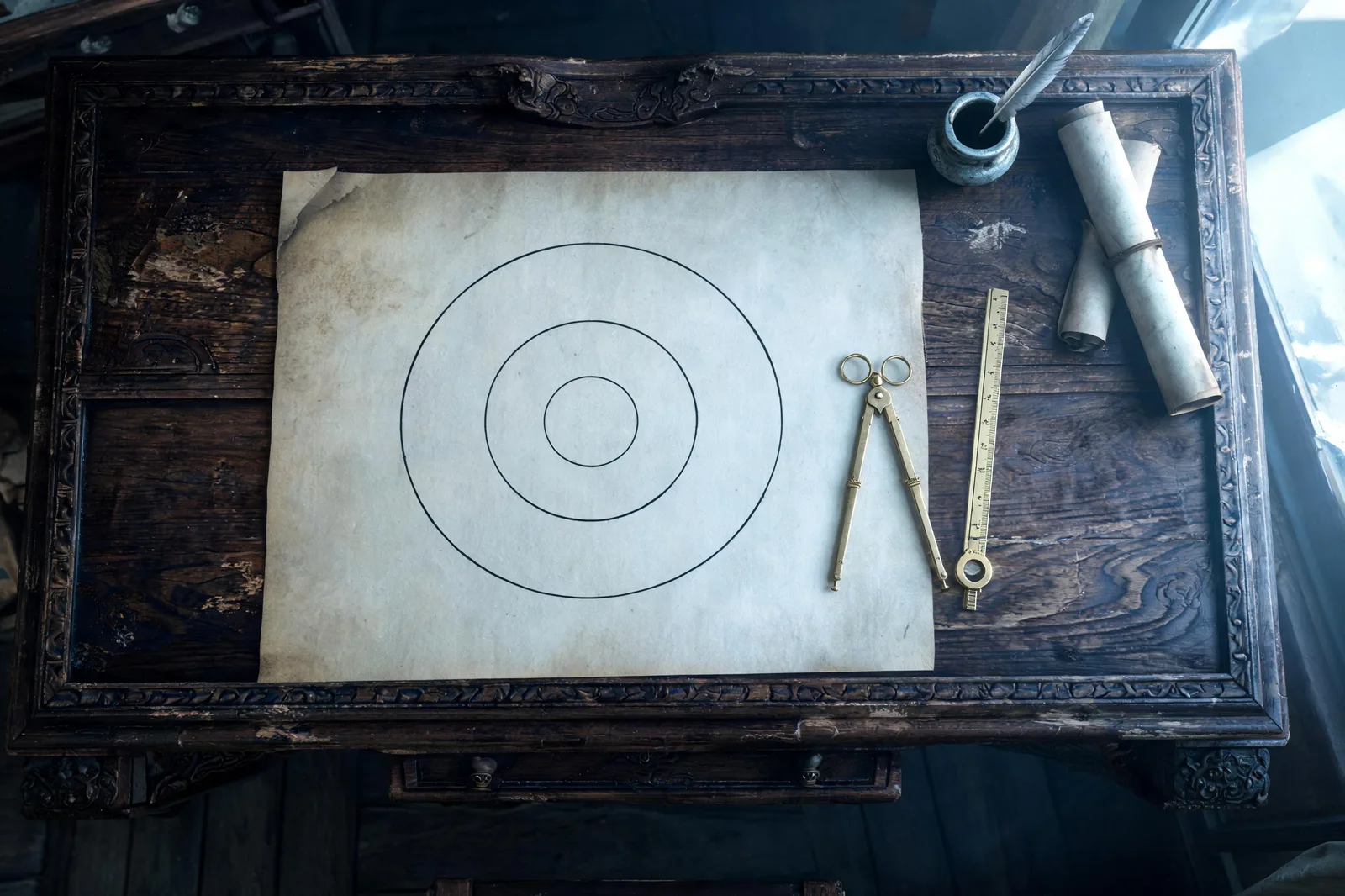
Heinrich Cornelius Agrippa's three books of occult philosophy, completed around 1510 and finally printed in full in 1533, organise the whole of Renaissance magical theory into one structure: elemental magic, celestial magic and intellectual or divine magic, one book for each. Agrippa was not writing a collection of isolated spells. He was building a complete cosmological ladder, elements at the bottom, planets and stars in the middle, angels and divine names at the top, each level governed by its own kind of correspondence. That three-tier architecture, borrowed by countless occult writers after him, is the real reason a modern reader of the Thoth deck can speak of elemental dignities, planetary attributions and divine names in the same breath without feeling like three unrelated subjects have been forced together.
The previous article in this series followed the Rosicrucian legend through The Rosicrucian Manifestos and the Tarot; Agrippa's encyclopaedic synthesis is one of the sources that legend, and nearly every magical order since, quietly drew on.
Book One: the elemental world and the four suits
The first book covers natural magic proper: the four elements, their qualities, and the sympathies running between stones, plants, animals and the human body. Agrippa inherited much of this material from older sources, including the Arabic astrological-magical compendium behind the tradition already explored in Picatrix and the Decans: Where the Minor Arcana's Astrology Comes From. A tarot reader who sorts the suits into fire, water, air and earth, and then reads an individual card's element as a clue to its temperament, is working inside exactly this layer of Agrippa's system. Ace of Disks — Root of the Powers of Earth stands at the root of the earth suit the way Agrippa's elemental world stood at the base of his whole ladder: solid, material, the necessary foundation everything above it still depends on.
Agrippa was careful to insist this elemental layer was real but incomplete on its own, a foundation rather than the whole building. He treated the natural magician's craft as a legitimate branch of philosophy, continuous with medicine and botany rather than opposed to them, a framing that made the whole project easier for contemporaries to take seriously.
Book Two: the celestial world and planetary attribution
The second book moves up to astrology proper: planetary hours, images, numbers and the mathematics behind magical squares. This is the level at which Agrippa's system becomes recognisably the ancestor of the Golden Dawn's planetary and zodiacal attributions across the Minor Arcana, each small card carrying a specific planet-in-sign assignment inherited, at several removes, from exactly this kind of celestial reasoning. Heinrich Cornelius Agrippa treated the heavens as a vast intermediary layer, neither pure matter nor pure spirit, through which influence passed from above to below in regular, calculable patterns.
Later occultists simplified and systematised what Agrippa had left comparatively loose, but the underlying conviction, that the stars carry meaning worth decoding methodically rather than merely admiring, is his. Where Book One offered sympathy, Book Two offered calculation, a shift that later magical orders leaned on heavily when they wanted their attributions to look rigorous rather than merely poetic.
Book Three: names, angels and the limits of the system
The third book is the most daring and the most cautious. Here Agrippa discusses divine names, angelic hierarchies and the ceremonial conjuring long associated with grimoire magic, while also warning repeatedly against overreach and impiety. He wrote at a moment when such claims could bring real danger, and the book's tone shifts constantly between confident instruction and careful theological hedging. This top tier is where a tarot reading edges closest to prayer: not commanding a result but aligning oneself, as honestly as possible, with an order believed to already be arranged for the good.
Why the three-world structure still organises a reading
Agrippa's three worlds gave Western occultism a durable habit of mind: always ask which level a question belongs to before answering it. A practical matter sits in the elemental world; a question of timing or temperament sits in the celestial; a question of meaning or purpose sits in the intellectual. A reading that answers an elemental question with a divine-name solution, or vice versa, misses the proportion Agrippa spent three books trying to teach. Tradition holds that his own later disavowal of magic, written near the end of his life, says less about the system's worth than about the dangerous climate he worked in.
The next article in this series follows one of Agrippa's own correspondents, John Dee, into Enochian magic and the Golden Dawn that inherited it.
FAQ
Did Agrippa believe everything he wrote in the three books? He later wrote a work doubting the vanity of the sciences, including magic, though scholars debate how sincere that later recantation really was.
What are Agrippa's three worlds? The elemental, celestial and intellectual (or divine) worlds, each governed by its own kind of correspondence and magical practice.
Is Agrippa's system the same as the Golden Dawn's Book T? No. Book T is a later nineteenth-century Golden Dawn teaching document; Agrippa's three books are its deeper Renaissance source material, among several others.
Why does Agrippa's work matter to tarot readers today? It supplies the layered logic, elemental, planetary, divine, that still organises how elemental dignities and planetary attributions are read together.
Questions
Did Agrippa believe everything he wrote in the three books?
He later wrote a work doubting the vanity of the sciences, including magic, though scholars debate how sincere that later recantation really was.
What are Agrippa's three worlds?
The elemental, celestial and intellectual (or divine) worlds, each governed by its own kind of correspondence and magical practice.
Is Agrippa's system the same as the Golden Dawn's Book T?
No. Book T is a later nineteenth-century Golden Dawn teaching document; Agrippa's three books are its deeper Renaissance source material, among several others.
Why does Agrippa's work matter to tarot readers today?
It supplies the layered logic, elemental, planetary, divine, that still organises how elemental dignities and planetary attributions are read together.
This article talks about
You might also like
 Spirituality
 Spirituality
 Spirituality
© 2026 TAROTS chat (tarots.chat). All rights reserved. No part of this article may be reproduced, distributed or adapted without the owner's written permission.
The Journal
 Kabbalah
 Spirituality
 Symbolism
 Love
 Love
 Symbolism
 Symbolism
 Symbolism
 Kabbalah