The Rosicrucian Manifestos and the Tarot
How three 1614 pamphlets gave later occultists their hidden brotherhood
by Redazione · 9 October 2026 · 5 min read
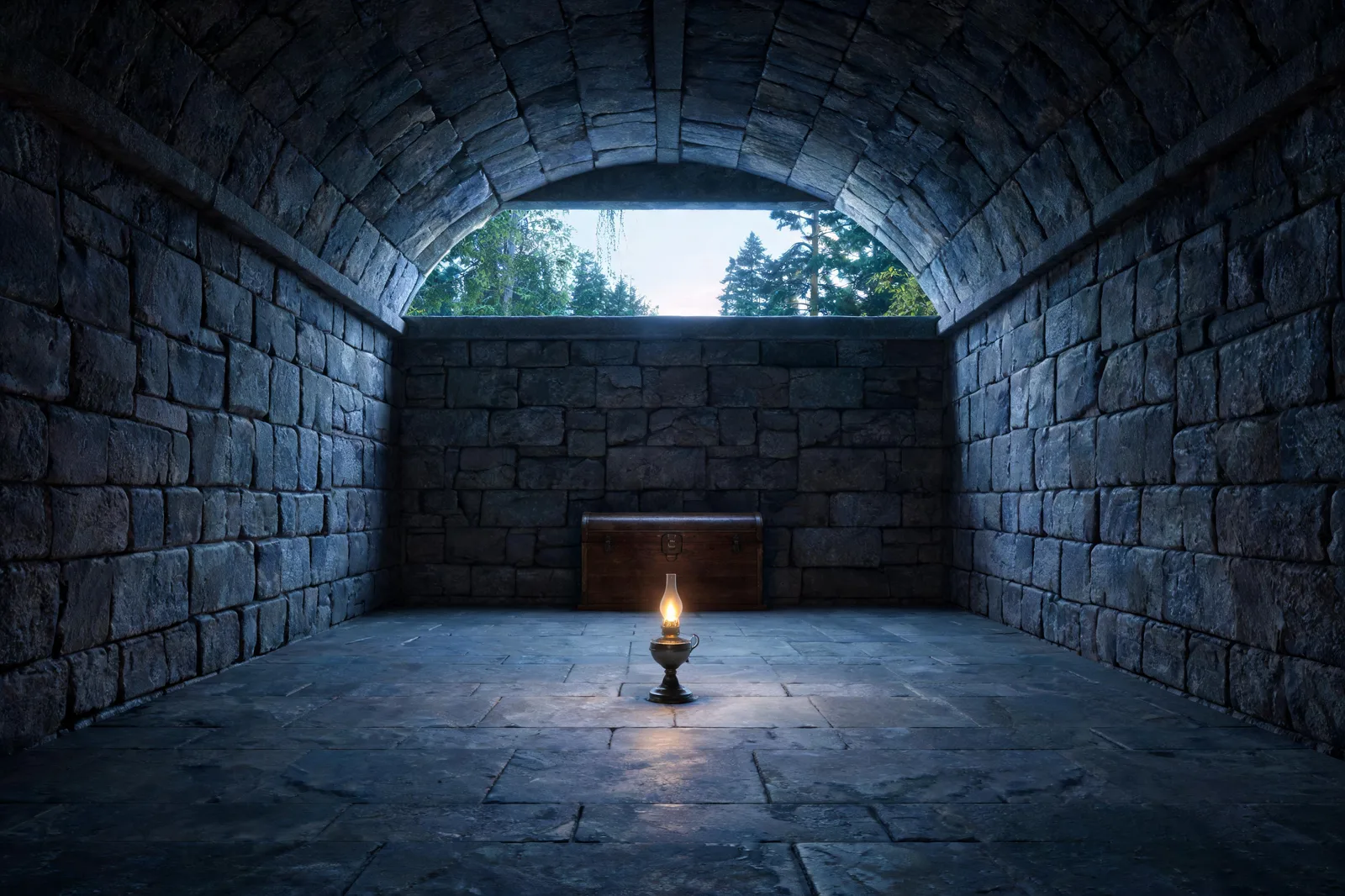
Three pamphlets that invented a brotherhood
The Rosicrucian manifestos are three short works published in German lands between 1614 and 1616: the Fama Fraternitatis, the Confessio Fraternitatis, and the strange alchemical romance The Chymical Wedding of Christian Rosenkreutz. Together they announced a secret brotherhood of enlightened reformers, supposedly founded two centuries earlier, who possessed both perfect natural knowledge and unshakeable Christian faith. No such brotherhood has ever been found to have existed before the pamphlets appeared. That absence did nothing to slow their effect: readers across Europe wrote letters asking to join a fraternity that, as far as anyone can still determine, was never more than an idea on paper. The previous article in this series traced Plotinus's emanations through to Plotinus and the Emanations Behind the Tree; the Rosicrucian current shows the same impulse toward hidden, unified knowledge taking a startlingly different, almost theatrical form.
The question the manifestos pose for tarot readers is not whether the brotherhood was real, but why its fictional shape proved so durable, and why later occultists kept returning to it when they wanted a founding story of their own.
What the Fama actually claims
The Fama Fraternitatis describes Christian Rosenkreutz, a German traveller who studied with sages in Damascus, Fez and across the Arab world before returning home with a synthesis of mathematics, medicine and natural magic. He founded a small brotherhood, built a secret vault, and died; the vault, the Fama says, was rediscovered exactly one hundred and twenty years later, undecayed and lit by an inner sun. The tale borrows freely from alchemy, Hermeticism and Christian apocalyptic expectation, promising a coming "general reformation" of arts, science and society. It is this promise of reform through recovered ancient wisdom that linked the manifestos to the same prisca theologia current already carried by the Corpus Hermeticum and the Emerald Tablet.
Scholars still debate authorship. Johann Valentin Andreae, a Lutheran theologian, is the strongest candidate, and later in life he dismissed the whole affair as a youthful jest that had grown far beyond his control. Whatever his original intent, the pamphlets circulated far outside any circle he could have controlled, picked up by printers in several countries within a few short years of the first edition.
Why a hidden order mattered to later occultists
Nineteenth-century magical orders needed an origin story that predated their own founders, and the Rosicrucian legend offered exactly that: an invisible college, uncorrupted by institutional politics, quietly guarding knowledge until the right moment to release it. The Hermetic Order of the Golden Dawn borrowed the Rosicrucian framework directly, inventing its own cipher manuscripts and a chain of secret continental adepts to root its tarot teaching in something older than its actual nineteenth-century founders. The Hermit carries this same image forward on the cards themselves: a solitary figure holding a lamp, guarding and transmitting a light that the surrounding darkness cannot extinguish, exactly the role the Fama assigns its invisible brothers.
Whether or not any Rosicrucian brotherhood ever met in a physical room, the legend gave Western esotericism a working model: knowledge preserved not by public institutions but by a hidden, self-selecting continuity, revealed only to the prepared.
The Chymical Wedding's alchemical theatre
The third manifesto departs furthest from the other two. The Chymical Wedding is a seven-day allegorical narrative, full of symbolic deaths, resurrections and a royal marriage performed through alchemical stages, closer to a dream than a treatise. Its imagery of death followed by transformation and a crowned, reunited pair anticipates exactly the sequence a reader can trace through the Thoth deck's own middle trumps, from dissolution to renewed union. This work shows how thoroughly the Rosicrucian current was already an occult literature of symbol and narrative, not simply a claim of secret science, decades before any tarot deck carried explicit esoteric titles.
A legend that outlived its own denial
Andreae's later denial changed nothing. The manifestos had already supplied two centuries of readers with a template: a reform movement led by an unseen brotherhood, conducted through symbol rather than public argument, holding science and faith together rather than apart. As Western Esotericism as a Discipline: Faivre, Hanegraaff and the Aries Journal discusses, this pattern of concealment paired with claimed universal reform is now studied as one of Western esotericism's defining features, not dismissed as mere fraud. Tradition holds that a reader who meets the Hermit should remember the legend behind him: a light carried precisely because it cannot yet be shown openly.
The next article in this series turns to Agrippa's Three Books of Occult Philosophy, the encyclopaedic system the Rosicrucian current drew on at every turn.
FAQ
Did the Rosicrucian brotherhood actually exist in 1614? No evidence of an organised brotherhood predating the manifestos has been found. Most scholars treat it as a literary invention with real later consequences.
Who wrote the Rosicrucian manifestos? Johann Valentin Andreae is the leading candidate, though the manifestos were published anonymously and the question remains debated.
What is the Chymical Wedding about? A seven-day allegorical alchemical narrative involving symbolic deaths, transformations and a royal marriage, read by occultists as a map of inner spiritual work.
Did the Golden Dawn actually belong to a Rosicrucian lineage? It claimed one through invented continental contacts and cipher manuscripts; historians treat this claim as a founding myth rather than a documented succession.
Questions
Did the Rosicrucian brotherhood actually exist in 1614?
No evidence of an organised brotherhood predating the manifestos has been found. Most scholars treat it as a literary invention with real later consequences.
Who wrote the Rosicrucian manifestos?
Johann Valentin Andreae is the leading candidate, though the manifestos were published anonymously and the question remains debated.
What is the Chymical Wedding about?
A seven-day allegorical alchemical narrative involving symbolic deaths, transformations and a royal marriage, read by occultists as a map of inner spiritual work.
Did the Golden Dawn actually belong to a Rosicrucian lineage?
It claimed one through invented continental contacts and cipher manuscripts; historians treat this claim as a founding myth rather than a documented succession.
This article talks about
You might also like
 Thoth Tarot
 Symbolism
 Spirituality
© 2026 TAROTS chat (tarots.chat). All rights reserved. No part of this article may be reproduced, distributed or adapted without the owner's written permission.
The Journal
From the Journal
Chosen for this page
 Symbolism
Western Esotericism as a Discipline: Faivre, Hanegraaff and the Aries Journal
8 min read
More in Symbolism Career
 Spirituality
 Symbolism
 Major Arcana
 Kabbalah
 Symbolism
 Symbolism
 Kabbalah