Theosophy and the Tarot at the Turn of the Century
How Blavatsky's global synthesis set the stage for the Thoth deck
by Redazione · 9 October 2026 · 5 min read
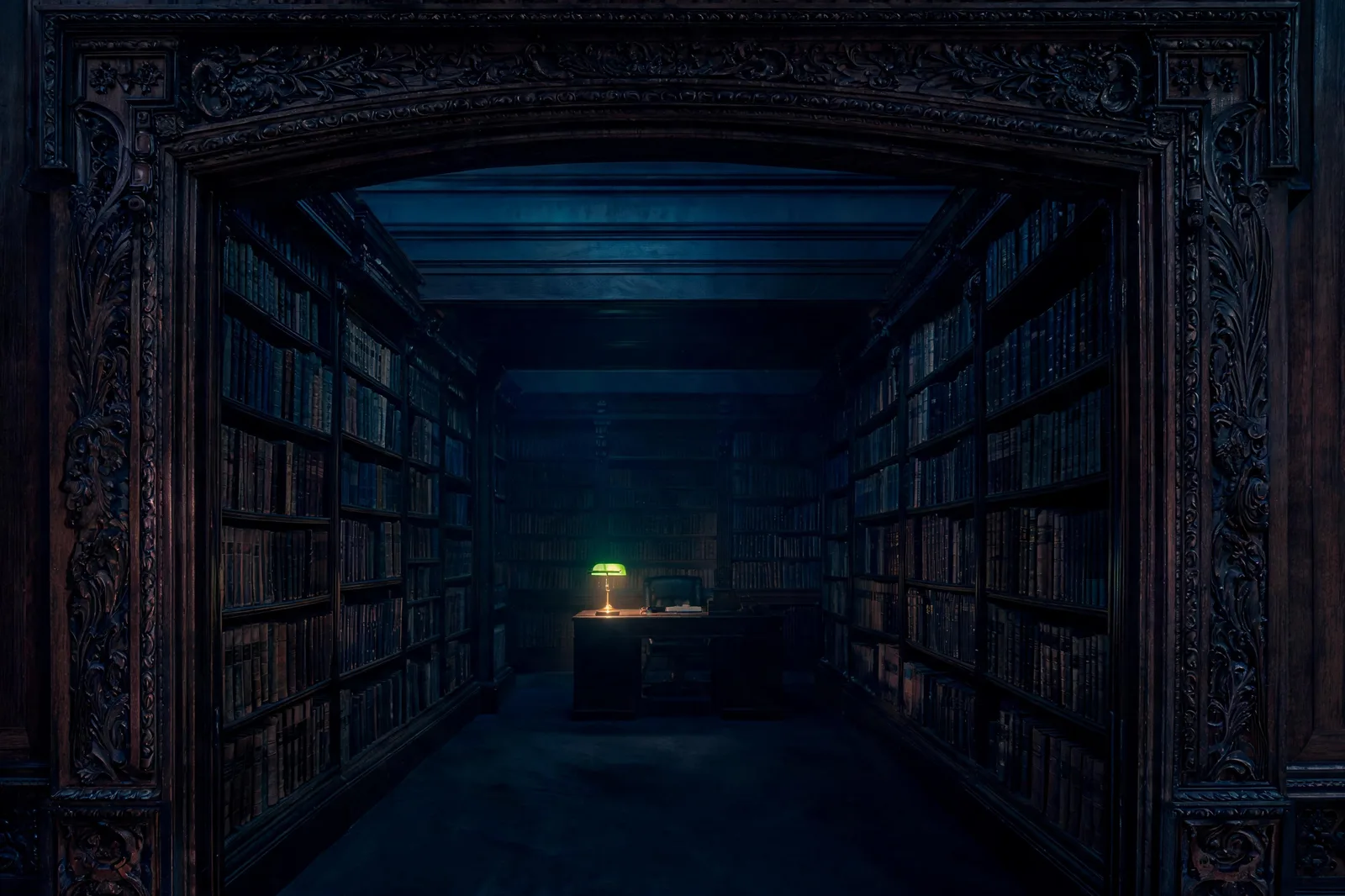
A synthesis built from everything that came before
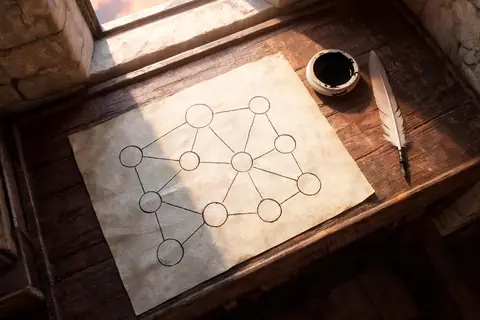
Theosophy tarot connections trace back to the Theosophical Society, founded in New York in 1875 by Helena Blavatsky, Henry Olcott and William Quan Judge, a movement that deliberately gathered Hermetic philosophy, Eastern religion, Kabbalah and modern spiritualism into one global system claiming access to a single underlying "ancient wisdom" behind every world religion. By the turn of the twentieth century, Theosophy had become the dominant intellectual climate in which new esoteric tarot decks were designed, read and marketed. The previous article in this series followed Swedenborg's doctrine of correspondences through Swedenborg's Correspondences and Tarot Symbolism; Theosophy is where that current, and every other one this series has traced, converged into a single widely shared vocabulary.
Blavatsky's own attitude toward the tarot specifically was cool at best, yet the movement she founded supplied the exact cultural conditions under which the esoteric reading of the cards finally took hold. Her two major works, Isis Unveiled and The Secret Doctrine, moved across continents and centuries at a pace few readers could fully verify, borrowing freely from Egyptology, Hindu scripture, Kabbalah and the natural sciences of her day, all folded into a single sweeping historical narrative.
Blavatsky, the Masters, and hidden knowledge
Blavatsky's central claim was access to a hierarchy of hidden spiritual teachers, the "Masters" or Mahatmas, said to guard humanity's ancient wisdom and transmit it selectively through chosen messengers. The Priestess, seated between two pillars and guarding a veiled, partly hidden scroll, maps almost perfectly onto this Theosophical image of concealed knowledge released only to the prepared seeker. Whether or not any reader of the card has ever heard of Blavatsky, the pattern of veiled wisdom awaiting a worthy interpreter was, by 1900, so thoroughly in the cultural water that it shaped how occultists of every stripe pictured their own authority.
Helena Blavatsky never fully systematised a Theosophical tarot of her own, but her framework of root races, cosmic cycles and hidden masters gave later writers, including members of the Golden Dawn working in parallel London circles, a shared idiom for claiming ancient legitimacy. Several early Golden Dawn members had passed through Theosophical lodges before founding their own order, carrying its vocabulary of initiation and hidden adepts with them even as they built a distinctly different magical curriculum.
Why Theosophy and the Golden Dawn overlapped so heavily
Many figures moved between Theosophical and Golden Dawn circles, or borrowed freely from both without formal membership in either. The two movements shared a historical moment, late Victorian London and its appetite for a synthesis of science, religion and the occult, more than they shared a single doctrine. Theosophy leaned East, toward Hindu and Buddhist cosmology reframed in Western esoteric language; the Golden Dawn leaned toward Kabbalah, Hermeticism and ceremonial magic descended from exactly the Renaissance currents this series has traced. Where they agreed was on the deeper assumption running through nearly every article here: that beneath the world's many separate religions and philosophies lies one older, unified wisdom, fragmented by history but recoverable by the right method.
This shared assumption, more than any specific doctrine, is Theosophy's real gift to the modern tarot reader. It is also why a reader can move comfortably between a Kabbalistic path, a Hermetic axiom and an Eastern-flavoured meditation technique within a single sitting, treating the mixture as natural rather than contradictory, a habit of mind Theosophy normalised for an entire generation of occult writers before anyone paused to ask whether the traditions involved had ever actually agreed with one another.
What a century of synthesis leaves behind
By the time Aleister Crowley and Lady Frieda Harris began work on the Thoth deck in the 1930s, the Theosophical habit of treating every tradition as a dialect of one underlying truth had become simply how educated occultists thought, often without naming its source at all. As Western Esotericism as a Discipline: Faivre, Hanegraaff and the Aries Journal makes clear, scholars now study this entire pattern, concealment, correspondence, claimed ancient unity, as the defining shape of Western esotericism itself, rather than treating any single current discussed across this series as the whole story.
This closes the series: ten currents, from the Corpus Hermeticum's ancient theology to Theosophy's global synthesis, each leaving its own layer inside a deck that still, remarkably, holds them all without collapsing under the weight.
FAQ
Did Blavatsky create or endorse a specific tarot deck? No. She wrote little about tarot specifically; her influence on the cards is indirect, through the broader esoteric climate Theosophy helped create.
What did the Theosophical Society actually claim? Access, through its founders and later leaders, to a hidden hierarchy of spiritual Masters guarding a single ancient wisdom behind the world's religions.
How did Theosophy and the Golden Dawn differ? Theosophy drew mainly on Eastern religious cosmology; the Golden Dawn drew mainly on Kabbalah, Hermeticism and Renaissance ceremonial magic, though both shared a similar synthesising ambition.
Why does this series end with Theosophy? Because it is where the Hermetic, alchemical, Neoplatonic, Rosicrucian, Agrippan, Enochian, Gnostic, Boehmian and Swedenborgian currents already traced all converged into one shared modern vocabulary.
Questions
Did Blavatsky create or endorse a specific tarot deck?
No. She wrote little about tarot specifically; her influence on the cards is indirect, through the broader esoteric climate Theosophy helped create.
What did the Theosophical Society actually claim?
Access, through its founders and later leaders, to a hidden hierarchy of spiritual Masters guarding a single ancient wisdom behind the world's religions.
How did Theosophy and the Golden Dawn differ?
Theosophy drew mainly on Eastern religious cosmology; the Golden Dawn drew mainly on Kabbalah, Hermeticism and Renaissance ceremonial magic, though both shared a similar synthesising ambition.
Why does this series end with Theosophy?
Because it is where the Hermetic, alchemical, Neoplatonic, Rosicrucian, Agrippan, Enochian, Gnostic, Boehmian and Swedenborgian currents already traced all converged into one shared modern vocabulary.
This article talks about
You might also like
 Spirituality
 Spirituality
 Spirituality
© 2026 TAROTS chat (tarots.chat). All rights reserved. No part of this article may be reproduced, distributed or adapted without the owner's written permission.
The Journal
From the Journal
Chosen for this page
 Symbolism
The Tarot Reaches England: Victorian Occultists and Imported Decks
5 min read
More in Symbolism Kabbalah
 Kabbalah
 Kabbalah
 Symbolism
 Wands
 Symbolism
 Symbolism
 Kabbalah