The Princess of Wands: Earth of Fire
How the Thoth court card closing the suit of Wands trades a single decan for a whole season's ground.
by Redazione · 9 October 2026 · 5 min read

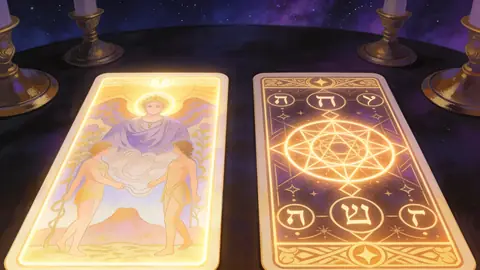
The Princess of Wands, Earth of Fire, is the Thoth deck's name for the court card that closes this series. After Saturn's heavy reckoning in The Ten of Wands, Oppression: Saturn in Sagittarius, the suit does not end on that weight. It resolves into the Princess, whose paradoxical title, earth within fire, names a different kind of attribution altogether: not a ten-degree decan, but a whole quarter of the sky.
Why She Has No Single Decan
Every small card in this series has carried one planet in one ten-degree slice of a zodiac sign. The four court cards work differently. In Golden Dawn attribution, each Princess governs a quadrant of roughly ninety degrees: the final decan of a mutable sign, the whole of the cardinal sign that follows, and the first two decans of the next fixed sign. For the Princess of Wands, tradition holds that this quadrant runs from late Pisces through all of Aries and into early Taurus, the stretch of the solar year framing the spring equinox. She does not belong to one Mars-ruled or Venus-ruled slice the way the Two or Four of Wands does. She belongs to the season itself, the whole arc that this series' first three decans, Dominion, Virtue and Completion, already walked through card by card.
This is why a Princess reads differently from any small card. She is not a moment within the suit's year. She is the ground the whole year stands on.
Earth of Fire: Crowley's Deliberate Paradox
Crowley kept the Golden Dawn's elemental grammar for the court cards: each Princess carries the element Earth within her suit's own ruling element, here Fire. In The Book of Thoth he treats this pairing as the suit's densest, most grounded expression, energy that has stopped moving long enough to become a stable, physical thing. Where the small cards of Wands show fire acting, claiming, proving, contesting, winning, defending, racing, enduring and finally weighing on its bearer, the Princess shows fire settled into form: a person, a project or a style with real, recognisable substance rather than fire's usual restlessness.
Tradition holds that this is also why Princesses, across all four suits, are read as the court's most literal cards: a young woman, a new beginning, or a tangible result, more often than a pure quality or temperament.
Her Place Among the Wands Court
The Princess completes a four-card household alongside the Knight of Wands, the Queen of Wands and the Prince of Wands, each carrying a different elemental mix of fire with air, water or fire again. As the suit's throne of Earth, she is traditionally read as the one most connected to the physical world: a Thoth court reading that distinguishes her clearly from the Prince's intellectual fire or the Knight's impulsive fire keeps the suit's four temperaments from blurring into a single "fire person" archetype.
She also closes the suit's own cosmology. The blog's piece on the suit's broader symbolism, Wands Suit Symbolism in the Thoth Tarot: Fire, Will and Creative Energy, covers the ground she stands on in more depth, and a reader new to this series may want that context before returning to her.
Reading the Princess of Wands in a Spread
In practice, the Princess of Wands suggests a new venture, person or creative spark that has already taken real, workable shape, distinct from the Ace's still-unformed potential. She favours questions about a young initiative ready to be acted on, a person whose enthusiasm is backed by genuine follow-through, or a creative project reaching the point where it can finally stand on its own. Ill-dignified, she can show enthusiasm without substance, a spark that never quite became a flame.
The Golden Dawn's attribution of the court cards to quadrants rather than decans, and their place in the wider structure of the tarot's elemental tables, is covered in general terms on the English Wikipedia's Tarot card meanings article, alongside the court cards' long history as a feature of the deck.
The Princess of Wands closes this ten-part walk through the Wands as decans, from Dominion's first claim in Aries to Oppression's final weight in Sagittarius, settled here into one card that carries the whole suit's ground.
Reading Her at the End of a Series, Not Just a Suit
A reader who has followed every card in this series will notice the Princess answers a question the small cards could not: what does the suit of Wands actually produce? Dominion through Oppression trace an arc of effort, contest and cost, but none of the nine alone shows a finished, standing result. The Princess is that result, read honestly. She is not a reward handed down for enduring Saturn's final decan; she is simply what fire looks like once it has had time to settle into a shape worth keeping. A querent who has sat with a long, difficult reading through several of this series' cards often benefits from closing with the Princess specifically, since she names the tangible thing the whole effort was for, rather than leaving the story at its heaviest point.
Questions
What does Earth of Fire mean for the Princess of Wands?
It names an element pairing: Earth, the most grounded, material element, carried within Fire, the suit's own ruling element, so the card shows fire settled into tangible form.
Why doesn't the Princess of Wands have a decan like the small cards?
Golden Dawn attribution gives each Princess a whole quadrant of about ninety degrees rather than one planet's ten-degree slice, so she governs a season rather than a single moment.
Which part of the zodiac does the Princess of Wands govern?
Tradition holds that her quadrant runs from the final decan of Pisces through all of Aries into the first two decans of Taurus, framing the spring equinox.
How does the Princess of Wands differ from the suit's other court cards?
She is the suit's most grounded, literal court card, often read as a tangible person or result, distinct from the Knight's impulsiveness, the Queen's steady warmth or the Prince's intellectual fire.
This article talks about
You might also like
 Wands
 Wands
 Wands
© 2026 TAROTS chat (tarots.chat). All rights reserved. No part of this article may be reproduced, distributed or adapted without the owner's written permission.
The Journal
 Kabbalah
 Symbolism
 Symbolism
 Thoth Tarot
 Kabbalah
 Kabbalah
 Symbolism
 Symbolism
 Kabbalah