Mother, Double, Simple: The 22 Letters Before They Became Cards
by Redazione · 7 October 2026 · 11 min read
The question the deck inherits
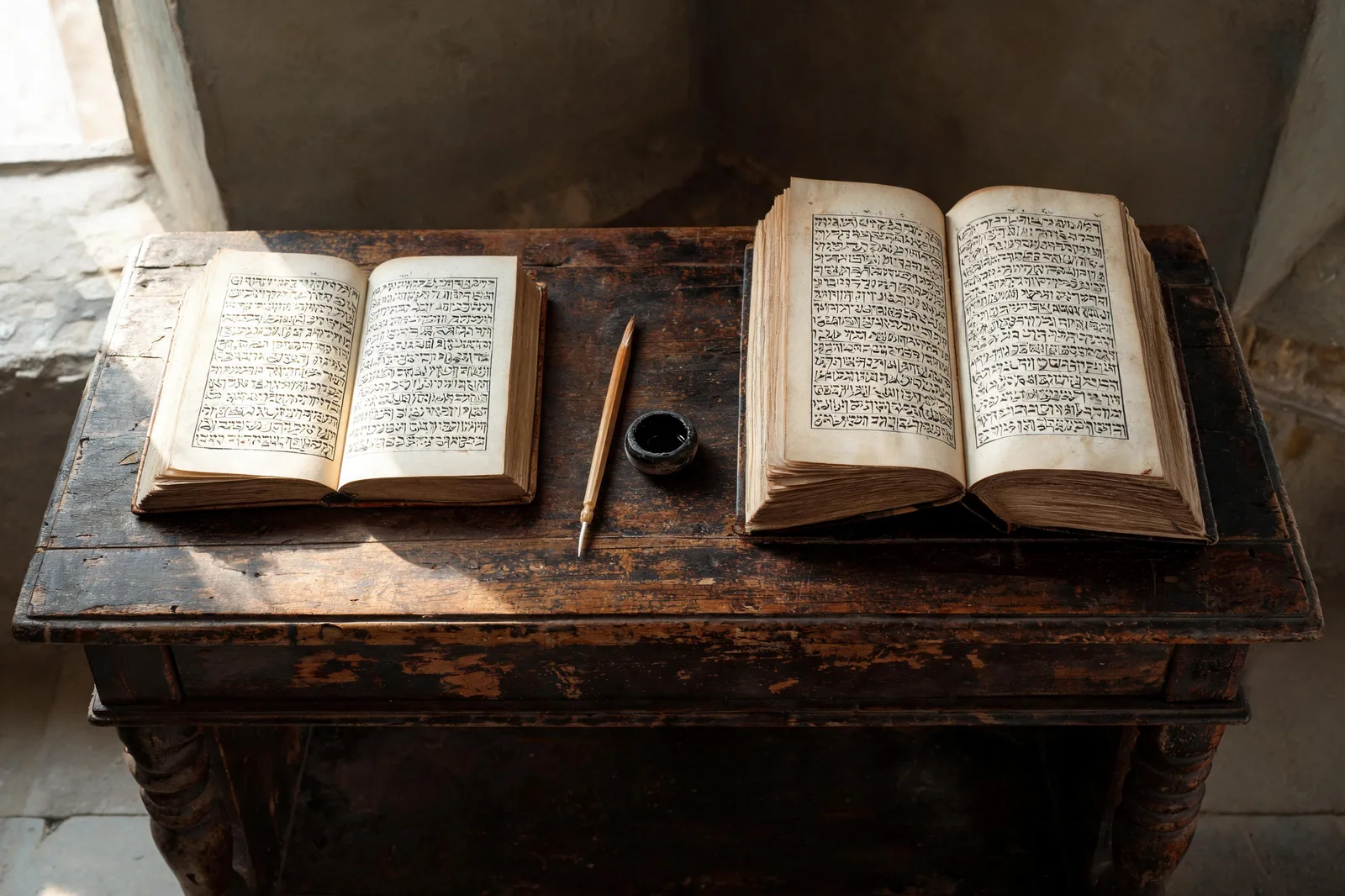
Every attribution table in every modern tarot book starts from the same assumption. The 22 Hebrew letters, the 10 sefirot and the 22 trumps are one coherent system, and someone simply read them off. The Sefer Yetzirah does not say that. It says something stranger. It says the world was built from thirty-two paths of wisdom: ten numbers and twenty-two letters. And it gives you the letters in three classes, the mother, the double and the simple, before it ever mentions a planet or a sign. The sefer yetzirah letters tree that the Golden Dawn later drew around the Fool was not copied from one source. It was assembled from at least two recensions of the book that do not agree with each other. This article opens the first recension, chapter by chapter, and shows exactly what it assigns to Aleph, Mem, Shin and the rest.
What chapter 3 actually says
The third chapter of the Sefer Yetzirah is the heart of the letter system. It names the three mother letters, Aleph, Mem and Shin, and it gives each one a role in the cosmos. Aleph is the airy letter, the one that balances the other two. Mem is the mute, the silent consonant. Shin is the hissing sibilant. The text does not describe them as symbols of abstractions. It describes them as the three elements from which the world was formed. Ruach, the spirit or air, produced water, and water produced fire. These three were potential before the letters made them actual. Aleph, Mem and Shin are the formative powers that pulled the three elements into being.
The book then says the cosmos has three parts: the world, the year, and man. Each part carries all three elements. The water formed the earth. The fire produced the heaven. The ruach produced the air between them. The three seasons, winter, summer and the rainy season, correspond to water, fire and ruach. Man mirrors the same structure. The head is fire, the torso is ruach, and the rest of the body is water. This is not a mnemonic. It is a claim about the architecture of everything.
The double letters and the seven
The next chapter turns to the seven double letters, the ones with two sounds. Bet, Gimel, Dalet, Kaph, Pe, Resh and Taw. Each of them is pronounced hard or soft, and the text uses that duality as its image. The seven planets move, approaching and receding. The seven days change with the planets. The seven openings in the human body connect the person to the outer world: two eyes, two ears, two nostrils and one mouth. The double letters are the formative power behind all three.
The assignment to the planets is where the recensions first part. The classical order that survives in most printed editions, and the one the Golden Dawn inherited, runs from Saturn to the Moon. Bet belongs to Saturn. Gimel to Jupiter. Dalet to Mars. Kaph to the Sun. Pe to Venus. Resh to Mercury. Taw to the Moon. But the longer recension, the one carried by Donnolo's commentary, arranges the same seven differently. A reader who opens the Saadia version and a reader who opens the Gra version are not looking at the same letter-planet map. Both are reading the Sefer Yetzirah. Neither is wrong about the text. They are reading two different texts.
The twelve simples and the twelve
The final letter chapter covers the twelve simple letters, the ones with a single sound. He, Waw, Zayin, Heth, Teth, Yodh, Lamedh, Nun, Samekh, Ayin, Tsade and Qoph. The text assigns them to the twelve signs of the zodiac, because the signs are stable in their relation to the earth. They also belong to the twelve months and to twelve organs in the human body, the hands, the feet, the kidneys, the gall, the intestines, the stomach, the liver, the pancreas and the spleen. Again the mapping is triple. Again the order is what the recensions disagree about.
The standard attribution that reaches the Golden Dawn and then the Rider-Waite and Thoth decks runs through the zodiac in its usual order. He is Aries. Waw is Taurus. Zayin is Gemini. Heth is Cancer. Teth is Leo. Yodh is Virgo. Lamedh is Libra. Nun is Scorpio. Samekh is Sagittarius. Ayin is Capricorn. Tsade is Aquarius. Qoph is Pisces. This is the order the deck inherits. But the Saadia recension, and the older Mantua text, place the simples in a different sequence, one that does not track the zodiac the way a modern reader would expect. The disagreement is not a typo. It is a different editorial tradition with its own logic.
Why the Sefer Yetzirah letters tree is two texts
The two main recensions of the Sefer Yetzirah are the short version and the long version. The short version is about 1,300 words and was annotated by Dunash ibn Tamim. It formed the basis of the first printed edition, published in Mantua in 1562, and of most printed editions after it. The long version is about 2,500 words and survives with a commentary by Shabbethai Donnolo. It is frequently printed as an appendix to editions of the short version. Abraham Abulafia, in the 13th century, noted the existence of both.
The long version contains entire paragraphs that the short version does not have. And the divergent arrangement of the material often changes the meaning. The Jewish Encyclopedia is blunt about this. The two recensions differ so much that a critical edition must consider both. The full history of the text, from the Mantua 1562 edition to the Gra redaction, is laid out in the Wikipedia article on the Sefer Yetzirah. There is no single critical text of the book. The book has no accepted definitive edition. Every attribution table in every tarot book is, in the end, a choice between recensions that have never been reconciled.
The Gra, Luria and the tree the deck inherited
The recension that actually reached the Golden Dawn is not the Mantua text. It is the Gra version. The full correspondence system the Golden Dawn built on it is mapped out in Golden Dawn Tarot Correspondences Explained. What is less well known is how the text itself was assembled before it reached the Golden Dawn at all.
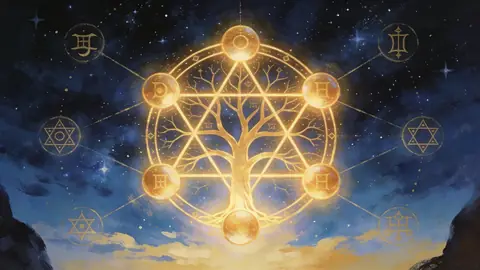
In the mid-16th century, Moses Cordovero, the leader of the Safed school, established a working text based on ten separate manuscripts. His student and successor, Isaac Luria, further redacted it to harmonize it with the Zohar. In the 18th century, the Vilna Gaon, known as the Gra, redacted it again. The result is the ARI-Gra version, and it is the text that the Western esoteric tradition, including the Golden Dawn, read when it drew the tree of life around the 22 trumps.
This matters because the Gra version is a harmonization. Luria edited the text to fit the Zohar. That means the letter attributions the deck inherits are not the raw output of the Sefer Yetzirah. They are the Sefer Yetzirah as read through a Zoharic lens. The three mother letters still map to the three elements. The seven doubles still map to the seven planets. The twelve simples still map to the twelve signs. But the exact order, and the way the letters sit on the tree, is the product of a 16th-century Safed redaction, not of the original Talmudic-era text.
What this changes for the reader of the deck
The question of how the trumps became the Hebrew letters is covered in Tarot and Kabbalah: How the 22 Trumps Became the Hebrew Letters. That article traces the path from the letters to the cards. This one does the reverse: it starts from the cards and asks what the letters actually say.
When you read the Fool as the letter Aleph, or the Fool as the unnumbered card, you are reading a choice. The Sefer Yetzirah gives Aleph the role of the balancing element, the airy letter that holds the middle. The Golden Dawn translated that into the Fool as the beginning, the zero, the unnumbered card that stands before the tree. That translation is faithful to one reading of one recension. It is not the only reading. A reader of the Saadia version, with its different arrangement, might place Aleph differently. A reader of the long version, with its extra paragraphs, might read the mother letters as a different kind of trinity.
The same is true of the double letters and the simple letters. When the deck assigns the Fool to Aleph, or the Magician to Bet, or the High Priestess to Gimel, it is encoding one specific order. The Sefer Yetzirah does not say that order is the only one. It says the letters are the formative powers, and it gives you the three classes. The order is the editorial tradition you inherited. This is not a flaw. It is the point. The tree of life is not a single text. It is a family of trees, and the deck is one of them.
The three trees
The series thesis is this. The Tree of Life and its letter attributions are not one text but a family of different trees. The full structure, the ten sefirot and the 22 paths, is described in the Wikipedia article on the tree of life in Kabbalah. The Kircher tree, the Gra tree, the Lurianic tree, each is a different editorial choice about what the letters do and in what order. The Golden Dawn picked one, the Gra version, and the deck inherited that choice. The disputes about tarot letters, the ones that run through every forum and every book, are not really disputes about the tarot. They are disputes about which late-antique reading you inherited. The Sefer Yetzirah does not settle them. It is the text they are all arguing over.
The Fool, in the end, is not the letter Aleph. It is the position that Aleph occupies in one particular reading of one particular recension of a book that has no definitive edition. That is a more interesting claim than the attribution table suggests. And it is the claim the next three parts of this series will test.
Questions
What does the Sefer Yetzirah say about the 22 letters?
It divides them into three classes: three mother letters (Aleph, Mem, Shin), seven double letters (Bet, Gimel, Dalet, Kaph, Pe, Resh, Taw), and twelve simple letters (He, Waw, Zayin, Heth, Teth, Yodh, Lamedh, Nun, Samekh, Ayin, Tsade, Qoph). It assigns the mothers to the three elements, the doubles to the seven planets, and the simples to the twelve signs.
Are the letter attributions in the tarot deck the same as the Sefer Yetzirah?
Not exactly. The deck inherits the Gra version, a 16th-century Safed redaction that harmonized the text with the Zohar. The Sefer Yetzirah has no definitive edition. The deck encodes one recension's order, not the raw text.
What is the difference between the short and long versions of the Sefer Yetzirah?
The short version is about 1,300 words and formed the basis of the 1562 Mantua edition. The long version is about 2,500 words and survives with Donnolo's commentary. The long version contains entire paragraphs the short version does not have, and the arrangement of the material often changes the meaning.
Which recension did the Golden Dawn use?
The Gra version, the ARI-Gra text. Moses Cordovero established a working text from ten manuscripts. Isaac Luria redacted it to harmonize with the Zohar. The Vilna Gaon redacted it again. This is the text the Western esoteric tradition read when it drew the tree of life.
Does the Sefer Yetzirah mention the tree of life?
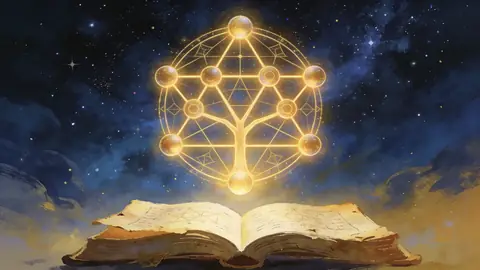
It does not use that term. It describes ten numbers (sefirot) and twenty-two letters as the thirty-two paths of wisdom. The tree of life as a diagram is a later development, a visual representation of the system the book describes.
Questions
What does the Sefer Yetzirah say about the 22 letters?
It divides them into three classes: three mother letters (Aleph, Mem, Shin), seven double letters (Bet, Gimel, Dalet, Kaph, Pe, Resh, Taw), and twelve simple letters. It assigns the mothers to the three elements, the doubles to the seven planets, and the simples to the twelve signs.
Are the letter attributions in the tarot deck the same as the Sefer Yetzirah?
Not exactly. The deck inherits the Gra version, a 16th-century Safed redaction that harmonized the text with the Zohar. The Sefer Yetzirah has no definitive edition. The deck encodes one recension's order, not the raw text.
What is the difference between the short and long versions of the Sefer Yetzirah?
The short version is about 1,300 words and formed the basis of the 1562 Mantua edition. The long version is about 2,500 words and survives with Donnolo's commentary. The long version contains entire paragraphs the short version does not have, and the arrangement of the material often changes the meaning.
Which recension did the Golden Dawn use?
The Gra version, the ARI-Gra text. Moses Cordovero established a working text from ten manuscripts. Isaac Luria redacted it to harmonize with the Zohar. The Vilna Gaon redacted it again.
Does the Sefer Yetzirah mention the tree of life?
It does not use that term. It describes ten numbers (sefirot) and twenty-two letters as the thirty-two paths of wisdom. The tree of life as a diagram is a later development, a visual representation of the system the book describes.
- #golden dawn
- #kabbalah
- #qabalah
- #series-the-three-trees-why-the-sefer-yetzirah-does-not-agree
- #tarot symbolism
You might also like
 Kabbalah
 Kabbalah
 Kabbalah
© 2026 TAROTS chat (tarots.chat). All rights reserved. No part of this article may be reproduced, distributed or adapted without the owner's written permission.
The Journal
 Kabbalah
 Kabbalah
 Major Arcana
 Thoth Tarot
 Thoth Tarot
 Thoth Tarot