Levi's Letters Versus the Golden Dawn: Why They Disagree
by Redazione · 7 October 2026 · 9 min read
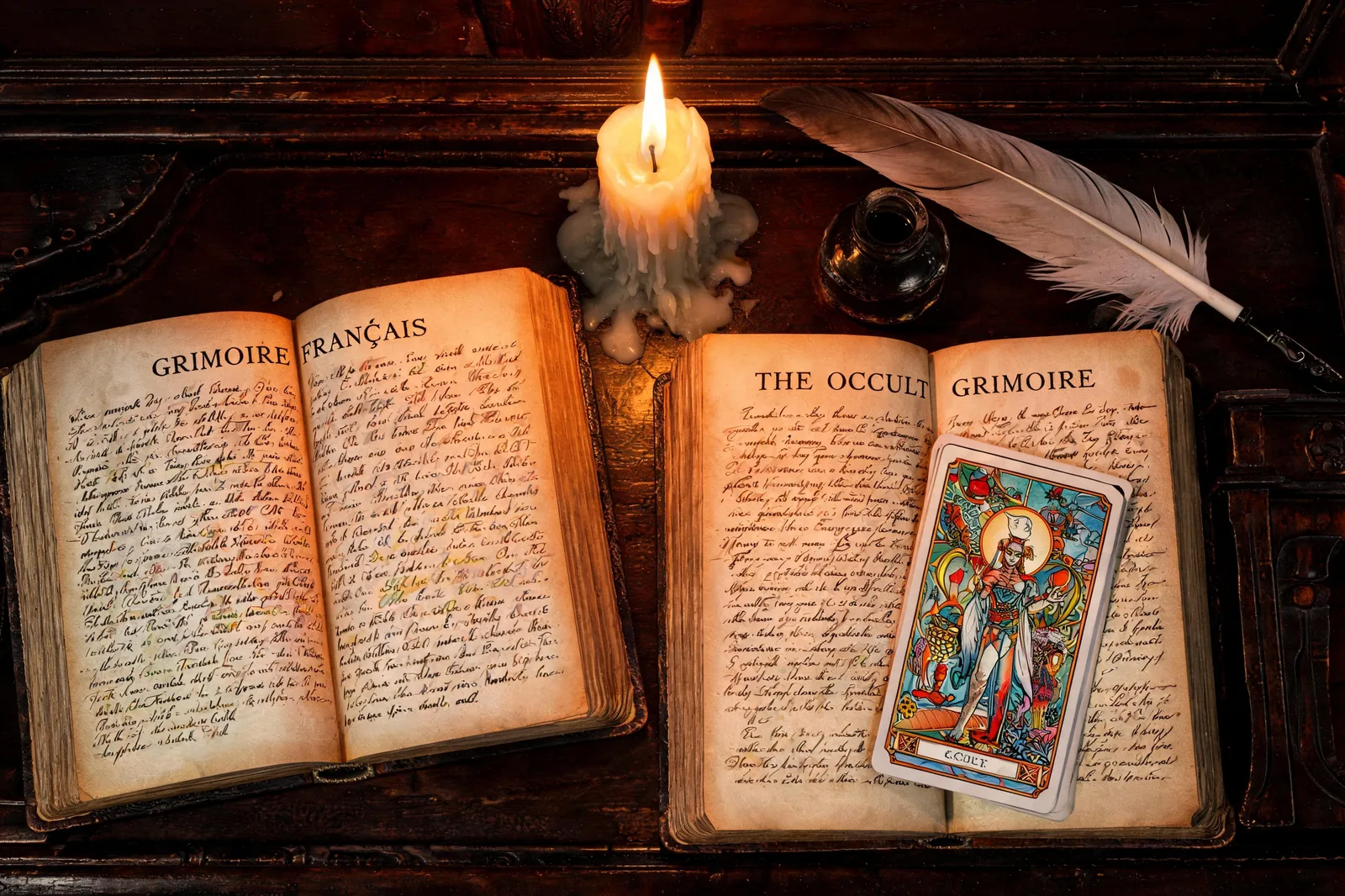
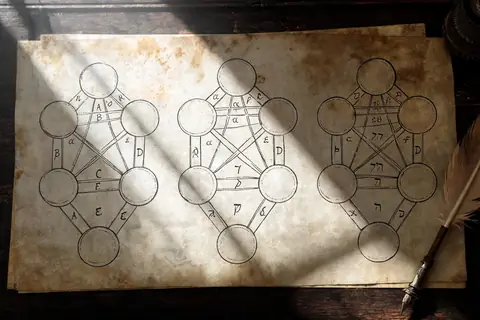
Part two of this series showed that the tree of life is not one diagram but a family of them, and that the letter-on-path question is where they disagree. That is the conclusion of the part on Kircher's Tree, the Gra's Tree, Luria's Tree, which is where the three trees of Kircher, the Gra and Luria were set side by side. That leaves a sharper question, the one this part answers. Why did Lévi assign different letters to the trumps than the Golden Dawn did, and who was copying whom? The levis letter attributions tarot readers argue about in every forum are not the same as the Golden Dawn table, and the difference is not a typo. It is the residue of the three trees from part two, now landing on the deck you hold.
What the levis letter attributions tarot readers inherited from him
Lévi worked in the 1850s, before any of the modern orders, and he built his tarot directly on the Sefer Yetzirah and on the Kabbalah he read in the French esoteric tradition. His central move, recorded in the work that became Dogme et Rituel de la Haute Magie and then in the Histoire de la Magie, is that the 22 trumps are the 22 letters. He took the three mother letters, the seven double letters and the twelve simple letters, and let them carry the elements, the planets and the zodiac signs that the Sefer Yetzirah gives them. In his own summary the letters are "all the gods, all the letters ideas, all the ideas numbers, and all the numbers perfect signs," and the alphabet is the alphabet of Moses, taken from the Egyptians and reaching back to Abraham through the Book of Thoth. The Wikipedia article on Éliphas Lévi traces how this Kabbalistic frame became the public face of his tarot.
The point that matters here is that Lévi was not reading a single authoritative letter table. He was reading the same family of trees that part two described, and he had to pick one. He picked the one that was circulating in the French esoteric world, the one that treated the Sefer Yetzirah as a closed, self-consistent system. That choice, made in the 1850s, is the one that most of the tarot literature of the next seventy years inherited.
The Golden Dawn table, and what it actually is
The Golden Dawn came into being in the late 1880s. Its tarot was compiled by a generation that had Lévi, had Court de Gébelin, and had a much wider reading of the Kabbalistic sources. The result is the table that Regardie published in The Golden Dawn, the one that now sits under every Rider-Waite-Smith deck. It assigns Aleph to the Fool, Bet to the Magician, Gimel to the High Priestess, and so on down to Taw on the World. The path numbers run from eleven to thirty-two. Bill Heidrick's correspondence tables lay out this attribution side by side with the Sefer Yetzirah directions. They make one thing clear. The order is the alphabetical order, letter by letter, matched to the trump order, with a small number of conventional swaps that the Order itself standardized.
That is the Golden Dawn tree in its printed form. It is the Western tree, the one that part two identified as the newest of the three. It is also the one that is still the default in every modern deck, because the Rider-Waite deck of 1909 was cut to that table, and because the Order's teaching materials, reproduced by Regardie in 1937, became the standard reference.
The chain between them: Westcott and the Order
The two tables did not meet by accident, and they did not meet in the abstract. There was a person between Lévi and the Golden Dawn, and that person is the reason the table looks the way it does. W. W. Westcott, one of the three founders of the Order, had already translated the Sefer Yetzirah into English, and it is that translation, not the French reading Lévi had used, that the Order taught from. In other words the chain runs Lévi, whose book popularized the idea that the trumps are the letters, into a generation of students who then had a fresh, literal, English rendering of the very book Lévi was paraphrasing. They read the book, they liked what Lévi had built on it, and they rebuilt it. The result is a table that is Lévi in spirit and the Sefer Yetzirah in letter, which is precisely why the two disagree wherever his paraphrase and the literal text pull apart.
Regardie's 1937 book did the next step, which was to make the Order's working table into a public, citable reference. Before that, the attribution existed in the teaching rooms and in the private papers of the Order. After that, it existed in print, and every deck cut from 1937 forward was cut against a table that had a name, a page, and an author. That is the difference between an attribution you can argue about and an attribution you can check against, and it is why the modern dispute looks the way it does. People are not arguing about letters. They are arguing about which of two printed documents is the authority, and both documents are real, and both are right, and they are not the same thing.
Where the two disagree, and why
The disagreement is not one card. It is the whole logic of the matching. Lévi let the letters carry the meaning and arranged the trumps around that meaning. The Golden Dawn took the alphabetical order and laid it onto the trumps as a fixed sequence. The two methods produce different pairings wherever the meaning order and the alphabetical order do not coincide, and they coincide only by accident.
Take the card everyone argues about, Strength. In the Golden Dawn table the letter is Tet, the ninth letter, and the trump is the eighth position, the traditional Strength. In the Lévi-influenced reading, the card that carries the serpent and the woman is read through a different letter, because the matching follows the Sefer Yetzirah's assignment of that letter to its own direction, not to the alphabetical slot. The same card, two different letters, and the dispute you have read in every forum since the 1970s is this exact dispute, dressed up as a question of "the correct" attribution. There is no single correct attribution, because the two systems are answering two different questions. Lévi is asking which letter the meaning belongs to. The Golden Dawn is asking which letter comes ninth in the alphabet.
The same thing shows up in the pair most people have never noticed. The Golden Dawn table assigns Lamed, the twelfth letter, to Justice, the eleventh position, and assigns the twelfth position to a different letter, because the Order kept the alphabetical sequence fixed and let the card names slide. Crowley, cutting the Thoth deck later, moved the card again. He put the Star where the Emperor had been, and the Emperor where the Star had been. Both of those moves are the same move Lévi was making a generation earlier. The card and the letter do not have to stay glued to the same slot. Every one of those swaps is a vote for one of the three trees from part two. None of them is a correction of the others. The full history of that swap, from the Golden Dawn to the Thoth deck, is laid out in our earlier piece on Golden Dawn Tarot Correspondences Explained, and the broader question of how the deck became Kabbalistic at all is covered in Tarot and Kabbalah: How the 22 Trumps Became the Hebrew Letters.
Who copied whom, and the honest answer
The honest answer to "who was copying whom" is that the Golden Dawn copied Lévi, and then changed him. The Order took his claim that the trumps are the letters, his three classes of letters, his element-planet-zodiac assignment. What they did not take was his freedom to let the meaning drive the matching. They replaced it with a fixed alphabetical sequence, which is easier to teach, easier to print, and easier to turn into a deck. The Lévi letters survived inside the Golden Dawn table wherever the meaning order and the alphabetical order happen to agree, and they disappeared everywhere else.
That is why the three trees of part two matter to a person holding a deck. The deck you are reading is not the Sefer Yetzirah. It is the Golden Dawn's choice of which Sefer Yetzirah to use, made in the late 1880s, printed in 1909, and reproduced in 1937. The letters on it are real letters. The tree they sit on is one of several. The question was never "which letter is the Fool." The question was always "which of the three trees am I reading."
If you hold a Rider-Waite-Smith deck and read the Fool as Aleph, the Magician as Bet, and the High Priestess as Gimel, you are reading the Golden Dawn's choice, which was itself a reading of Lévi, which was itself a reading of the Sefer Yetzirah, which was itself one of several texts. The chain is four links long, and every link is a person making a choice, not a fact being copied. That is the honest state of the letters on the deck. They are not the letters of Moses, and they are not the letters of the Sefer Yetzirah, and they are not the letters of Lévi. They are the letters of a 19th-century Order that liked what it found in all three of those, and cut a deck to the result. Part four of this series looks at what that deck is good for, once you know it is a choice and not a scripture.
Questions
Why did Lévi assign different letters to the trumps than the Golden Dawn?
Because Lévi let the meaning of each Sefer Yetzirah letter drive the matching to a trump, while the Golden Dawn laid the alphabetical order onto the trumps as a fixed sequence. Where the meaning order and the alphabetical order do not coincide, the two tables pair a different letter to the same card.
Who was copying whom, Lévi or the Golden Dawn?
The Golden Dawn copied Lévi, and then changed him. The Order took his claim that the trumps are the letters, but replaced his meaning-driven matching with a fixed alphabetical order that is easier to teach and to print. Regardie's 1937 book made that table the public reference.
Which letter is the Fool in the Golden Dawn table?
Aleph. In the standard Golden Dawn attribution, Aleph is the Fool, Bet is the Magician, Gimel is the High Priestess, and the sequence runs alphabetically to Taw on the World, with the path numbers eleven through thirty-two.
Why does Strength carry a different letter in different sources?
In the Golden Dawn table the letter for the Strength position is Tet. In a Lévi-influenced reading the card is read through the letter the Sefer Yetzirah assigns to that meaning rather than to the alphabetical slot, so the same card gets a different letter. The dispute is about which of two printed tables is the authority.
Are the letters on my Rider-Waite deck 'the real' Hebrew letters?
They are real letters, but they are one choice among several. The deck is the Golden Dawn's reading of Lévi, who read the Sefer Yetzirah, which is itself one of several texts. The letters are a 19th-century choice, not a single authoritative source.
- #golden dawn
- #kabbalah
- #series-the-three-trees-why-the-sefer-yetzirah-does-not-agree
- #tarot history
- #tarot symbolism
You might also like
 Kabbalah
 Kabbalah
 Kabbalah
© 2026 TAROTS chat (tarots.chat). All rights reserved. No part of this article may be reproduced, distributed or adapted without the owner's written permission.
The Journal
 Kabbalah
 Thoth Tarot
 Symbolism
 Thoth Tarot
 Thoth Tarot
 Thoth Tarot