Arthur Machen and Algernon Blackwood in the Golden Dawn
Two horror writers who carried its worldview into fiction
by Redazione · 9 October 2026 · 5 min read
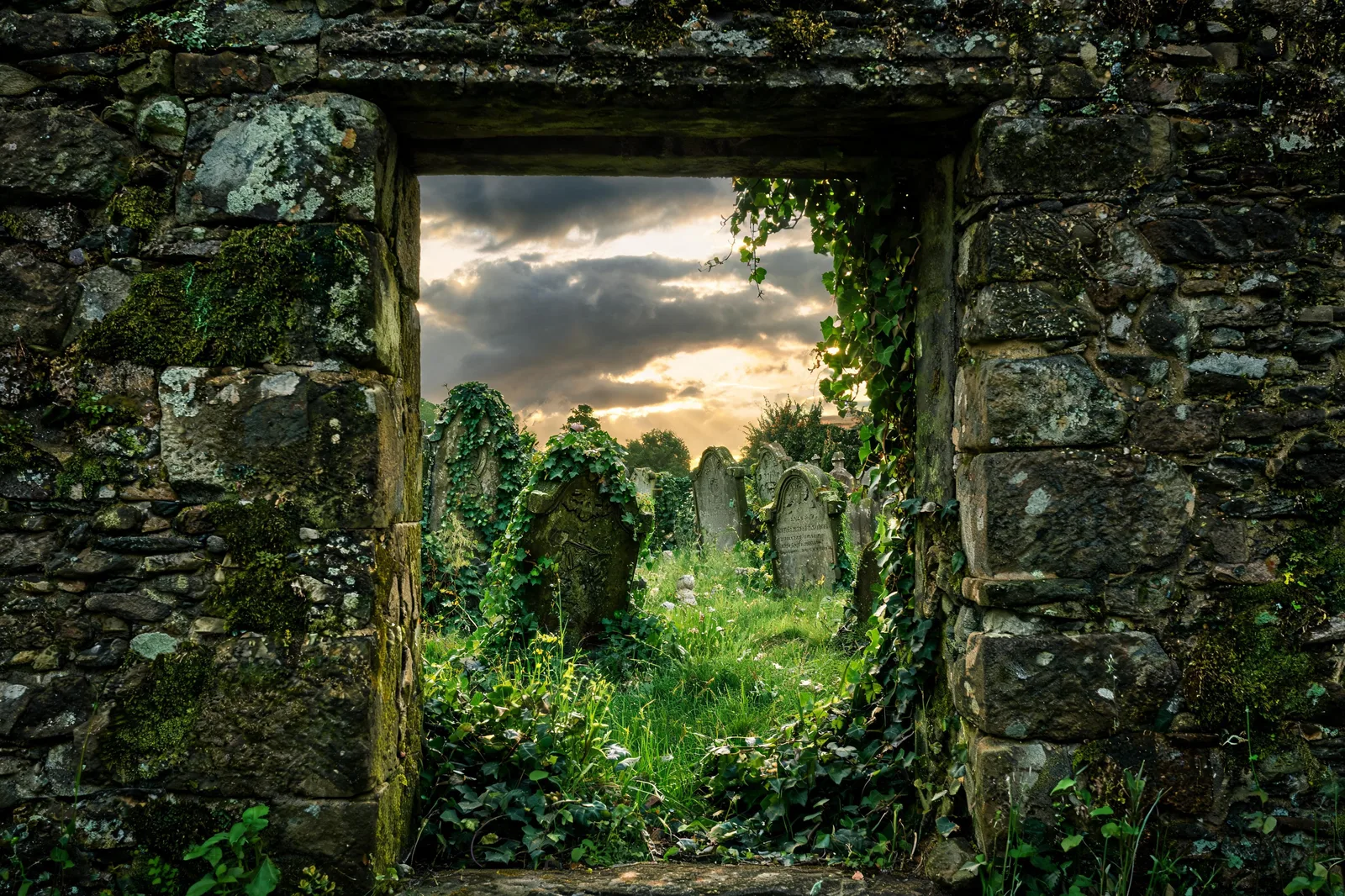
The Arthur Machen Golden Dawn connection began through friendship and curiosity rather than ambition, and the same is true of Algernon Blackwood, who joined the order a year or so later. Both were working writers, not ceremonial specialists, and both used what they found there to build some of the most unsettling supernatural fiction of their era. Neither stayed long enough to become a major figure in the order's internal politics, but their membership says something real about who the Golden Dawn attracted once its reputation spread beyond occult London, past adepts like Allan Bennett: The Adept Who Became a Buddhist Monk, into literary circles proper.
Machen, born in Wales in 1863, had already written The Great God Pan (1894), a novella whose vision of a terrifying reality hidden just behind ordinary appearances scandalised reviewers and sold steadily anyway. He joined the Isis-Urania Temple around 1899, reportedly introduced through his friendship with A. E. Waite, who was already a member and would later found his own splinter order. Machen's interest in the Golden Dawn seems to have been more intellectual than devotional. He valued its claim that the visible world concealed a deeper, stranger order of things, a conviction that matches his fiction far more than it matches any specific ritual technique he is known to have practised.
Arthur Machen Golden Dawn Fiction: A Horror Writer's Hidden Reality
Machen's fiction returns obsessively to the idea that ancient, pre-Christian forces survive beneath modern Britain, waiting to break through. That theme runs parallel to the Golden Dawn's own premise, that a secret current of real knowledge survives beneath exoteric religion, even though Machen filtered it through dread rather than aspiration. The Moon is the Thoth card of illusion, hidden paths and the uncanny edge of the unconscious. It sits unusually close to the landscape of a Machen story: a quiet Welsh valley that turns out to hide something much older than the church built on top of it.
Machen did not remain an active member for long and left little record of advancing far through the order's grades. His occult period mattered less for what he practised than for the vocabulary and worldview it lent a writer already primed to use it.
What Arthur Machen and Golden Dawn ritual shared
A common misconception treats Machen as a dabbler who borrowed occult colour for atmosphere alone. The record suggests something closer than that. Machen's novella The Hill of Dreams explores a slow, dangerous absorption into a hidden symbolic world that mirrors the grade system's own logic of sequential revelation, where each stage changes how the initiate reads the one before it. Whether Machen drew this structure consciously from his Golden Dawn membership or arrived at it through his own reading of myth and landscape is not settled by the surviving correspondence, and readers should treat the connection as a plausible influence rather than a documented source. What is clear is that Machen kept circling the same idea in book after book long after he had stopped attending any temple: that the world worth describing is the one just behind the visible one.
Blackwood's pantheist mysticism
Algernon Blackwood, born in 1869, joined the Golden Dawn around 1900, slightly later than Machen and into a temple already strained by the disputes that would shortly fracture it. Blackwood's own mysticism leaned toward nature rather than ceremony. He had spent years in Canada and travelled widely, and his fiction, especially The Willows (1907) and The Wendigo (1910), treats wild landscapes themselves as conscious, indifferent and capable of erasing a human mind that strays too far into them. Tradition holds that his Golden Dawn training sharpened this instinct. It gave him a technical vocabulary for altered states and liminal perception. Blackwood's own comments on the order are sparse, though, so this connection is more plausible than documented in detail.
Unlike Machen, Blackwood went on to a long public career as a broadcaster. He became one of the first writers to read his own ghost stories on BBC radio in the 1930s and 1940s. That role made him one of the most recognisable voices of supernatural fiction in Britain well into old age.
Why Machen and Blackwood matter to Golden Dawn history
Neither Machen nor Blackwood left behind ritual papers, lodge correspondence or doctrinal writing comparable to what Mathers, Westcott or Regardie produced. Their contribution to the order's legacy runs through a different channel entirely. Fiction carried the Golden Dawn's basic premise, that ordinary reality is a surface over something larger, into a mainstream reading public that never opened a single lodge document. A reader who first met the idea of hidden correspondences through The Great God Pan or The Willows, long before hearing the words Golden Dawn, was absorbing the same worldview the order's own initiates studied formally.
Their presence on the membership rolls is a useful corrective to any picture of the Golden Dawn as a closed society of occultists alone. It also drew in two novelists who turned its central intuition into literature still read today, and whose reputations have long outlasted most of the lodge disputes that briefly touched their lives. Fuller biographical detail on both men is available in the Arthur Machen and Algernon Blackwood entries on Wikipedia.
Questions
When did Arthur Machen join the Golden Dawn?
Around 1899, reportedly introduced through his friendship with fellow member A. E. Waite.
Did Algernon Blackwood write about his Golden Dawn membership?
Only sparsely. He joined around 1900, and his supernatural fiction shows a sensibility compatible with occult training, but direct comment from him on the order is limited.
Did either writer rise far through the Golden Dawn's grades?
There is no strong evidence either man pursued advanced grades; both engaged with the order's ideas more as writers than as ceremonial practitioners.
What is Arthur Machen's best-known work?
The Great God Pan (1894), a novella about a hidden, terrifying reality beneath the ordinary world, a theme that echoes the Golden Dawn's own premise.
This article talks about
You might also like
 Thoth Tarot
 Thoth Tarot
 Thoth Tarot
© 2026 TAROTS chat (tarots.chat). All rights reserved. No part of this article may be reproduced, distributed or adapted without the owner's written permission.
The Journal
 Major Arcana
 Symbolism
 Spirituality
 Kabbalah
 Love
 Kabbalah
 Symbolism
 Symbolism
 Kabbalah