Crowley's Golden Dawn Years, 1898 to 1900
Rapid rise, a contested grade, and a very public collapse
by Redazione · 9 October 2026 · 5 min read
The Crowley Golden Dawn years, 1898 to 1900, lasted barely two years in total, yet they shaped nearly everything he did afterward, including the deck Lady Frieda Harris would eventually paint with him four decades later. He joined as an ambitious young man with money and no patience for the order's usual pace, and he left as the central figure in its most public and most damaging internal crisis.
Aleister Crowley was initiated into the Isis-Urania Temple in November 1898, drawn by the same intellectual appetite for ceremonial structure that had brought in Mathers, Farr and the rest of the founding generation. He advanced quickly through the outer grades, helped considerably by Allan Bennett: The Adept Who Became a Buddhist Monk, who tutored him directly in ceremonial technique and shared lodgings with him in London during this period. Crowley's wealth let him treat magical study as a full-time occupation in a way few other members could afford, and his evident ability unsettled as many colleagues as it impressed.
A contested promotion
By 1899, Crowley wanted advancement to the Adeptus Minor grade, the inner order threshold that separated serious practitioners from outer-grade students. The London adepts, including Yeats, resisted promoting him that quickly, citing both procedural concerns and discomfort with Crowley's personal conduct and reputation. Mathers, watching from Paris and increasingly at odds with his own London membership over questions of authority, resolved the dispute by personally initiating Crowley into the grade himself in Paris, bypassing the London temple's judgment entirely.
That decision did real damage. It confirmed to the London adepts that Mathers would override their collective authority whenever it suited him, adding fuel to a conflict over legitimacy that was already burning over the disputed Cipher Manuscripts and the order's true origins. The Chariot is the Thoth card of willed advance against resistance. It is an apt enough image for how Crowley got his grade: driven forward by raw determination and a powerful patron, with the consent of the people meant to judge him left almost entirely out of the process.
The Battle of Blythe Road
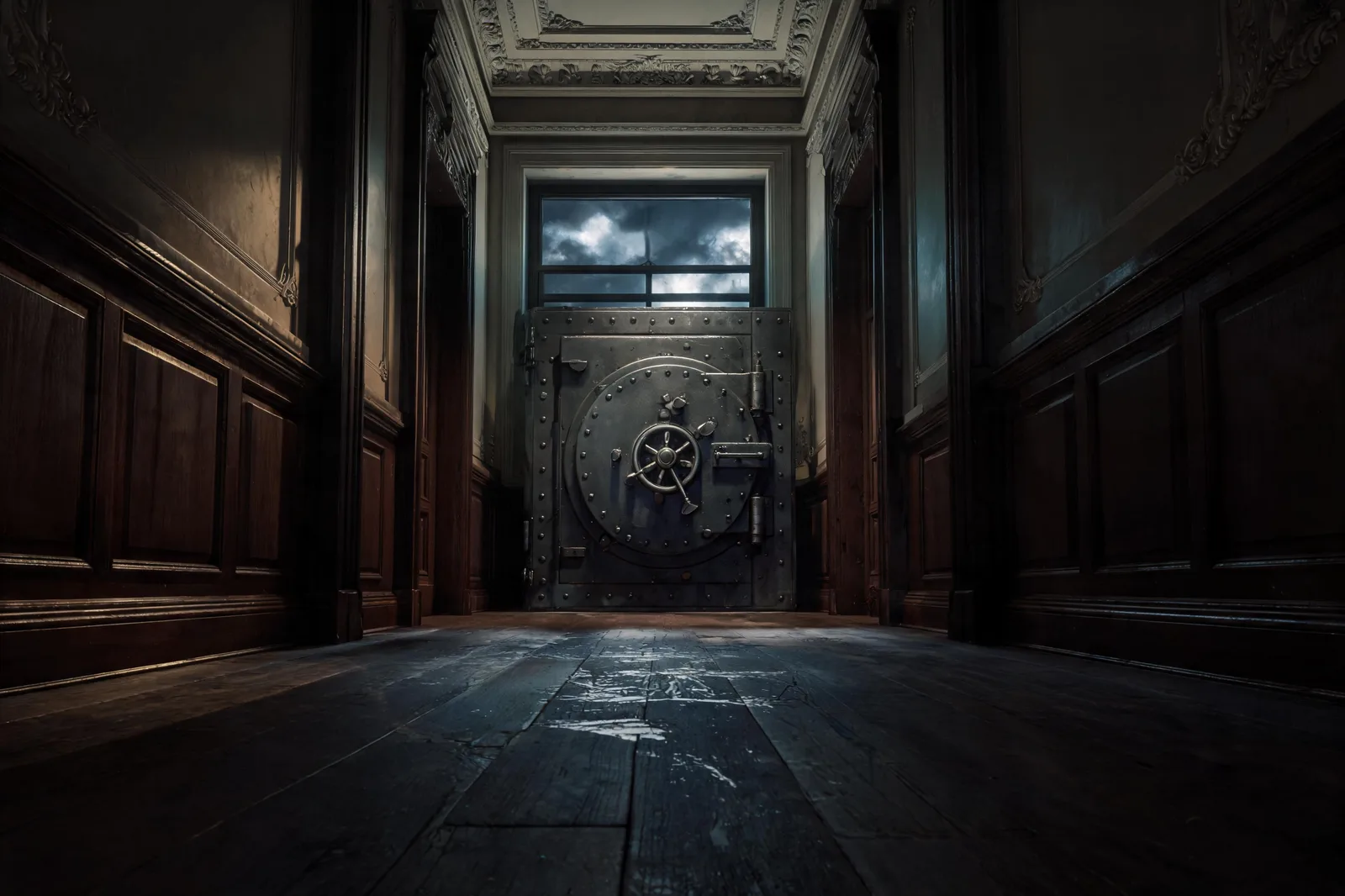
The breach came to a head in 1900. Furious at the London temple's rebellion against his authority, Mathers sent Crowley to seize the order's ritual vault at Blythe Road on his behalf, a confrontation now remembered as The Battle of Blythe Road: Golden Dawn Members Fight for a Vault. Crowley arrived dressed in Highland regalia and a black mask, an outfit later accounts treated as almost comic, and attempted to take physical control of the premises. The London members refused to yield, called the police, and the attempt collapsed into public farce rather than the decisive victory Mathers had wanted.
The episode effectively ended Crowley's standing with the original Isis-Urania structure for good. He remained loyal to Mathers for a time afterward, following him into the Paris-based project that would later become Alpha et Omega: Mathers's Order After 1900. That relationship also soured within a few years, though, leaving Crowley without a formal attachment to any Golden Dawn successor body by the middle of the decade.
A common misreading of these years
Popular accounts sometimes collapse the whole episode into a simple morality tale: brilliant young magician destroyed a venerable order through sheer arrogance. That framing flatters a dramatic narrative but flattens a messier reality. The Golden Dawn's authority structure was already failing before Crowley joined at all, strained by Mathers's unverifiable claims about the order's hidden founders and by growing resentment at his one-man rule from Paris. Crowley did not create that instability. He arrived at a moment when it was already close to breaking, and his contested promotion gave the London adepts a concrete grievance to rally around rather than an abstract one. Removing Crowley from the story entirely would not have saved the Isis-Urania Temple; it would likely have delayed the same rupture by a year or two at most, probably triggered by some other ambitious member Mathers chose to favour in his place.
What the Crowley Golden Dawn Years Left Behind
Two years is a short apprenticeship by the standards of the order's own grade system, and Crowley never completed the full course of study the founders had designed. What he took from it, though, mattered enormously: the correspondences, the grade structure, the basic grammar of ceremonial magic. That material became the scaffolding for everything he built afterward, including the system of attributions that Lady Frieda Harris eventually painted into the Thoth deck decades later.
Crowley's own account of these years, scattered through his Confessions, is coloured by decades of later self-mythologising, so specific claims about his own ability or his opponents' motives are worth treating with some caution rather than as settled fact. The broader shape of the story, rapid rise, contested promotion, public collapse, is corroborated well enough by other members' accounts to stand as the clearest single account of how badly the Golden Dawn's authority structure had failed by 1900. For more biographical detail, the Aleister Crowley entry on Wikipedia covers the wider arc of his life before and after these two pivotal years.
Questions
When was Crowley initiated into the Golden Dawn?
In November 1898, into the Isis-Urania Temple in London.
Why was Crowley's promotion to Adeptus Minor controversial?
The London adepts resisted promoting him so quickly, so Mathers personally initiated him into the grade in Paris, bypassing their judgment entirely.
What was Crowley's role in the Battle of Blythe Road?
Mathers sent him to seize the order's ritual vault on his behalf; the London members refused to yield and called the police, ending the attempt in public farce.
Did Crowley stay with the Golden Dawn after 1900?
He briefly followed Mathers into the Paris-based project that became Alpha et Omega, but that relationship also broke down within a few years.
This article talks about
You might also like
 Thoth Tarot
 Thoth Tarot
 Thoth Tarot
© 2026 TAROTS chat (tarots.chat). All rights reserved. No part of this article may be reproduced, distributed or adapted without the owner's written permission.
The Journal
 Career
 Symbolism
 Spirituality
 Disks
 Kabbalah
 Symbolism
 Symbolism
 Symbolism
 Kabbalah