Rider and Company: The Publisher of 1909
by Redazione · 9 October 2026 · 5 min read

Who finally solved the shortage described through The Tarot Reaches England: Victorian Occultists and Imported Decks, the decades in which English occultists had no domestic tarot deck of their own? Rider and company tarot 1909 is the answer: a London publishing house, not an occult order or a card-making guild, closed the gap by printing a new deck alongside its companion book. This final part of the series looks at the publisher itself, the ordinary commercial decision that gave England its first tarot deck.
A publisher of practical and esoteric books
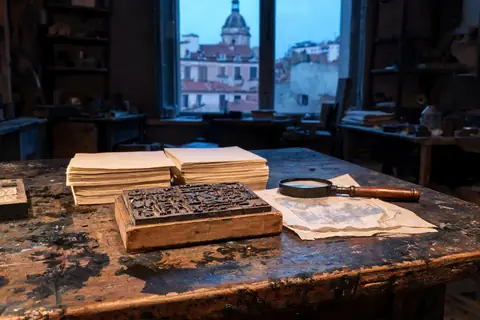
William Rider & Son was an established London publisher by the early twentieth century, known for a catalogue that mixed practical self-help titles with esoteric and occult works, a combination that made commercial sense for a readership increasingly interested in spiritualism, theosophy and ceremonial magic. A. E. Waite, already a prolific author and translator within that same esoteric publishing world, approached the firm with a project unlike the hand-painted ritual sets and imported decks discussed in the previous part: a complete, newly illustrated tarot deck meant for ordinary commercial sale, paired with an explanatory handbook.
Rider and company tarot 1909: the book and the deck together
Rider published the deck and Waite's accompanying text, The Pictorial Key to the Tarot, as a linked pair in 1909, a packaging decision that mattered commercially as much as intellectually. A buyer purchasing the deck got Waite's interpretive framework bundled with it, solving the exact problem Victorian occultists had faced for two decades: cards without context, or context without cards. Pamela Colman Smith, commissioned to illustrate all seventy-eight cards including fully pictorial pips, a notable departure from the plain numeral cards typical of earlier European decks, did the artistic work; Rider's role was getting that work printed, bound and sold through ordinary bookshop channels rather than through private occult circles.
Why a mainstream publisher mattered
Rider's commercial reach changed the tarot's availability in England more than any prior ritual practice had. A deck sold through standard publishing and bookshop distribution reached a far wider audience than hand-painted Golden Dawn sets ever could, and it did so at an ordinary retail price rather than through private commission or import duty. This single publishing decision effectively ended the shortage examined through The Tarot Reaches England: Victorian Occultists and Imported Decks: for the first time, any interested English reader could walk into a shop and buy both a deck and its interpretive key without arranging a French import or copying a friend's hand-painted set.
A deck shaped by its publisher's market
Rider and Company tarot 1909 also reflects what a mainstream publisher needed commercially: clear packaging, an accessible explanatory book, and artwork legible enough for a general audience rather than restricted to initiates. That commercial framing shaped the deck as much as Waite's Kabbalistic scheme or Smith's artistic choices did. Compare this with The Emperor as rendered across different traditions, and the Rider deck's clarity of figure and symbol stands out precisely because it was designed to be read correctly by a buyer with only the companion book for guidance, not by an initiate trained over years within an order.
What the rider and company tarot 1909 contract looked like
Little survives in the public record about the exact commercial terms Waite and Smith negotiated with Rider, a gap typical of early twentieth-century publishing agreements that were never meant to be historically significant at the time. What is documented is the basic shape of the arrangement: a publisher taking on both an illustrated deck and its companion volume as a single commercial product, with Smith paid a flat fee for the artwork rather than ongoing royalties, a common and unfavourable practice for illustrators of the period. That flat payment meant Smith saw none of the deck's later commercial success directly, even as it became one of the most reproduced sets of images in the whole history of publishing.
A long afterlife for a short print run
The deck's publishing history after 1909 involved several reprintings and eventual changes in ownership of the rights, with later twentieth-century editions handled by other publishers as the deck's popularity grew far beyond what Rider likely anticipated. It became, over decades, probably the best-known tarot deck in the English-speaking world, a status that owes as much to Rider's original decision to publish deck and book together for ordinary retail sale as to the artwork or Waite's text individually. The Wikipedia overview of the Rider-Waite tarot deck covers its publication history and subsequent editions in more detail.
Closing this part of the series
Ten parts, one argument: the tarot's history before the esoteric mainstream took hold was a history of printers, guilds, taxes, preachers, card games and, finally, an ordinary London publisher filling a commercial gap. Rider and Company tarot 1909 belongs on that list beside Nicolas Conver's woodblocks and Jean Dodal's Lyon workshop, not above them. Every deck in this series started as somebody's commercial or administrative decision, long before it became anybody's symbol of the sacred.
Questions
What is Rider and Company tarot 1909?
The London publishing house William Rider & Son, which released a new tarot deck in 1909 alongside A. E. Waite's companion book.
Why did Rider publish the deck and book together?
Bundling solved the problem English occultists faced for decades: imported cards without explanation, or translated theory without an available deck.
Who illustrated the Rider deck?
Pamela Colman Smith, commissioned to draw all seventy-eight cards including fully pictorial pip cards, a departure from plain numeral cards.
Why was a mainstream publisher significant for the tarot?
It moved the deck from private ritual sets and imports into ordinary bookshop distribution, reaching a far wider English readership.
This article talks about
You might also like
 Symbolism
 Symbolism
 Symbolism
© 2026 TAROTS chat (tarots.chat). All rights reserved. No part of this article may be reproduced, distributed or adapted without the owner's written permission.
The Journal
From the Journal
Chosen for this page
 Spirituality
The Magus Tarot Card Meaning: Willpower, Manifestation and Divine Connection
3 min read
More in Spirituality Kabbalah
 Kabbalah
 Kabbalah
 Kabbalah
 Relationships
 Symbolism
 Symbolism
 Kabbalah