Gematria and the Numbers of the Trumps
by Redazione · 9 October 2026 · 5 min read
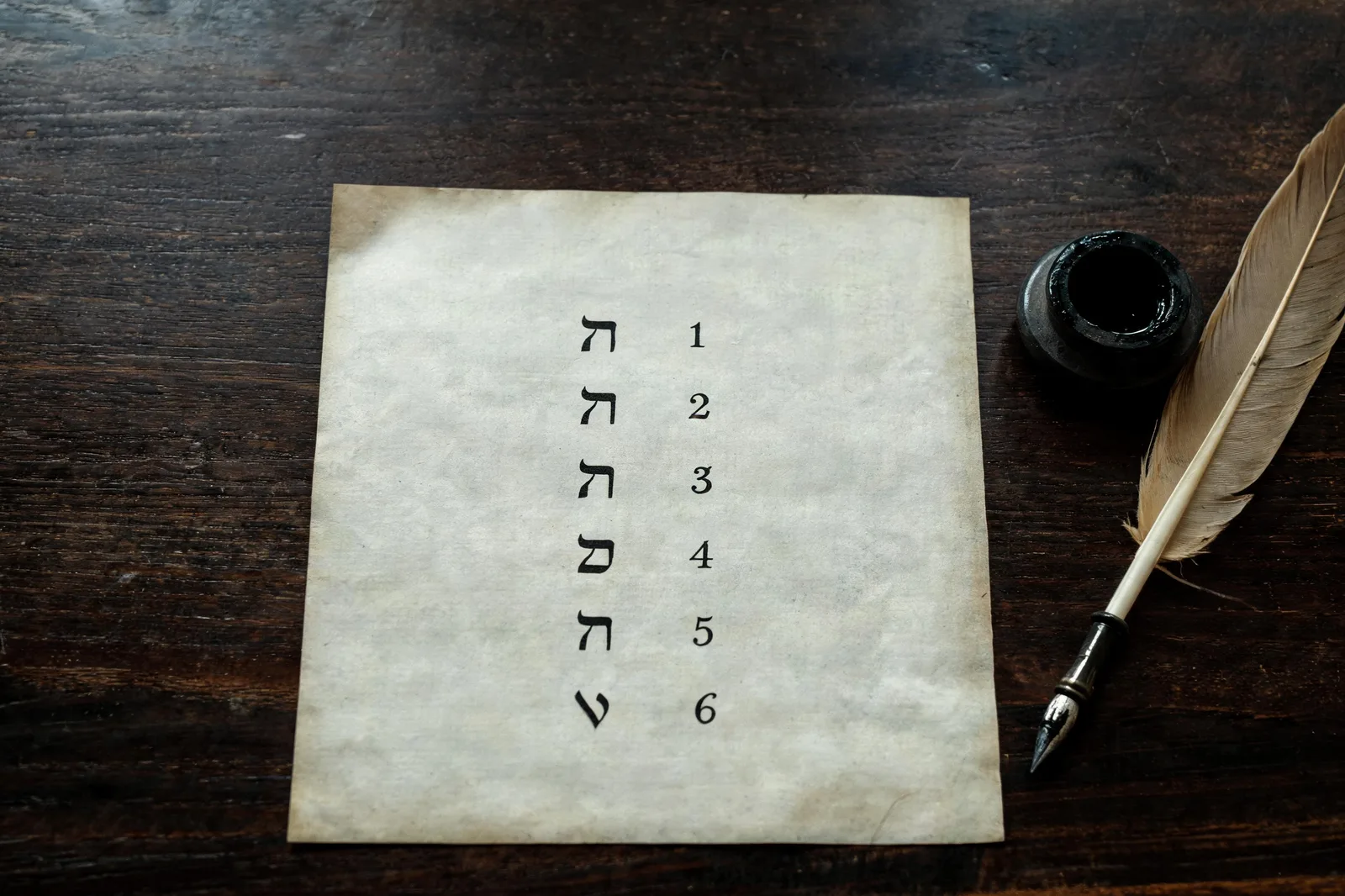
Gematria tarot connections start with a simple fact: every Hebrew letter is also a number. Aleph is one, Beth is two, and so on through the alphabet attributed to the twenty-two trumps. Once a letter carries a number, any word built from those letters carries a sum, and two words sharing a sum become, in Kabbalistic practice, worth reading side by side. Applied to the Major Arcana, this turns the deck's numbering from a simple sequence into a web of numeric kinship that a reader can trace between cards that otherwise look unrelated.
What gematria actually is
Gematria is a method, not a single fixed system: it assigns a numeric value to each Hebrew letter and then sums the letters of a word or phrase. Rabbinic commentators used it for centuries to find connections between biblical verses that share a total, treating the match as suggestive rather than proof. The practice has a long documented history inside Jewish exegesis, summarised well on Wikipedia's gematria entry, and it travelled into Christian Cabala and then into Golden Dawn occultism along the same route the Hebrew letters themselves took onto the trumps, discussed in this series after the Tetragrammaton in The Tetragrammaton and the Sixteen Court Cards.
From letters to card numbers
Each trump's attributed Hebrew letter already carries a numeric value independent of the trump's own place in the sequence zero to twenty-one. Zain, attributed to The Lovers, is seven; Cheth, attributed to The Chariot, is eight. These letter-values do not always match the card's own position number, and that mismatch is itself informative: it shows two different numbering systems laid over the same card, one from the trump's sequence in the deck and one from the letter's place in the alphabet. A careful reader keeps both systems distinct rather than collapsing them, since conflating them produces false numeric coincidences that gematria practice was never meant to generate.
Shared sums, shared meaning
The more interesting gematria work happens between words, not single letters. A name or phrase relevant to a card's meaning can be checked against the sums of other Hebrew words, and a match becomes a prompt for interpretation rather than a settled fact. Aleister Crowley used this method extensively in his own writing on the Thoth deck, treating numeric agreement between a trump's attributions and other sacred words as evidence of a deeper structural link. Golden Dawn-trained readers inherited the same habit: a numeric echo between two concepts was treated as worth investigating, never as proof that required no further argument.
A tool for study, not a verdict
Gematria's biggest risk, acknowledged by careful practitioners, is over-fitting: with enough words and enough letter values to choose from, almost any two concepts can be made to share a sum if a reader searches long enough. Responsible use treats a gematria match as a starting point for reflection on a card, something to weigh against the card's established attributions, never as a final answer about what a trump "really" means. Tradition holds the practice loosely for exactly this reason: it is a tool of resonance and suggestion, inherited from a much older rabbinic method, and it works best when a reader stays honest about the difference between a striking numeric pattern and a demonstrated fact.
Reading it into a session
At the table, gematria rarely appears directly; it lives instead in the background knowledge a reader brings to a card's numeric position and its Hebrew letter. A reader who knows that a trump's letter-value links it, by sum, to another word in the tradition can hold that association quietly while reading, letting it colour an intuition without announcing it as doctrine to a client. Used this way, gematria deepens a reader's own sense of a card's place in the whole system without turning a reading session into a numerology lecture.
FAQ
Is gematria unique to tarot? No. It is a much older Jewish exegetical method, applied to biblical Hebrew for centuries before Golden Dawn occultists adapted it to the trumps and their attributed letters.
Do card numbers and letter-values always match? No, and that mismatch is expected. A trump's position in the sequence zero to twenty-one and its attributed letter's own numeric value are two separate systems laid over the same card.
Can two completely different words really share the same sum? Yes, often. This is exactly gematria's risk: with enough vocabulary to search, numeric matches are common, so a single shared sum is suggestive, not conclusive.
Should a reader mention gematria during a client reading? Rarely as explicit doctrine. It works better as background knowledge that informs a reader's own sense of a card, rather than as a claim presented to a client as settled fact.
Questions
Is gematria unique to tarot?
No. It is a much older Jewish exegetical method, applied to biblical Hebrew for centuries before Golden Dawn occultists adapted it to the trumps and their attributed letters.
Do card numbers and letter-values always match?
No, and that mismatch is expected. A trump's position in the sequence zero to twenty-one and its attributed letter's own numeric value are two separate systems laid over the same card.
Can two completely different words really share the same sum?
Yes, often. This is exactly gematria's risk: with enough vocabulary to search, numeric matches are common, so a single shared sum is suggestive, not conclusive.
Should a reader mention gematria during a client reading?
Rarely as explicit doctrine. It works better as background knowledge that informs a reader's own sense of a card, rather than as a claim presented to a client as settled fact.
This article talks about
You might also like
 Kabbalah
 Kabbalah
 Kabbalah
© 2026 TAROTS chat (tarots.chat). All rights reserved. No part of this article may be reproduced, distributed or adapted without the owner's written permission.
The Journal
 Kabbalah
 Kabbalah
 Kabbalah
 Thoth Tarot
 Kabbalah
 Symbolism
 Symbolism
 Symbolism
 Kabbalah