The Eighteenth Path in Practice: Cheth and the Chariot
A short working for the path between Binah and Geburah, and the discipline of advancing under unresolved tension.
by Redazione · 9 October 2026 · 4 min read
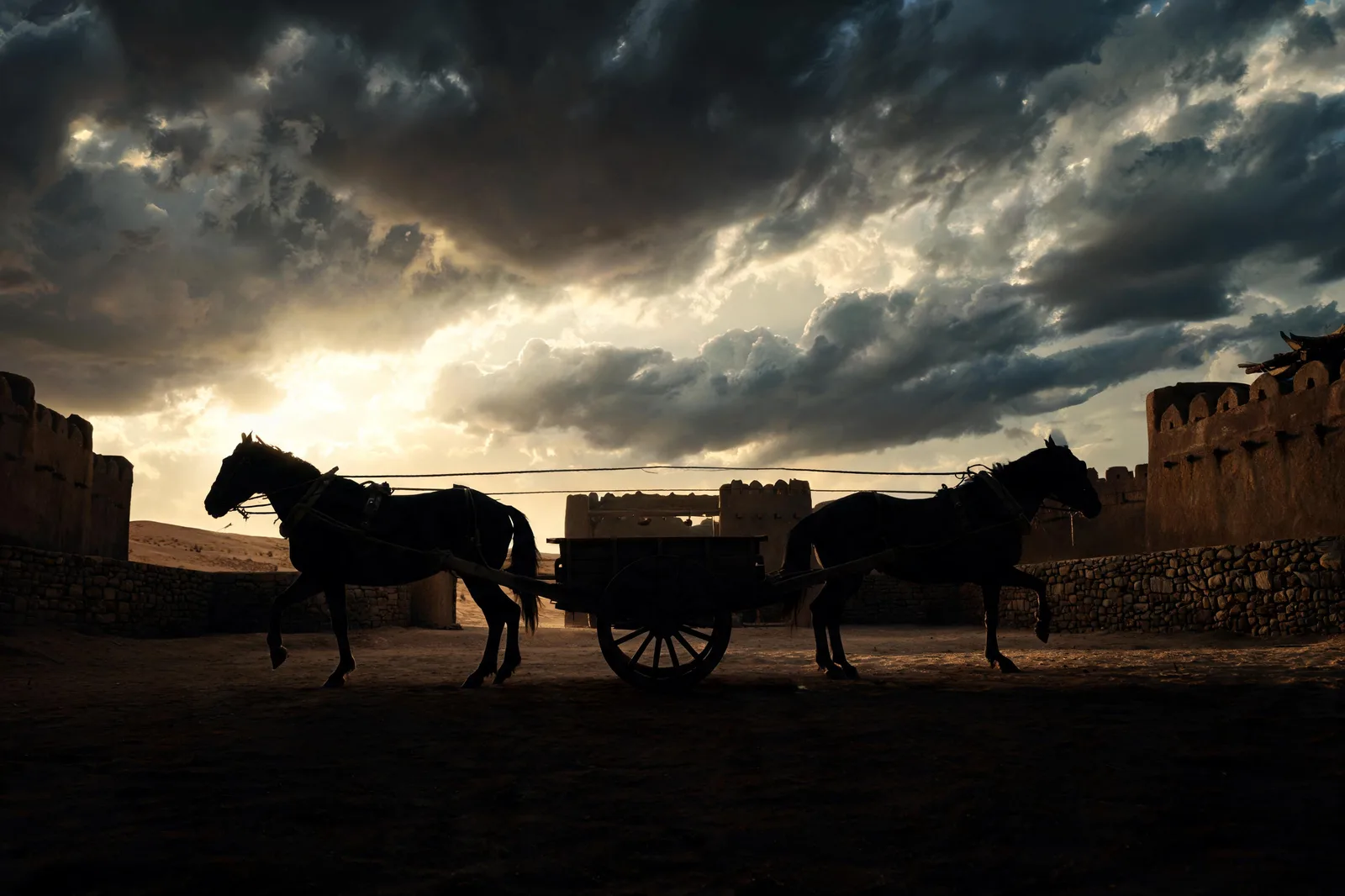
The eighteenth path on the Tree of Life runs from Binah to Geburah, and the Golden Dawn gave it the Hebrew letter Cheth and the card of controlled advance: The Chariot. The eighteenth path, Cheth, is where a decision already made on the seventeenth path has to be driven forward without the vehicle tearing itself apart, and the practice it asks for is holding two pulling forces in one hand.
Where the Eighteenth Path Sits
Binah is severe, restrictive form; Geburah is force, the sephirah of strength and judgment applied without hesitation. The eighteenth path joins two points on the Tree's left-hand pillar, the pillar of severity, and Cheth, "fence" or "enclosure", names a boundary strong enough to contain real power without breaking. The seventeenth path, worked in Path Seventeen in Practice: Zain, Choice and the Lovers, named a choice plainly; the eighteenth path asks what happens once that choice has to move.
The Golden Dawn attributed Cancer to this path, and The Chariot shows two sphinxes, black and white, yoked to one vehicle, pulling in opposite directions. Crowley's Book of Thoth is explicit that the charioteer's task is not to pick one sphinx over the other, but to hold both in harness and move forward anyway.
Cheth: The Fence That Holds Power In
A fence does not remove what is inside it; it keeps real force contained enough to be directed rather than scattered. That is the eighteenth path's discipline: the two sphinxes are not an error to correct, they are the actual engine. Readers who treat The Chariot as pure willpower miss the fence entirely — unchecked force without containment does not advance, it simply breaks apart.
Tradition holds that Cancer governs the Chariot's shell: a hard, protective boundary around something genuinely soft and exposed inside. The eighteenth path asks for exactly that combination, a strong enclosure around a real vulnerability, not a hard shell with nothing worth protecting underneath it.
A Short Working for the Eighteenth Path
This exercise trains the specific skill of driving forward with two opposing forces still in harness:
- Sit with The Chariot in view. Name two things pulling you in different directions on the decision you already named in the seventeenth path's working.
- Picture both as sphinxes yoked to one vehicle, neither one freed, neither one silenced.
- Picture a fence of plain stone around the whole vehicle, holding the tension in without letting it scatter.
- Take one small, concrete step forward in imagination, with both forces still pulling.
- Write down what that one step was, in plain language, and what each sphinx contributed to it.
The point is not resolving the tension. The point is moving while the tension is still present, which is what advancing actually requires.
The Chariot in a Reading
At the table, The Chariot in a Celtic Cross often marks a sitter who believes they must settle an internal conflict before they can act. The path's teaching runs the other way: contain the conflict well enough, and act with it still unresolved.
Where the seventeenth path demanded honesty about two options, the eighteenth demands movement despite neither option fully winning. A reading that waits for perfect internal agreement before advancing misreads what the Chariot is showing.
What Changes When You Practice It
Working the eighteenth path builds the capacity to act under real, unresolved tension instead of waiting for it to disappear first. Cheth's fence does the quiet work: not eliminating the pull of opposite forces, but containing it well enough that it becomes motion instead of paralysis. Practiced often, The Chariot stops looking like brute willpower and starts looking like what it actually is: a vehicle built to carry contradiction forward.
Questions
What does the eighteenth path connect on the Tree of Life?
It joins Binah and Geburah on the Tree's left-hand pillar and carries the Hebrew letter Cheth.
Why does Cheth mean 'fence' on this path?
A fence contains real force so it can be directed rather than scattered. The Chariot's two sphinxes pull opposite ways inside one enclosure.
Does the Chariot mean resolving an inner conflict first?
Tradition holds the opposite: the path teaches advancing while both pulling forces remain in harness, not waiting for them to agree.
What does it mean when the Chariot appears in a reading?
It often marks a sitter who believes they must settle an internal conflict before acting, when the card is asking them to move with it still present.
This article talks about
You might also like
 Kabbalah
 Kabbalah
 Kabbalah
© 2026 TAROTS chat (tarots.chat). All rights reserved. No part of this article may be reproduced, distributed or adapted without the owner's written permission.
The Journal
 Kabbalah
 Spirituality
 Kabbalah
 Kabbalah
 Disks
 Career
 Symbolism
 Symbolism
 Kabbalah