Daat: The Card That Is Missing on the Tree of Life
by Redazione · 8 October 2026 · 9 min read
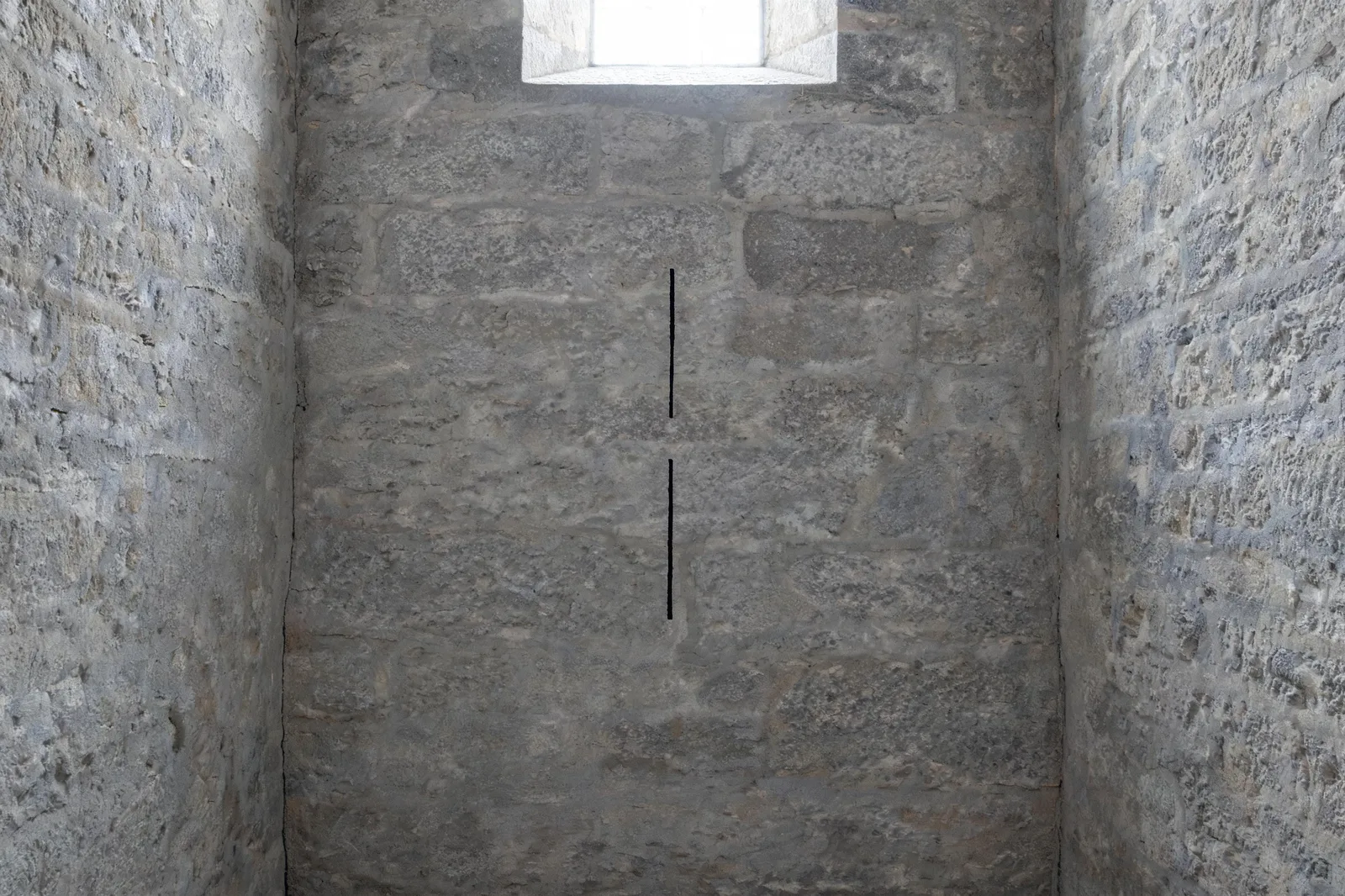
The card that is not there
Daat tarot missing card is the most important structural fact about the Tree of Life, and it is the one the deck never draws. On the Tree, between Binah and Tiphareth, there is a gap. The line that runs down the middle column is broken. Every diagram of the ten sephirot shows it: Binah, the third sephira, Understanding, connects down to Tiphareth, the sixth, Beauty, and between them there is nothing. No circle. No name. No card in the standard tarot correspondence tables.
This gap has a name. It is Daat, daat, or daath, from the Hebrew word for knowledge. It is the sephira that is not a sephira, the card that is missing from the deck. And its absence is the single most important structural fact about the Tree.
Daat tarot missing card is a topic most tarot books never touch. The Golden Dawn correspondence tables list ten sephirot and ten trumps, one to one, and they skip the gap entirely. Crowley's Book of Thoth does the same. The Rider-Waite system does the same. The deck has a hole in the middle of its spine, and the standard reading practice walks over it.
This article will do three things. It will say what Daat actually is in the kabbalistic sources. It will explain why it has no card, and why that is the point. And it will give you a reading method that uses the gap itself, not a card that fills it.
What Daat is in the sources
In the Lurianic system, as recorded by Rabbi Isaac Luria's students in the Etz Chayim, Daat is usually counted as one of the sephirot while Keter is excluded. The Etz Chayim counts Chokmah, Binah, Daat, the six middle sephirot, and Malchut, ten in all, with Daat filling the third place and Keter set aside.
In the system of Moses Cordovero, the opposite convention holds: Keter is always counted as part of the ten, and Daat is excluded as a separate sephira. The Cordovero tradition, in the Pardes Rimonim and the Or Ne'erav, describes the ten sephirot as one light in ten vessels, and Daat is not one of the vessels.
These are two different answers to the same question, and the disagreement is not a small one. It tells you something about what the tradition thinks the Tree is for. The Lurianic count includes Daat because the Lurianic narrative needs it: the hollow, the withdrawal, the space that creation happens in. The Cordovero count excludes Daat because the Cordovero narrative treats the Tree as a map of emanation, and Daat is not an emanation, it is the point where emanation becomes knowable.
Wikipedia's entry on Daat summarizes the structural position well: Daat is associated in the soul with the powers of memory and concentration, powers that rely on one's recognition and sensitivity to the potential meaningfulness of those ideas generated in consciousness through the powers of Chokmah and Binah. In other words, Daat is the faculty that notices that Chokmah and Binah have produced something worth holding.
The practical consequence of the two counts
The disagreement between the two counts is not a footnote. It is the whole question. If you follow the Lurianic count, the Tree has a node where the gap is, and the deck is wrong to skip it. If you follow the Cordovero count, the Tree does not have a node there, and the deck is right to skip it.
The practical consequence for a reader is that you need to know which count you are working in before you interpret the gap. A Lurianic reading treats the gap as a real sephira with a real function, and reads it as such. A Cordovero reading treats the gap as the absence of a sephira, and reads it as a silence, a threshold, a transition between two real nodes.
Both are defensible. Both are in use. The deck does not tell you which one to use, and that is part of the point: the deck is silent, and the reader has to choose.
The two levels
The sources distinguish two Daats, and the distinction does real work in a reading.
Daat Elyon, the higher knowledge, also called Daat hane'elam, the hidden knowledge, is the Daat that sits within Keter. It is the internalized aspect of the transcendent principle. It is what knows, but does not yet appear. It is the knowledge before it is shaped.
Daat Tachton, the lower knowledge, also called Daat hamitpashet, the extending knowledge, is the Daat that connects the intellect as a whole with the realm of emotion. It is the moment when what is known becomes felt, when the idea from Chokmah and the structure from Binah cross the threshold into the middle column and begin to move toward Tiphareth.
The higher Daat is the gap as absence. The lower Daat is the gap as threshold. A reading that wants to work with the missing card needs both, and it needs to know which one it is dealing with.
Why the daat tarot missing card is a structural fact
The standard correspondence tables have ten trumps for ten sephirot, and they skip the gap. The Fool is 0, and he is not on the Tree at all. The Magus is Chokmah, the High Priestess is Binah, and the Empress is Tiphareth. The gap between the High Priestess and the Empress is the gap between Binah and Tiphareth, and no card fills it.
This is not an oversight. It is a structural fact. The deck is built on the assumption that the Tree has ten nodes, and the Tree, in the Cordovero count, has ten nodes. Daat is the eleventh thing that some counts include and others do not, and the deck follows the ten-node count.
The consequence is that the deck has a structural silence where the kabbalah has a structural silence. The deck does not fill the gap. The deck mirrors the gap. And that is the point. The missing card is the missing sephira, and the two silences are the same silence.
The gap as a reading position
When a reading needs the gap, it is not looking for a card. It is looking for the moment in the question where something is known but not yet felt, where the idea has formed but the emotion has not caught up, where the reader has the structure and is waiting for the beauty.
Practically, this shows up in a reading in three ways.
The first is a position that asks about understanding. The questioner knows the facts, they know the structure, they know what is going on, and they cannot feel it. The gap is the space between knowing and feeling, and the reading that lands there is saying: you are in Daat, the knowledge is there, the feeling is not yet.
The second is a position that asks about memory. Daat is associated with memory and concentration in the sources. A reading that lands on the gap in a question about a past event is saying: this is not a memory of what happened, this is a memory of what was known about what happened, the knowledge of the event without the feeling of it.
The third is a position that asks about the threshold. The gap is the threshold between the upper triad and the middle column. A reading that lands there in a question about a decision is saying: you are at the point where the decision has been made in the mind and has not yet been made in the body, the knowledge is complete and the commitment is not.
What the Fool does with the gap
The Fool, as we discussed in the companion article on tzimtzum, is the zero card, the card before the sequence, the hollow. The Fool is not Daat. The Fool is the space before the Tree. Daat is the space within the Tree. The two are different silences, and confusing them is the most common error in reading the deck through kabbalah.
The Fool is the absence that comes before the first light. Daat is the absence that comes after the second light, the space between Chokmah and Binah and Tiphareth, the gap where the light has formed a structure but has not yet become visible in the middle column.
If the Fool is the page before the first word, Daat is the blank line between the first paragraph and the second. Both are real. Both are in the deck. Only one of them is a card.
The sources
The primary kabbalistic source is the Etz Chayim, the Tree of Life, recorded by Rabbi Hai ben Joseph Vital. The Chabad.org article on the two systems of ten sephirot (chabad.org) is the clearest English statement of the Cordovero-versus-Luria disagreement over whether Daat is counted.
The Wikipedia entry on Daat (en.wikipedia.org) gives the structural position and the two-level distinction. The GalEinai basics article (inner.org) is the most accessible exposition of the higher and lower Daat.
For the Fool and the zero position, see the companion article on tzimtzum. Tzimtzum and the Fool: A Card for the Withdrawal of Light For the broader Tree of Life structure, see the Three Trees series. Kircher's Tree, the Gra's Tree, Luria's Tree
The deck does not have a card for Daat. The gap is the card. Read it as a silence, not as a presence, and the reading works.
Questions
What is Daat in kabbalah?
Daat is the Hebrew word for knowledge, and in the Tree of Life it is the position between Binah and Tiphareth. Some counts, like the Lurianic one, include it as a sephira. Others, like the Cordovero one, exclude it. The deck follows the ten-node count and skips it.
Why is there no tarot card for Daat?
The standard correspondence tables list ten trumps for ten sephirot, and the ten-node count excludes Daat. The gap in the deck mirrors the gap in the Tree: the deck is silent where the kabbalah is silent.
How do I read the gap between the High Priestess and the Empress?
Read it as a silence, not a card. It is the space between knowing and feeling, between the structure and the beauty. In a position about understanding, it says the knowledge is there but the feeling is not yet. In a position about a decision, it says the mind has decided and the body has not.
You might also like
 Kabbalah
 Kabbalah
 Kabbalah
© 2026 TAROTS chat (tarots.chat). All rights reserved. No part of this article may be reproduced, distributed or adapted without the owner's written permission.
The Journal
From the Journal
Chosen for this page
 Kabbalah
Yetzirah Tarot: The World of Formation, Air and the Suit of Swords
6 min read
More in Kabbalah Kabbalah
 Kabbalah
 Spirituality
 Symbolism
 Major Arcana