The Middle Pillar and the Tarot
by Redazione · 9 October 2026 · 4 min read
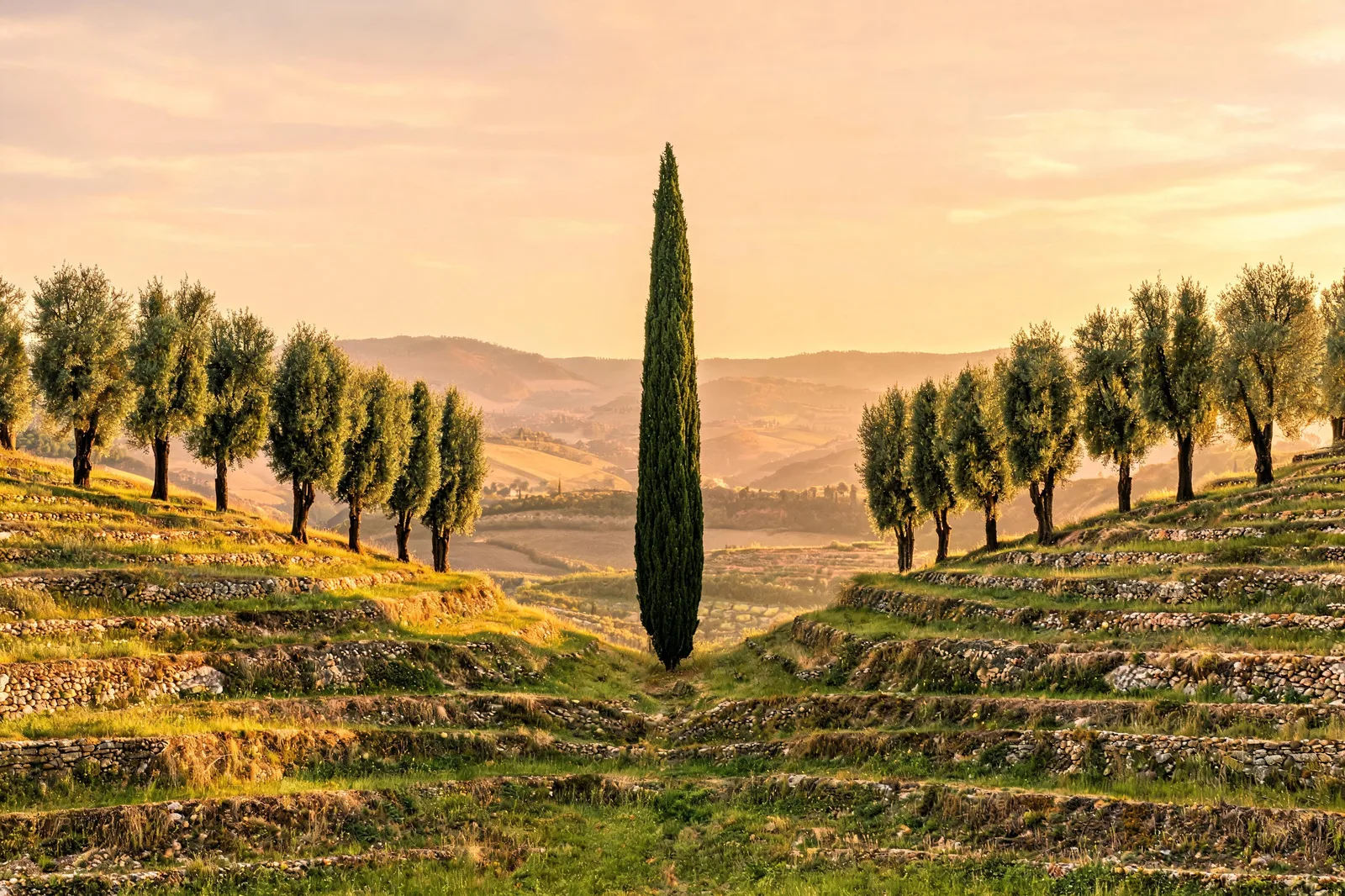
The middle pillar tarot readers lean on runs straight down the centre of the Tree of Life, and it is the one line on the whole diagram that no reader needs translated: Kether, Daat, Tiphareth, Yesod and Malkuth, balance held in a single column between the outer extremes that the rest of this series, from The Three Veils of Negative Existence onward, has been mapping in detail. Where the three pillars as a whole describe severity on one side and mercy on the other, the middle pillar is what neither extreme can claim alone: the column of equilibrium a reader returns to when a spread has pulled too far one way.
Five spheres, one line
The middle pillar's spheres are Kether at the top, the hidden sphere Daat beneath it, Tiphareth at the centre, Yesod below that, and Malkuth at the foot. Each one is a point where the pillar of mercy, on the right, and the pillar of severity, on the left, are reconciled rather than chosen between. Tiphareth, the heart of the whole Tree, sits exactly halfway down the middle pillar, and Golden Dawn teaching treats it as the clearest single expression of balance on the entire diagram, the sphere every path eventually has to pass near.
Why the outer pillars need the middle one
Mercy and Severity: Reading the Two Pillars in a Spread set out what the two outer pillars represent on their own: expansion and restraint, growth and discipline, each one incomplete without the other. The middle pillar in tarot is not a third option alongside mercy and severity; it is the place their opposition resolves into something usable. A reading dominated by cards from the pillar of severity, Geburah's fives and their neighbours, reads very differently once a middle-pillar card, a six or the Hierophant, sits beside them: the harsh judgment finds a centre to settle into rather than running unchecked.
The middle pillar as a practice, not only a diagram
Outside tarot, the middle pillar names a specific meditative exercise in Golden Dawn and later ceremonial practice: a practitioner visualises light descending through Kether, Daat, Tiphareth, Yesod and Malkuth in turn, pausing at each point to let it settle before moving to the next. The exercise is meant to steady attention along exactly this axis of balance, and some modern teachers, including writers in the lineage of Dion Fortune, use it as a grounding technique independent of any card reading. A tarot reader does not need to perform the full exercise to borrow its logic: naming which middle-pillar sphere a spread's energy is missing is often enough to see what the reading is actually asking for.
Reading with the middle pillar in mind
A practical habit: when a spread feels unbalanced, pulled hard toward conflict or hard toward passive acceptance, ask which middle-pillar sphere is absent. A reading heavy with Geburah's severity and Chesed's mercy but no Tiphareth card is a reading without its own centre named; one heavy with Netzach's desire and Hod's calculation but no Yesod card is missing the sphere where those two actually combine into a workable plan. The middle pillar, used this way, is less a fixed meaning and more a diagnostic question a reader learns to ask of any spread.
A caution on balance as an answer
Balance is not always the right prescription. Some situations genuinely call for a decisive lean toward mercy or toward severity, and treating the middle pillar as always correct risks flattening a reading into vague even-handedness. Tradition holds that the middle pillar names where balance is available, not a verdict that balance is always what a querent needs; a Thoth reading stays honest only if the middle pillar is offered as one more piece of the structure, not as the system's final word.
FAQ
Is the middle pillar a card, a spread or a meditation? All three uses exist: a diagram of five spheres on the Tree of Life, a Golden Dawn meditative exercise, and, informally, a lens a tarot reader applies to an existing spread.
Which cards are most associated with the middle pillar? The Fool (Kether), the Hierophant and other paths touching Daat and Tiphareth, the Hanged Man near Yesod, and the whole suit of tens near Malkuth.
Does the middle pillar meditation require tarot cards at all? No. It originates as a ceremonial magic exercise independent of tarot; its use as a reading lens is a later, informal borrowing.
How does the middle pillar relate to the outer two pillars? It is the column where the pillar of mercy and the pillar of severity are reconciled, rather than a third force competing with them.
Questions
Is the middle pillar a card, a spread or a meditation?
All three uses exist: a diagram of five spheres on the Tree of Life, a Golden Dawn meditative exercise, and a lens a tarot reader applies to an existing spread.
Which cards are most associated with the middle pillar?
The Fool (Kether), the Hierophant and other paths touching Daat and Tiphareth, the Hanged Man near Yesod, and the suit of tens near Malkuth.
Does the middle pillar meditation require tarot cards at all?
No. It originates as a ceremonial magic exercise independent of tarot; its use as a reading lens is a later, informal borrowing.
How does the middle pillar relate to the outer two pillars?
It is the column where the pillar of mercy and the pillar of severity are reconciled, rather than a third force competing with them.
You might also like
 Kabbalah
 Kabbalah
 Kabbalah
© 2026 TAROTS chat (tarots.chat). All rights reserved. No part of this article may be reproduced, distributed or adapted without the owner's written permission.
The Journal
From the Journal
Chosen for this page
 Career
 Love
 Spirituality
 Spirituality
Bardon's Electric and Magnetic Fluids and the Polarity of the Cards
3 min read
More in Spirituality Major Arcana
 Major Arcana
 Symbolism
 Symbolism
 Kabbalah