The Knight of Disks at Work: The Patient Farmer
Why the slowest court card in the Thoth deck is built for long careers, not quick wins.
by Redazione · 9 October 2026 · 5 min read
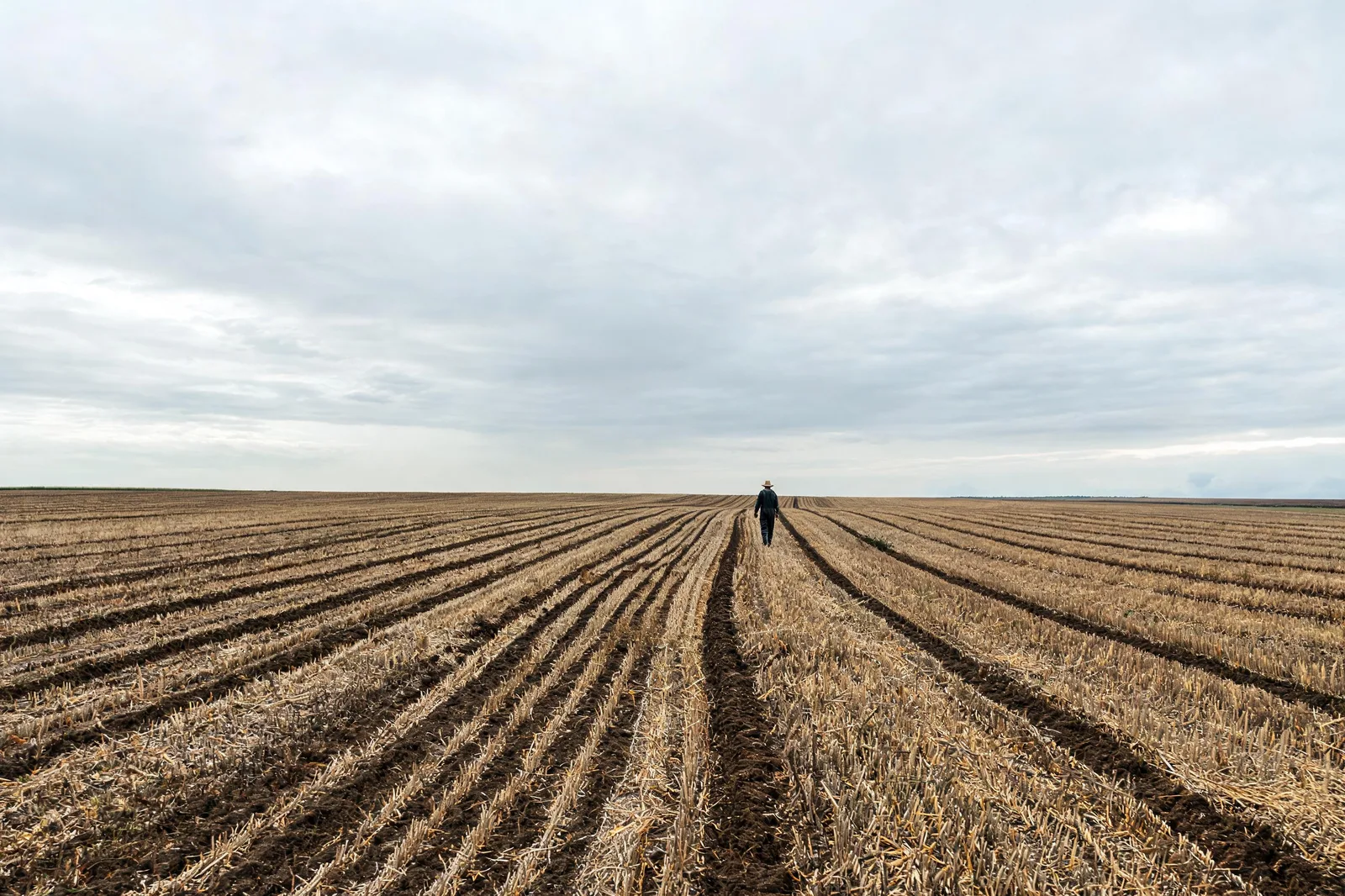
No court card in the Thoth deck moves slower than this one, and that slowness is the whole point. Read for a Knight of Disks career question, the card describes someone who finishes what they start by refusing to rush it, closer to a farmer walking a field season after season than a rider racing toward a prize. After the patient repetition of The Eight of Disks: Prudence and Slow Progress, this card scales that same patience up to the length of an entire working life.
The Farmer, Not the Racer
The Thoth deck shows the Knight of Disks seated heavily on a slow, sturdy horse, armoured, deliberate, with none of the urgency Crowley gave the Knights of Wands or Swords. Tradition holds that the Golden Dawn placed this figure across the closing degrees of Virgo into Libra, the earth sign's practical discipline meeting the first stirrings of balance and partnership. Whatever the exact attribution, the character is consistent across every account of the Thoth court: dogged, careful, and almost stubbornly unhurried.
This makes the Knight of Disks one of the few court cards whose caution is not a warning sign. Where other knights can tip into recklessness or paralysis, this one succeeds precisely by refusing both. He does not need the field to finish in a week, and treats a season's wait as simply the cost of a reliable harvest.
Knight of Disks Career Reading: What the Figure Suggests
In a work spread, this card often names someone, or an approach, built around endurance rather than speed: the colleague who outlasts every reorganisation, the employee whose value shows only after years, the founder who treats a business as a decade-long project rather than a sprint toward funding. A reading that surfaces this card over a career question is rarely pointing at an immediate opportunity. It is naming a strategy: keep doing the steady thing, and let time do the rest of the work.
This can be hard advice for a reader facing a question that feels urgent. The Knight of Disks does not answer "should I act now." It answers a different, often more useful question: what approach actually suits a goal that will take years, not weeks, to reach. For long projects, that reframe alone can change how someone plans their next move.
Comparing the Knight to Faster Cards
Set beside The Chariot, whose energy drives directly and visibly toward a goal, the Knight of Disks looks almost passive. It is not. The Chariot wins by controlled momentum; the Knight of Disks wins by simply never stopping, across a timeline long enough that momentum barely matters. Set beside Three of Disks — Works, which shows a design already tested against a standard, the Knight shows the much longer arc that standard sits inside: years of showing up, not a single completed project.
A spread that includes several of these cards together can map out a whole career trajectory, from a single careful repetition to a tested piece of work to a reputation built over seasons. Read in isolation, the Knight of Disks can look dull next to more dramatic cards. Read as part of that longer arc, it is often the card that explains why the others eventually paid off.
What Patience Costs and What It Buys
The card does not pretend patience is free. A reading built around it should be honest that slow, steady effort can look unrewarding for long stretches, and that choosing this approach means accepting a longer runway before any visible result. What it buys in return is durability: a position, a skill or a reputation that does not collapse the first time conditions turn difficult, because it was never built on a single burst of effort in the first place.
For a reader weighing whether to stay the slow course or chase something faster, the Knight of Disks offers no verdict on which choice is right. It simply names the temperament that the slow course actually requires: calm, steady, and willing to measure success in seasons rather than days. Whether that temperament fits the reader's own situation is, as always, a judgement only they can make.
A Habit Worth Borrowing From the Card
Readers who keep drawing faster, more dramatic cards for the same question sometimes overlook what the Knight of Disks offers: permission to stop measuring progress daily. Tradition holds that a field checked every hour never grows faster for the attention; it only wears down the person doing the checking. The same logic applies to a slow career project. A useful practice alongside this card is choosing a longer interval, a season rather than a week, before judging whether the steady approach is working. That single change in timing often does more for a long project than any single burst of extra effort.
This does not mean ignoring real warning signs. The Knight of Disks describes patience as a strategy, not as blindness to a situation that has genuinely stopped working. A reader can hold both at once: trust a slow timeline while still checking, at reasonable intervals, that the underlying work is sound. The card simply asks that those checks be spaced sensibly, rather than driven by daily anxiety about a process that was never designed to show results quickly.
Questions
What does the Knight of Disks mean for a career?
It describes steady, patient effort built for a long trajectory, where results come from endurance rather than a quick push.
Is the Knight of Disks a slow or boring card?
It is deliberately unhurried, but in the Thoth tradition that caution is a strength, not a weakness, for long projects.
How is the Knight of Disks different from the Chariot?
The Chariot drives toward a goal with controlled momentum; the Knight of Disks simply keeps going across a much longer timeline.
When does the Knight of Disks appear in a reading?
Often when a situation rewards patience: a long apprenticeship, a slow-growing business, or a role whose value shows only over years.
This article talks about
You might also like
 Disks
 Disks
 Disks
© 2026 TAROTS chat (tarots.chat). All rights reserved. No part of this article may be reproduced, distributed or adapted without the owner's written permission.
The Journal
From the Journal
Chosen for this page
 Swords
 Kabbalah
 Kabbalah
 Symbolism
Cups Suit Symbolism in the Thoth Tarot: Water, Emotion and the Unconscious
2 min read
More in Symbolism Career
 Symbolism
 Symbolism
 Symbolism
 Kabbalah