The Hermetic Order of the Golden Dawn and Its Tarot Curriculum
by Redazione · 9 October 2026 · 6 min read
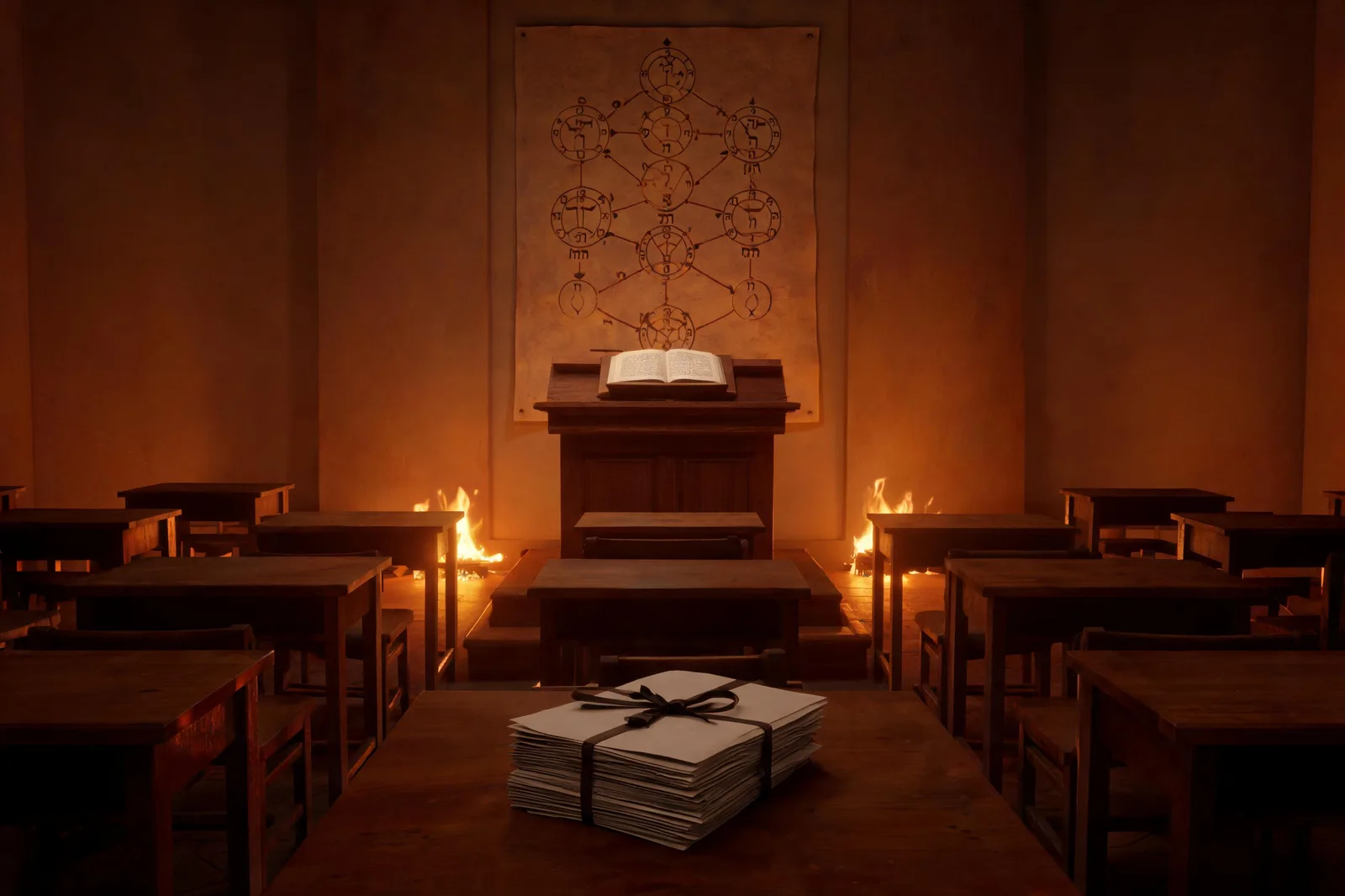
The Hermetic Order of the Golden Dawn built the first systematic school of golden dawn tarot study, turning a French cartomancer's curiosity into a graded curriculum with examinations, lectures and a fixed body of doctrine. Founded in London in 1888 by William Wynn Westcott, Samuel Liddell MacGregor Mathers and William Robert Woodman, the Order treated the Tarot not as a fortune-telling toy but as a portable textbook of Hermetic Qabalah, astrology, alchemy and ceremonial magic. This opening article of the series sets out how that curriculum was built, who taught it, and why its structure still shapes the way the Thoth deck is read today.
A Society Built Like a School
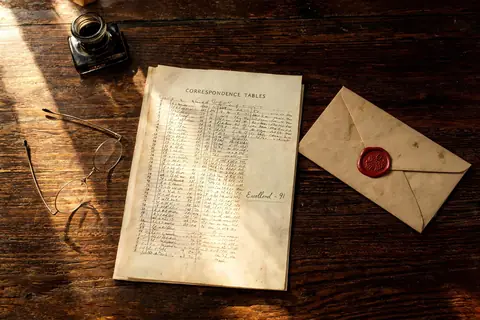
Membership in the Golden Dawn moved through grades named after the ten Sephiroth of the Tree of Life, from Neophyte up through Philosophus and into the inner Second Order, the Rosae Rubeae et Aureae Crucis. Each grade carried required reading, a ritual of advancement and a written examination. The Tarot entered this ladder early: a member met the suits and the trumps while still learning elemental and planetary attributions, well before any instruction on divination proper. Knowledge Lectures, circulated only to initiates, laid out correspondences between Hebrew letters, planets, elements and the seventy-eight cards in tables meant to be memorised, not merely consulted.
This pedagogical approach set the Order apart from earlier French occultists. Antoine Court de Gébelin and Etteilla had proposed Egyptian origins and divinatory meanings for the cards, but neither built an institution to test whether a student actually understood the system. The Golden Dawn did. A candidate could not simply buy a deck and start laying out spreads; the deck's meanings were supposed to emerge from the whole curriculum, including the Hebrew alphabet, the thirty-two paths of the Tree, and the elemental and zodiacal correspondences rehearsed long before the cards appeared in a reading context. For the Order's own account of where this material first crystallised, see The Cipher Manuscripts: What the Golden Dawn's Founding Document Says About the Tarot, the founding document that supplied the skeleton Mathers later filled out.
Book T and the Written Curriculum
The core teaching document was known internally as Book T, "Theoricus Adeptus Minor," a manuscript setting out the attributions, images and divinatory meanings of every card. Members copied it by hand; printed versions appeared only decades later, each with its own quiet variations introduced by later editors. The three main printings of that text, and what each one changed, are traced in Book T and Its Three Printings.
Book T did more than list meanings. It assigned each of the thirty-six small cards to a ten-degree segment of the zodiac called a decan, gave the court cards elemental sub-attributions, and set the trumps on the paths of the Tree according to a scheme that swapped two cards from the older French tradition. A student who had internalised these correspondences could, in principle, derive a card's meaning from first principles rather than memorising a phrase from a book, which was precisely the Order's pedagogical aim.
The Ritual Grades and the Examination System
Advancement through the grades required passing oral and written tests set by the Second Order's officers. A Philosophus candidate, for instance, had to demonstrate working knowledge of the four elements and their weapons — wand, cup, sword and disk — matched to the four tarot suits, plus the geomantic figures and the basic Hebrew alphabet. Failure meant delay, not expulsion, but the bar was real: surviving examination papers from the 1890s show detailed questions on the attributions rather than vague essay prompts. This rigour is why historians still treat the Golden Dawn's curriculum as a genuine syllabus and not an informal reading group.
From Private Teaching to Public Deck
The Order's internal disputes after 1900, among Mathers, Westcott and Florence Farr, and a later public scandal, scattered its papers into rival splinter groups and private hands. Arthur Edward Waite, a Second Order member, eventually produced the Rider-Waite-Smith deck for a general audience, simplifying much of the inner teaching into pictorial scenes. Aleister Crowley, trained in the same system, went the other direction: his Thoth deck, painted with Lady Frieda Harris, preserved and extended the decan and path attributions almost in full, making it the most complete surviving expression of the original curriculum in card form. Decades later Israel Regardie published the bulk of the Order's papers openly, a decision this series will return to.
Why the Curriculum Still Matters to a Reader
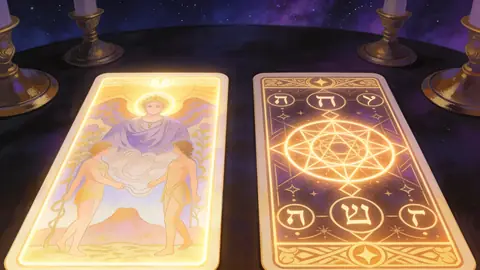
A reader working with the Thoth deck today inherits this graded structure whether they realise it or not: the court cards' elemental hierarchy, the decan attributions on the small cards, and the correspondence between each trump and a Hebrew letter all descend directly from the Golden Dawn's internal teaching. Understanding that the deck was built as an examination syllabus, not a fortune-telling prop, changes how a card like The Magus is read: as a node in a worked system, with a precise place on the Tree, rather than an isolated image. The Wikipedia entry on the Hermetic Order of the Golden Dawn gives a useful outside summary of the Order's history for readers wanting wider context before the next article in this series turns to the Order's most famous divinatory method, the Opening of the Key.
Frequently Asked Questions
Was the Golden Dawn the first group to teach the Tarot as a system? It was the first to formalise that teaching into graded lectures with examinations; earlier writers like Etteilla had systems of meanings but no comparable institution.
Did every member learn the same curriculum? Largely yes within a given temple, though splinter groups after 1900 diverged in emphasis and sometimes in attribution details.
Is Book T the same as the Thoth deck's companion book, The Book of Thoth? No. Book T is the earlier internal Golden Dawn manuscript; Crowley's The Book of Thoth is his own later commentary written to accompany the printed deck.
Why does this matter for a modern reading? The attributions behind a Thoth card were designed to be derived from a system, not memorised as a slogan, which is why study of the curriculum deepens a reading rather than merely decorating it.
Questions
Was the Golden Dawn the first group to teach the Tarot as a system?
It was the first to formalise that teaching into graded lectures with examinations; earlier writers like Etteilla had systems of meanings but no comparable institution.
Did every member learn the same curriculum?
Largely yes within a given temple, though splinter groups after 1900 diverged in emphasis and sometimes in attribution details.
Is Book T the same as the Thoth deck's companion book, The Book of Thoth?
No. Book T is the earlier internal Golden Dawn manuscript; Crowley's The Book of Thoth is his own later commentary written to accompany the printed deck.
Why does this matter for a modern reading?
The attributions behind a Thoth card were designed to be derived from a system, not memorised as a slogan, which is why study of the curriculum deepens a reading rather than merely decorating it.
This article talks about
You might also like
 Thoth Tarot
 Thoth Tarot
 Thoth Tarot
© 2026 TAROTS chat (tarots.chat). All rights reserved. No part of this article may be reproduced, distributed or adapted without the owner's written permission.
The Journal
 Symbolism
 Kabbalah
 Thoth Tarot
 Swords
 Kabbalah
 Kabbalah
 Symbolism
 Symbolism
 Kabbalah