The Tree as a Map of Consciousness in Fortune's Qabalah
by Redazione · 9 October 2026 · 4 min read
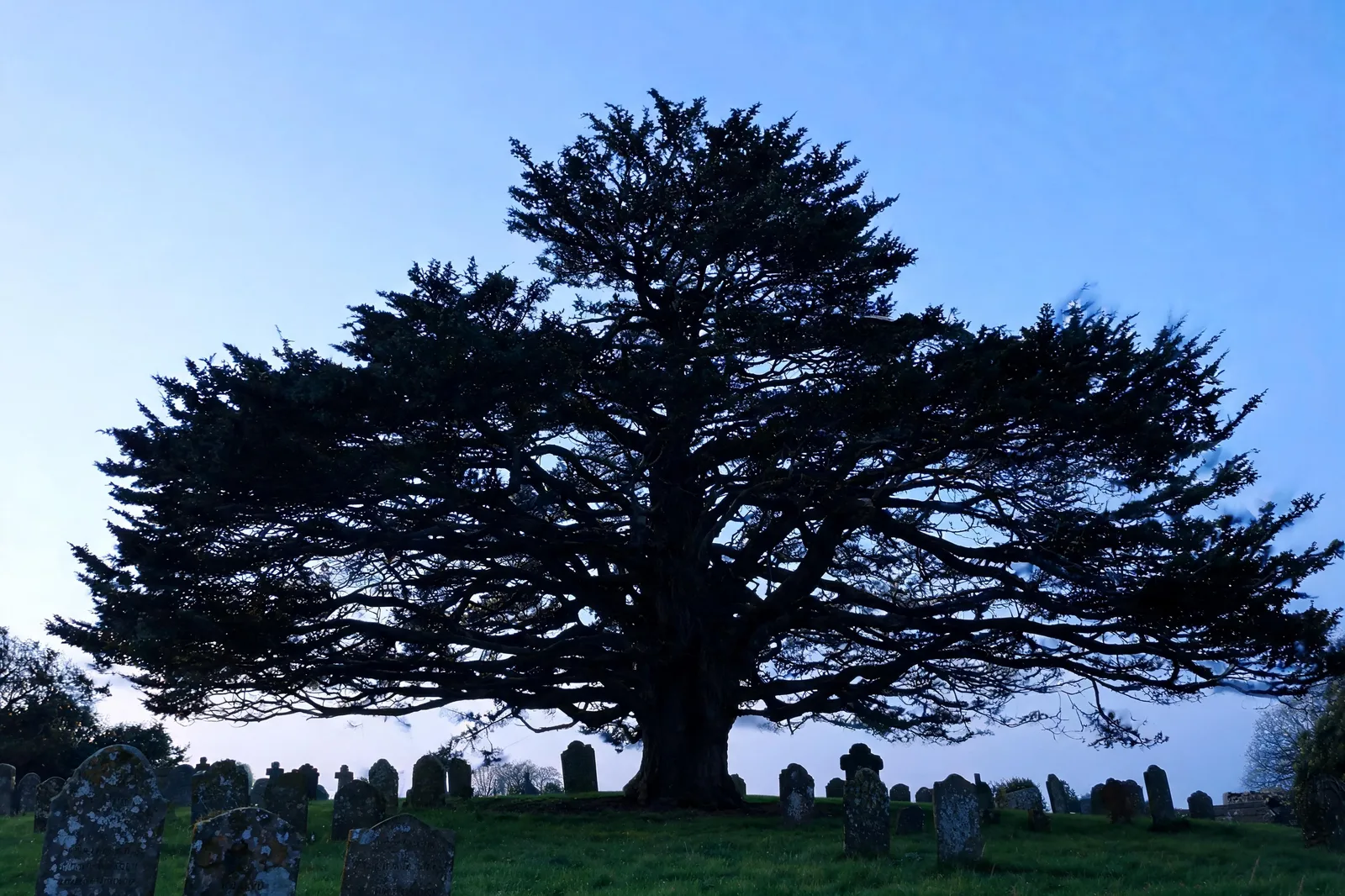
Dion Fortune treated the Tree of Life as a map of tree of life consciousness, not a chart of distant cosmic rungs, and that single choice set her Qabalah apart from drier academic accounts. Each sephirah, in her reading, names a state a mind can actually occupy: a mood, a disposition, a way of perceiving that a student could enter through practice and later recognise again in ordinary life. As discussed in The Mystical Qabalah: How Fortune Built the Book, this psychological emphasis runs through every chapter of her major work.
Spheres as States, Not Stations
Fortune's innovation was partly one of emphasis rather than invention; Golden Dawn teaching had already linked the sephiroth to inner faculties. She pushed the idea further, insisting a student should learn to recognise, say, Hod's precise, verbal clarity or Netzach's warm, relational pull as recurring moods in daily experience, not only as abstractions reached through ritual. The Tree became a kind of internal cartography: a person moving through a difficult, isolating stretch of life was, in her language, dwelling for a time in Geburah, not failing at life generally.
This reframing matters for tarot readers because it changes how a card like The Hermit gets read. Instead of a fixed meaning attached by rote, the card becomes a report on where the querent's consciousness currently sits on the Tree, with its own discipline, its own narrow light, its own necessary withdrawal from crowds.
The Middle Pillar and Balanced Awareness
Fortune gave special attention to the middle pillar, the vertical line running through Malkuth, Yesod, Tiphareth and Kether, as the axis of balanced consciousness. Where the side pillars represent necessary extremes, severity on one side, mercy on the other, the middle column represents integration: a mind that has stopped swinging between opposites and found a steadier centre.
She treated Tiphareth, the sun sphere at the Tree's heart, as a particular achievement of consciousness: a sense of identity strong enough to relate honestly both upward toward the supernals and downward toward the everyday world of Malkuth. A reader who meets The Sun in a spread, in her framework, is being shown exactly this kind of hard-won equilibrium, not a simple promise of unclouded happiness.
Pathworking as Deliberate Practice
The paths connecting the sephiroth were, for Fortune, the practical route between these states of mind. A student did not simply read about the path of Teth; they walked it through guided visualization, approaching Lust as an actual threshold to cross rather than a passage to admire from a safe distance. This method treated imagination as a genuine faculty of perception, not mere fancy, an idea she inherited from the wider Golden Dawn current and then wrote up with unusual clarity.
Pathworking, done this way, builds a kind of experiential fluency. A student who has sat with Geburah's harsh clarity, then crossed toward Tiphareth's balance, carries that movement into how they read the cards tied to those same spheres, an advantage no memorised keyword list can supply on its own.
A Map for the Whole Person
Fortune resisted any reading of the Tree that treated higher spheres as more valuable than lower ones. Malkuth, the physical world, received as careful a psychological treatment in her writing as Kether, the crown of pure being. A student's consciousness, in her model, was meant to range across the whole Tree, not escape upward and abandon the body and its ordinary concerns.
This grounded instinct is part of why her work has aged well. Readers wary of occult literature that treats the material world as an obstacle find in Fortune's Qabalah a structure that honours daily life, work and relationships as fully as it honours contemplative peaks. Anyone exploring consciousness as a wider subject will recognise the ambition behind her project: a working model of mind, tested against lived experience rather than argued from first principles alone.
Questions
What did Dion Fortune mean by tree of life consciousness?
She read each sephirah as a real mental state, a mood or way of perceiving a student could enter through practice and recognise again in ordinary life.
What is the middle pillar in her Qabalah?
The vertical line through Malkuth, Yesod, Tiphareth and Kether, representing balanced awareness between the Tree's two side pillars of severity and mercy.
How does pathworking relate to the tarot?
Fortune's students walked each path through guided visualization tied to a tarot trump, building direct familiarity with a card before ever reading its definition.
Did Fortune favour higher spheres over lower ones?
No. She insisted Malkuth, the physical world, deserved as much psychological respect as Kether, treating the whole Tree as one map for a whole life.
This article talks about
You might also like
 Kabbalah
 Kabbalah
 Kabbalah
© 2026 TAROTS chat (tarots.chat). All rights reserved. No part of this article may be reproduced, distributed or adapted without the owner's written permission.
The Journal
 Learn Tarot
 Wands
 Symbolism
 Love
 Symbolism
 Tarot Journal
 Symbolism
 Symbolism
 Kabbalah