The Breaking of the Vessels and the Tower
by Redazione · 9 October 2026 · 4 min read
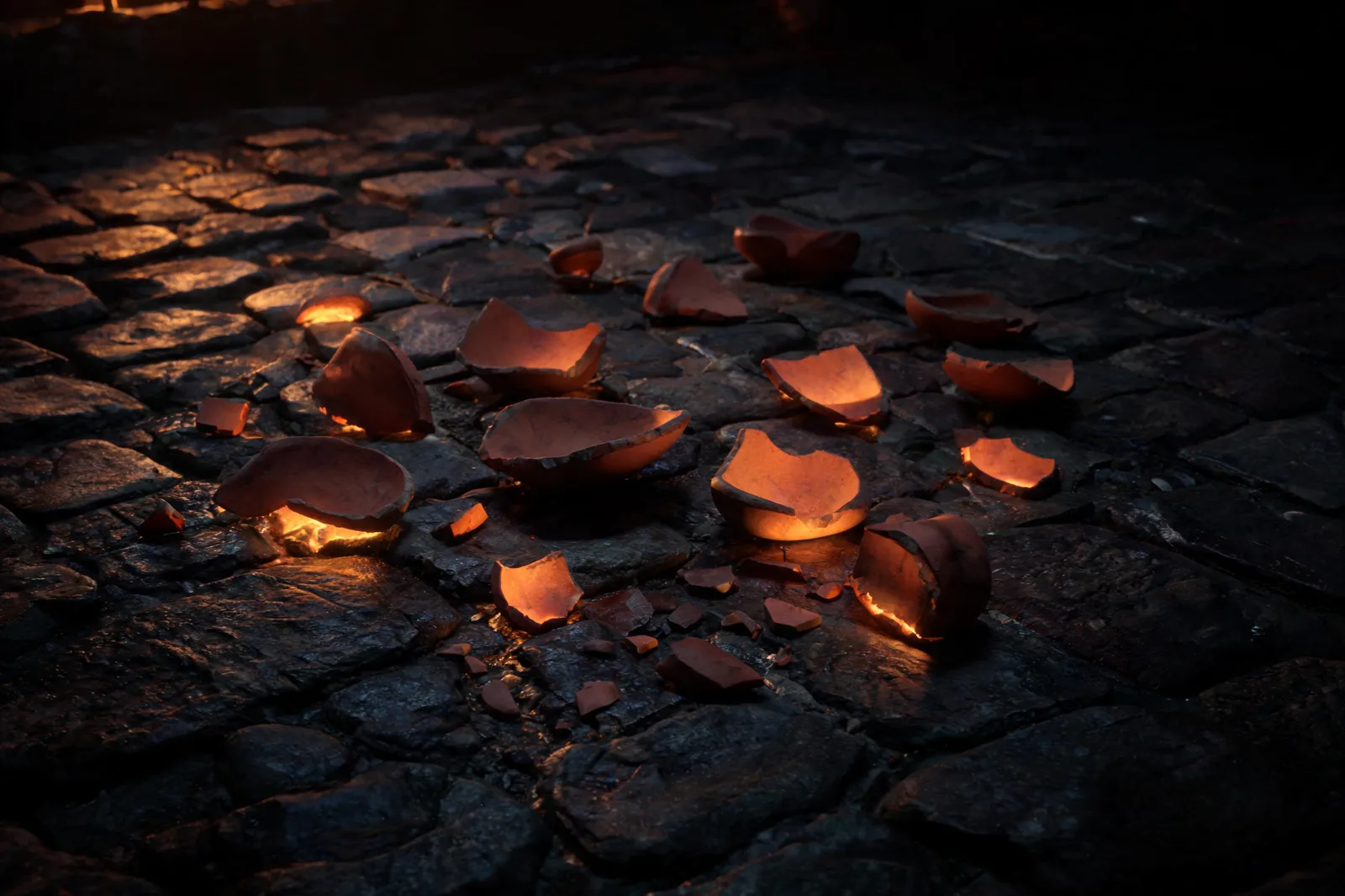
The breaking of the vessels, shevirat ha-kelim in Hebrew, is Lurianic Kabbalah's account of why creation feels unfinished rather than whole. Light meant for the ten sephirot arrived too intense for the lower vessels built to hold it, and several shattered under the force of what they were meant to contain. Fragments fell, scattering sparks of holiness into the world below. For a reader of the Thoth deck, this myth gives the clearest Kabbalistic parallel to The Tower, the trump most readers already associate with sudden, structural collapse.
What actually breaks, and why
Lurianic cosmology, following the sixteenth-century teaching of Isaac Luria in Safed, places the breaking after Adam Kadmon's light descended toward the sephirot discussed in The Shekhinah and the Feminine Cards and the Shekhinah's own role within Malkuth. The first three sephirot, Kether, Chokmah and Binah, held their light without rupture; the lower seven, from Chesed through Malkuth, could not. Their vessels cracked and fell, carrying fragments of divine light trapped within the broken shells. A readable scholarly overview of this stage within the wider Lurianic system sits in the Wikipedia article on Lurianic Kabbalah, useful background before approaching the myth's more technical detail.
The Tower as a tarot echo
The Tower shows a structure struck by lightning, crumbling as two figures fall from its height, flame bursting from its windows. Read through the Lurianic myth, this is not senseless destruction; it is the same pattern the vessels underwent, a container failing because what it held exceeded its own strength. Golden Dawn and Thoth tradition attribute the Tower to the Hebrew letter Peh, meaning "mouth," and to Mars, the planet of sudden force, both consistent with a reading of the card as an event that breaks a structure open rather than one that simply destroys it for no reason.
Breaking as a condition of this world
Lurianic teaching treats the breaking as more than a single historical event inside a myth; it describes the ordinary condition of the world a reader and client already live in. Sparks of trapped light are said to be scattered through everyday objects and situations, waiting to be recognised and lifted free of their broken shells. This reframes what a Tower card in a spread can mean at the table: not only an ending, but a release of something valuable that a previous, now-broken structure had been holding too tightly to let move. A reading that treats the Tower purely as disaster misses this half of the myth it echoes.
Sparks, shells and the reader's task
The broken vessels left behind two things: sparks of holy light and qliphoth, hollow shells formed from the broken containers themselves, a theme this series will return to directly. For now, the relevant point is practical: Lurianic teaching assigns the work of gathering scattered sparks back out of their shells to human effort, called tikkun, repair, which the next part of this series takes up in connection with the final trump. A Tower reading, held this way, points a client toward the labour of recovery that follows a collapse, not only toward the collapse itself.
Reading the myth responsibly
This is cosmological myth, not a historical claim, and tradition holds it as symbolic rather than literal even within much of Jewish mysticism itself. A Thoth reader borrowing the image should say so plainly: the breaking of the vessels explains why Lurianic Kabbalists expected flawed, fragmented experience as normal rather than exceptional, and why they built repair, not nostalgia for an unbroken past, into the centre of their practice. Applied carefully, it gives the Tower a depth beyond simple warning, without pretending collapse is ever comfortable to sit through.
FAQ
Did Isaac Luria invent the idea of broken vessels? He gave it its fullest and most systematic form in sixteenth-century Safed, building on earlier Kabbalistic materials; the detailed doctrine of shevirat ha-kelim is most closely associated with his school specifically.
Why did only the lower seven sephirot break? Lurianic teaching holds that the first three, Kether, Chokmah and Binah, were closer to the original unified light and could bear its intensity, while the lower seven received it in a more individuated, and therefore more fragile, form.
Does the Tower card really come from this myth? Not directly; the Tower predates Lurianic Kabbalah in tarot history. The connection is an interpretive parallel modern readers draw between two separate traditions of structural collapse, not a claim about the card's origin.
What happens to the sparks after the breaking? Lurianic teaching says they scatter into ordinary existence, trapped in shells called qliphoth, and that human spiritual effort, tikkun, works to free and restore them over time.
Questions
Did Isaac Luria invent the idea of broken vessels?
He gave it its fullest and most systematic form in sixteenth-century Safed, building on earlier Kabbalistic materials; the detailed doctrine of shevirat ha-kelim is most closely associated with his school specifically.
Why did only the lower seven sephirot break?
Lurianic teaching holds that the first three, Kether, Chokmah and Binah, were closer to the original unified light and could bear its intensity, while the lower seven received it in a more individuated, and therefore more fragile, form.
Does the Tower card really come from this myth?
Not directly; the Tower predates Lurianic Kabbalah in tarot history. The connection is an interpretive parallel modern readers draw between two separate traditions of structural collapse, not a claim about the card's origin.
What happens to the sparks after the breaking?
Lurianic teaching says they scatter into ordinary existence, trapped in shells called qliphoth, and that human spiritual effort, tikkun, works to free and restore them over time.
This article talks about
You might also like
 Kabbalah
 Kabbalah
 Kabbalah
© 2026 TAROTS chat (tarots.chat). All rights reserved. No part of this article may be reproduced, distributed or adapted without the owner's written permission.
The Journal
From the Journal
Chosen for this page
 Thoth Tarot
 Tarot Journal
The Flat Fee: What Pamela Colman Smith Was Paid for the Deck
5 min read
More in Tarot Journal Kabbalah
 Major Arcana
 Kabbalah
 Swords
 Symbolism
 Symbolism
 Kabbalah