What the Qliphoth Are: Shells in Lurianic Kabbalah
by Redazione · 9 October 2026 · 4 min read
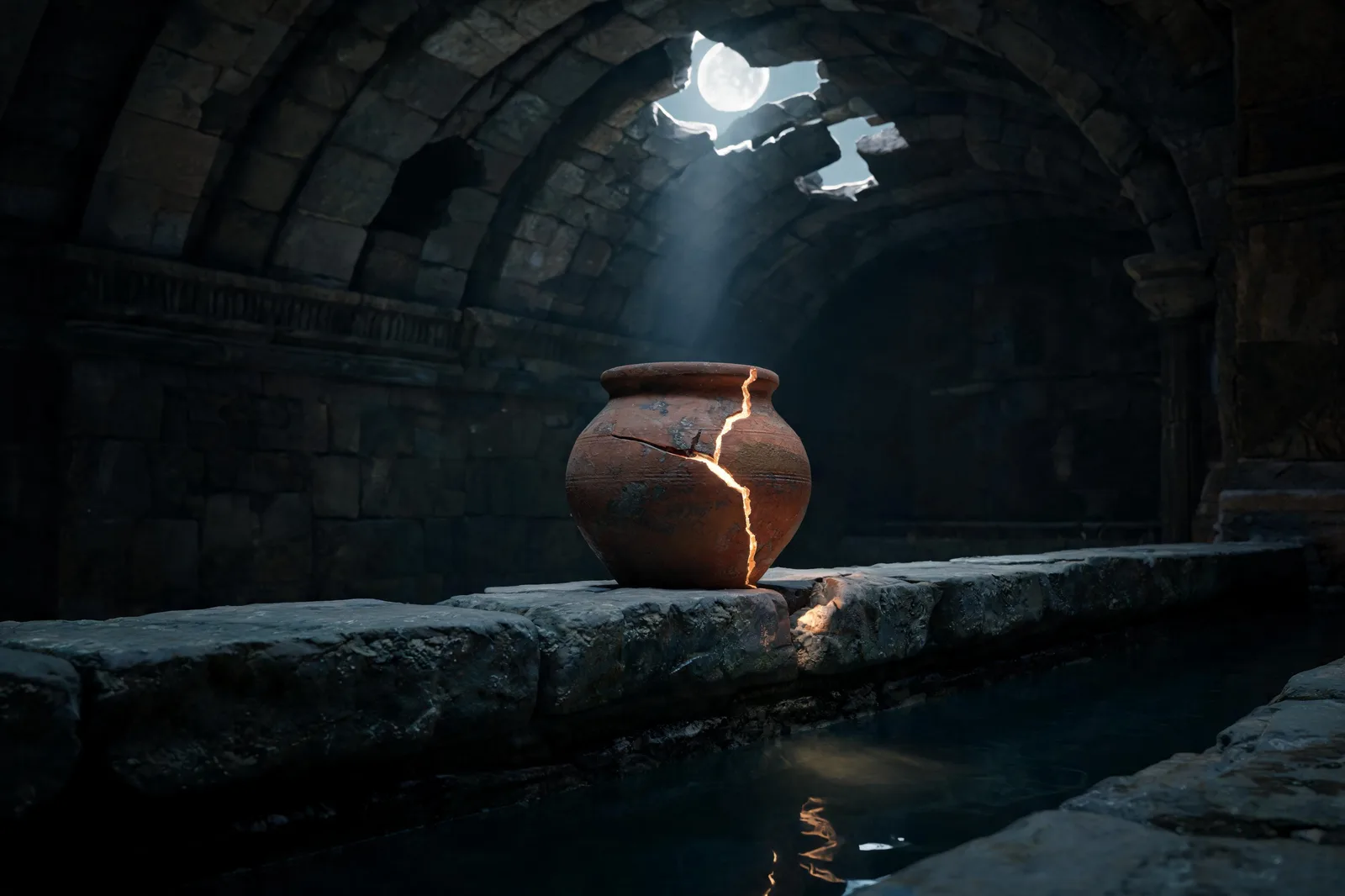
The qliphoth are the "shells" of Lurianic Kabbalah: empty husks left over when divine light shattered its vessels at the start of creation. Understanding what the qliphoth are means starting with Isaac Luria, the sixteenth-century mystic of Safed, and the cosmic accident his students called the shevirah, the breaking of the vessels.
Vessels that could not hold the light
Luria taught that God withdrew (tzimtzum) to leave room for a created world, then sent divine light into ten vessels meant to channel it. The light was too intense. The lower seven vessels cracked and scattered, their fragments falling away from holiness. Those fragments are the qliphoth: structure without indwelling light, form that outlived its purpose. Luria's own writings survive mostly through his student Chaim Vital, whose Etz Chaim organized the master's oral teaching into the system later readers call Lurianic Kabbalah.
Shells, not demons
"Qliphoth" (קליפות) simply means husks or peels, the way a fruit's skin is discarded once the fruit is eaten. The image matters: these are not independent evil powers invented to frighten students, but leftover containers, the exhausted packaging of a cosmic event. Later occultists dramatized them considerably, as the next part of this series traces through the Golden Dawn's own reading of the shevirah. In Luria's own system the qliphoth explain why evil and imperfection exist in a world made by a good God: not through intentional malice, but through structural failure at the universe's first moment.
The Tree of Life has a shadow
Lurianic Kabbalah maps the ten vessels onto the ten sefirot of the Tree of Life, the same diagram tarot readers use for the Thoth deck's correspondences. Each sefirah has, in this reading, a corresponding shell: not a mirror world staffed with named adversaries, at least not yet in Luria's own texts, but a structural shadow, the condition of brokenness that the sefirah's light is meant to repair. Death already carries this idea of structure outliving its content, something emptied and transformed rather than destroyed outright.
Tikkun: the work of repair
The whole point of naming the qliphoth was never to catalog them for their own sake. Luria's system exists to describe tikkun, the repair of the vessels through human action: prayer, ethical conduct, and attentive intention (kavanah) that gathers the scattered sparks of light trapped in the shells and returns them to their proper place. A reader who meets the qliphoth only as a list of frightening names misses this entirely. The concept is diagnostic and restorative, describing a wound in order to heal it, closer to a physician's chart than a demonology.
Why tarot readers meet this word at all
The Thoth deck's structure borrows directly from the Tree of Life, and any serious study of its correspondences eventually meets the qliphoth, because the tradition that built the sefirotic attributions also built their shadow. The Tower often draws comparisons to the shevirah itself: a structure that cannot hold what it contains, breaking so something new can follow. That is a historical and symbolic parallel, not a ritual instruction, and this series treats it that way throughout.
From Safed to the Golden Dawn
Luria never met a tarot card. The qliphoth entered Western esotericism through a different route: Christian Cabalists, then nineteenth-century occultists, then the Hermetic Order of the Golden Dawn, each generation reading the shells through its own concerns. Dion Fortune's own careful treatment of the subject, in The Qliphoth in Dion Fortune's Writing, shows one of the more sober stops on that journey, treating the qliphoth as a serious structural idea worth understanding rather than a menu of evocations. The next part of this series follows the Golden Dawn's own version of that inheritance.
A concept worth studying carefully
What the qliphoth are, in the end, is an answer to a hard question: why does a world made by a perfect source contain brokenness at all? Luria's answer was structural rather than moral, and it rewards patient reading more than it rewards fear. Readers who want the source material in English can start with Gershom Scholem's history of the Kabbalah, still the clearest modern guide to Luria's system: Gershom Scholem surveyed this material for decades and remains the standard entry point for readers without Hebrew.
Tarot readers who follow the Tree of Life seriously will meet the qliphoth again and again, in older grimoires, in Crowley's own marginal notes, and in the Thoth deck's own shadow symbolism. Meeting the concept here, in its original Lurianic shape, is the soundest way to understand everything that later Western occultism built on top of it.
Questions
What does the word qliphoth mean?
Qliphoth means husks or shells in Hebrew. It describes the broken, light-emptied remains of the vessels that shattered at the start of creation in Lurianic Kabbalah.
Who first taught about the qliphoth?
Isaac Luria, a sixteenth-century kabbalist in Safed, developed the idea, though it survives mainly through his student Chaim Vital's writings.
Are the qliphoth demons?
In Luria's own system, no. They are structural husks, not independent evil beings; later occultist writers added more dramatic imagery to the concept.
Why do tarot readers study the qliphoth?
Because the Thoth deck's correspondences rest on the Tree of Life, and the qliphoth are that tree's structural shadow, part of the same system of sefirot.
This article talks about
You might also like
 Kabbalah
 Kabbalah
 Kabbalah
© 2026 TAROTS chat (tarots.chat). All rights reserved. No part of this article may be reproduced, distributed or adapted without the owner's written permission.
The Journal
 Kabbalah
 Spirituality
 Love
 Spirituality
 Symbolism
 Spirituality
 Symbolism
 Symbolism
 Kabbalah