Frabato the Magician: Bardon's Novel as a Tarot Journey
by Redazione · 9 October 2026 · 3 min read
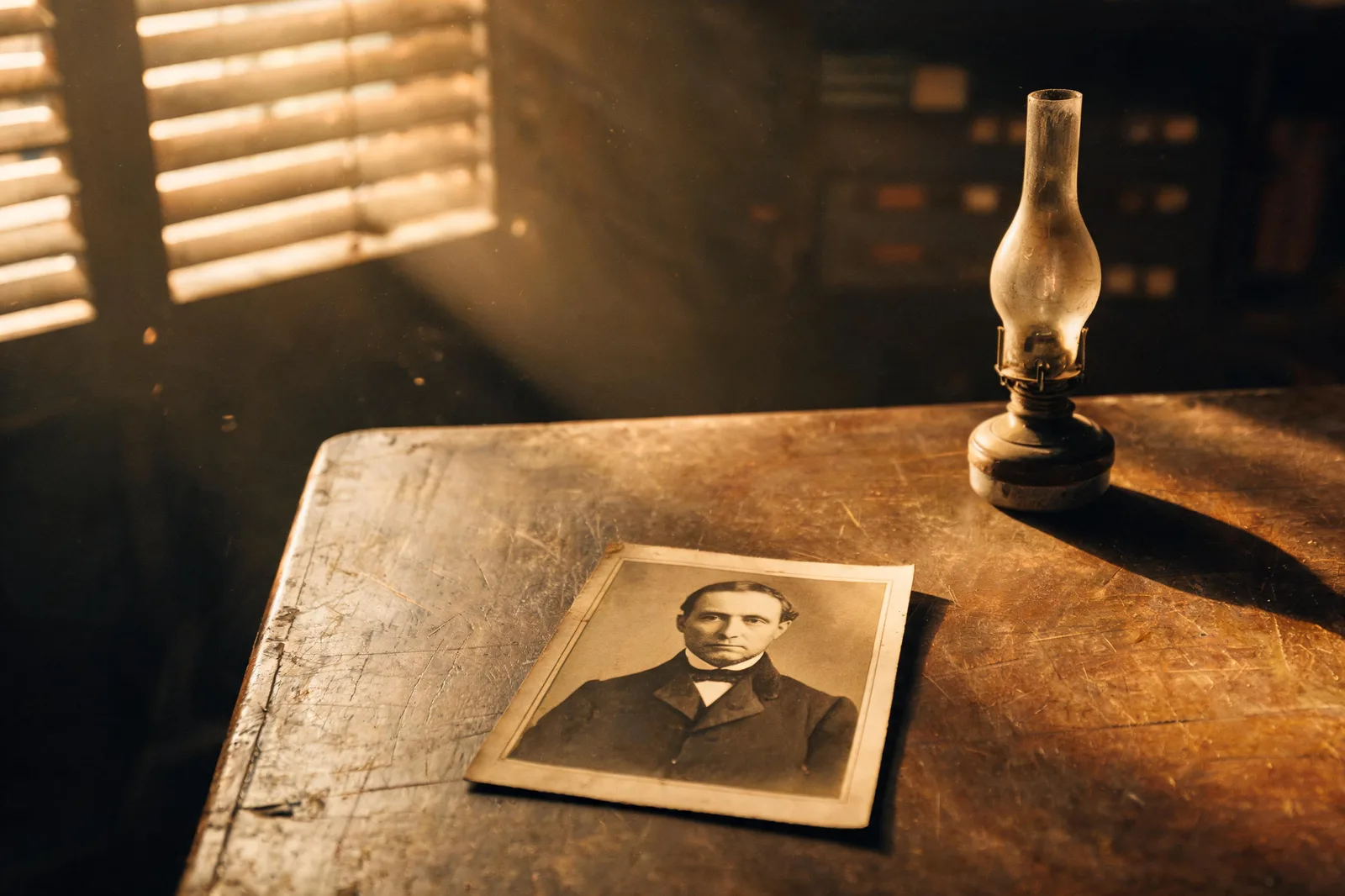
Frabato the Magician is not one of Bardon's three teaching books; it is a novel, published only after his death, that tells a story Bardon is said to have shared with those closest to him: a past life as a magician named Frabato, and a confrontation with a hostile occult faction that tradition holds shadowed his later years too. Bardon's Tarot: Why Readers Call His First Book the First Card left Bardon's three books at their own close; this part turns to the story that explains, in his circle's own telling, why those books cost him so much to write.
A Novel, Not a Manual
Where Initiation into Hermetics, the evocation book and the Quabbalah volume are built from exercises, Frabato the Magician reads as narrative: a central figure recognises, across lifetimes, a long conflict between those who use trained power to serve others and those who use it to dominate them. The manuscript surfaced and was published only in 1979, more than two decades after Bardon's death in 1958, prepared from material he had shared with people around him. Tradition holds the gap between his death and the book's appearance reflects how sensitive its claims were considered at the time, not any uncertainty about whether Bardon told the story at all.
War as Part of the Legend
The novel folds Bardon's own wartime arrest into its plot, presenting the Gestapo's interest in him as something closer to a continuation of the older occult conflict than an unrelated historical accident. Readers should hold that framing as legend layered onto biography, not as an independently verified account of why he was arrested. Franz Bardon's documented history and the novel's own mythic reading of it are two different registers, and the book itself asks to be read as the second.
A Struggle the Cards Already Know
The Major Arcana carries its own version of a struggle between service and domination. The Devil names the trap of power turned toward appetite and control, chains that look freely chosen until they are tested; Fortune, a few cards earlier, turns the same wheel that can lift a figure up or drag one under depending only on which spoke a hand grips. Frabato's conflict, trained power aimed at others' good against trained power aimed at their harm, is the same axis these two trumps already hold, told as a life story instead of a static image.
Death as Threshold, Not Ending
Bardon's own death, at the hands of a regime that imprisoned him on invented charges, sits close to Death in a reader's instinct: an ending that the tradition around him refuses to read as final. His students describe his death less as a conclusion than as an interruption, the fourth book never written standing in for the continuation his life did not get to finish. That reading comforts more than it proves, and is worth naming as comfort rather than as established fact.
What the Story Gives a Reader
A tarot reader does not need to accept Frabato's past-life claims to take one thing from the novel: the conviction that a trained power always serves one of two masters, and that a reading which cannot say which master is in play for a given card has not finished its work. The next part of this series turns to a concept central to Bardon's whole system, the Akasha principle, and to the open potential it shares with the tarot's own first trump, the Fool.
Questions
What is Frabato the Magician?
A novel published in 1979, after Bardon's death, telling a story of a past-life magician and a long conflict between service and domination that his circle said he shared privately.
Is Frabato the Magician one of Bardon's teaching books?
No. His three teaching books are Initiation into Hermetics, the evocation book and the Key to the True Quabbalah; Frabato is narrative, not instruction.
Does the novel explain Bardon's wartime arrest?
It frames the arrest as part of an older occult conflict; that is the novel's own mythic reading, not an independently documented explanation.
How does Frabato relate to the tarot?
Its central struggle, power serving others against power serving domination, mirrors the axis readers find between the Devil and Fortune in the Major Arcana.
This article talks about
You might also like
 Symbolism
 Symbolism
 Spirituality
© 2026 TAROTS chat (tarots.chat). All rights reserved. No part of this article may be reproduced, distributed or adapted without the owner's written permission.
The Journal
From the Journal
Chosen for this page
 Tarot Journal
The Battle of Blythe Road: Golden Dawn Members Fight for a Vault
5 min read
More in Tarot Journal Thoth Tarot
 Symbolism
 Kabbalah
 Kabbalah
 Thoth Tarot
 Symbolism
 Symbolism
 Kabbalah