The 1942 Exhibitions of the Thoth Paintings
by Redazione · 9 October 2026 · 5 min read
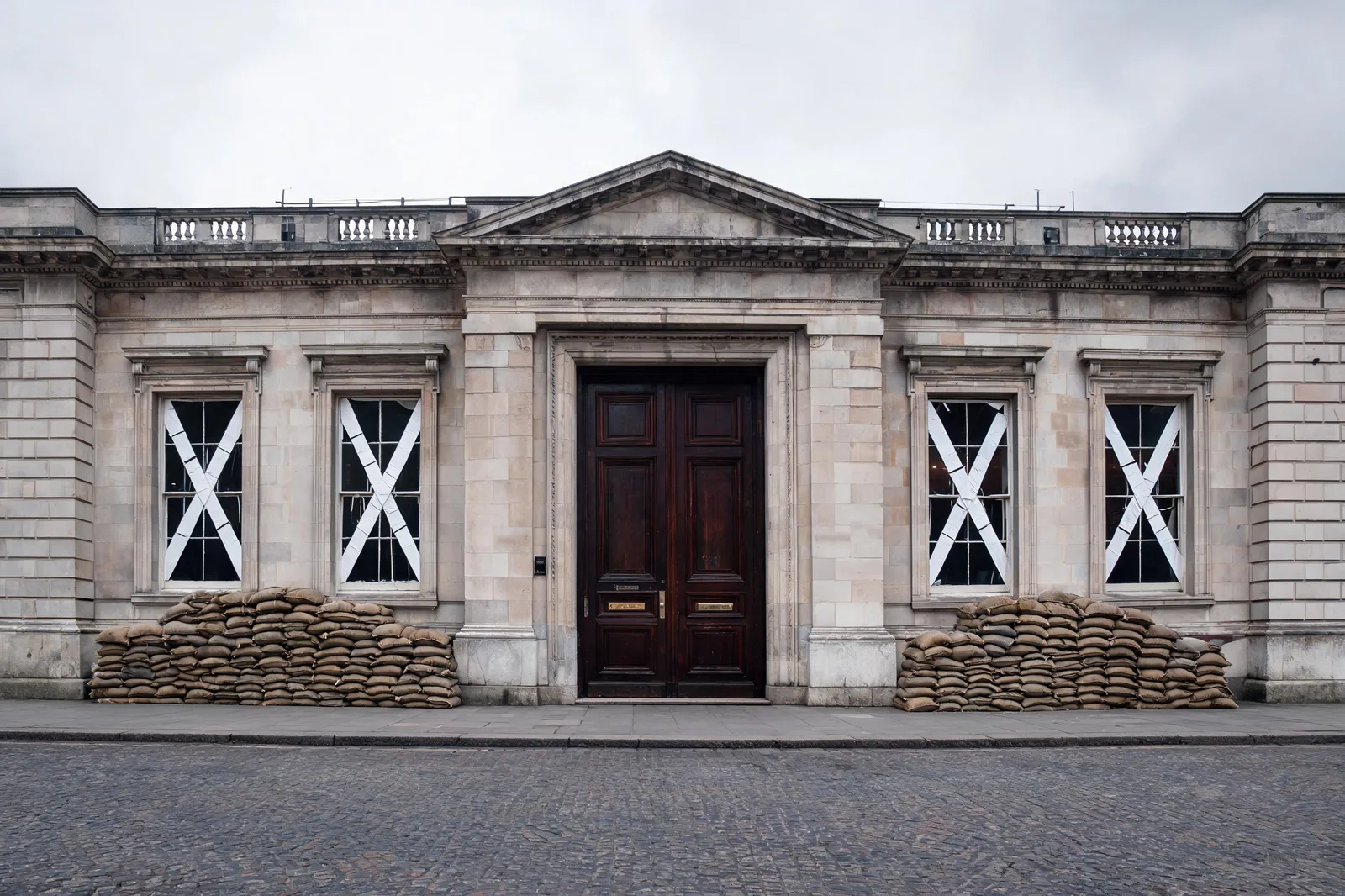
The 1942 Thoth paintings exhibition put Lady Frieda Harris's work in front of the public years before any printed deck existed. Lady Frieda Harris: Five Years Painting the Thoth Deck had occupied her since 1938; by 1942 enough cards were finished that she and Crowley judged the project ready to be seen, not as a fortune-telling tool but as a body of fine art.
Harris arranged to show a selection of the paintings at a London gallery that year, framed and hung as watercolours in their own right, each labelled with its trump number and title rather than any divinatory gloss. Tradition holds that the show drew a mixed response: some visitors engaged with the astrological and Egyptian imagery on its own visual terms, while others, aware of Crowley's name and reputation, came mainly out of curiosity about the notorious magician behind the brief. Wartime London, in the middle of the Blitz's aftermath, was not an easy market for any exhibition, and attendance records from the period are thin.
Mounting any exhibition in 1942 London took real effort. Galleries operated on reduced hours, transport was unreliable, and much of the capital's usual art-going public had been evacuated or was occupied with war work. That Harris pressed ahead regardless says something about how much she valued the project being seen as art in her own lifetime, rather than waiting for better circumstances that the war gave no promise of ever arriving.
A statement of ambition, not a sales pitch
The exhibition mattered less as a commercial event than as a public claim: these were not sketches for a future card game but finished paintings, meant to be judged by the standards of contemporary British art. Harris had exhibited conventional work for two decades before meeting Crowley, and she brought that same expectation of serious critical attention to a project most galleries would never have considered displaying. Putting the Hierophant or the Tower beside ordinary English watercolours was itself an argument about what the Thoth deck was supposed to be.
Crowley's role and his frustration
Crowley, for his part, wanted the exhibition to build momentum toward a published deck and an accompanying book — what became The Book of Thoth, finished in manuscript form around the same years though not printed until 1944. He had no money to fund a print run himself, and publishers were wary of his name. The exhibition let him point to physical evidence of the project's seriousness when he pitched it, even though no agreement for a printed deck would arrive in his lifetime; he died in 1947, over two decades before Weiser's edition reached shops in 1969.
What the thoth paintings exhibition showed outside a deck
Seen framed on a gallery wall rather than held in the hand, the paintings' scale becomes a different kind of evidence. Harris worked larger than a standard card, and visitors who saw the originals could notice detail invisible in the small reproductions later readers would know: the layered circles of her "projective geometry" technique, visible pencil underdrawing left exposed at the edges, and colour mixing that print technology of the 1940s could not have reproduced faithfully even if a publisher had agreed. A card like The Moon rewards the kind of close looking a gallery invites and a shuffled deck rarely gets.
A second showing and a quiet decade after
A further exhibition followed later in the 1940s, again presenting the paintings as art rather than apparatus, and again without securing the commercial deal Crowley hoped for. The war years were a difficult period to launch anything as unusual as an esoteric tarot: paper was rationed, publishers conservative, and Crowley's own public standing far from helpful to a project needing respectable backers. The paintings themselves survived intact, eventually passing into institutional keeping, which is part of why later scholars could study the originals directly rather than relying only on printed reproductions.
That survival was not guaranteed. Wartime London lost galleries, homes and archives to bombing throughout the early 1940s, and a less careful custodian than Harris could easily have let seventy-eight fragile watercolours scatter or decay. Her insistence on treating them as a coherent exhibited body of work, catalogued and kept together rather than sold off piece by piece, is likely part of why the full set reached the 1969 printers intact rather than as a partial or reconstructed collection.
Why the exhibitions still matter to readers
For a modern reader of the Thoth deck, the exhibition history is a reminder that the cards were conceived, shown and judged as paintings first, a divinatory deck only second. That ordering shapes how the deck still reads: dense, painterly, built for sustained attention rather than quick pattern recognition. The long gap between the 1942 showing and the deck's eventual 1969 printing is itself a story about how long serious esoteric art can wait for its moment — and about two people, Harris and Crowley, who never saw the deck's eventual popularity while they were both alive to witness it.
Crowley's own account of the project's aims appears in his later writing; general biographical context is available in the Wikipedia article on Aleister Crowley.
Questions
When were the Thoth tarot paintings first exhibited?
Lady Frieda Harris showed a selection of the finished paintings publicly in 1942, in London, years before any printed deck existed.
Why did Harris exhibit the paintings as art rather than release them as a deck?
No publisher had agreed to print the deck yet, and Harris wanted the paintings judged on their own merit as fine art, not only as a divinatory tool.
Did Aleister Crowley attend the exhibitions?
Crowley supported the exhibitions as a way to build interest in the project and its accompanying book, though detailed attendance records from the period are thin.
What happened to the original Thoth paintings after the exhibitions?
The paintings survived intact and eventually passed into institutional keeping, letting later scholars study the originals directly rather than only printed reproductions.
This article talks about
You might also like
 Symbolism
 Symbolism
 Symbolism
© 2026 TAROTS chat (tarots.chat). All rights reserved. No part of this article may be reproduced, distributed or adapted without the owner's written permission.
The Journal
From the Journal
Chosen for this page
 Spirituality
The Sun Tarot Card in Spiritual Practice: Joy, Enlightenment and Divine Light
2 min read
More in Spirituality Swords
 Kabbalah
Tarot and String Theory: Ten Dimensions, Vibration and the Tree of Life
8 min read
More in Kabbalah Symbolism
 Kabbalah
 Symbolism
 Symbolism
 Symbolism
 Kabbalah