The Ten of Wands, Oppression: Saturn in Sagittarius
How the Thoth deck's final decan of Sagittarius turns nine cards of fire into one honest burden.
by Redazione · 9 October 2026 · 5 min read
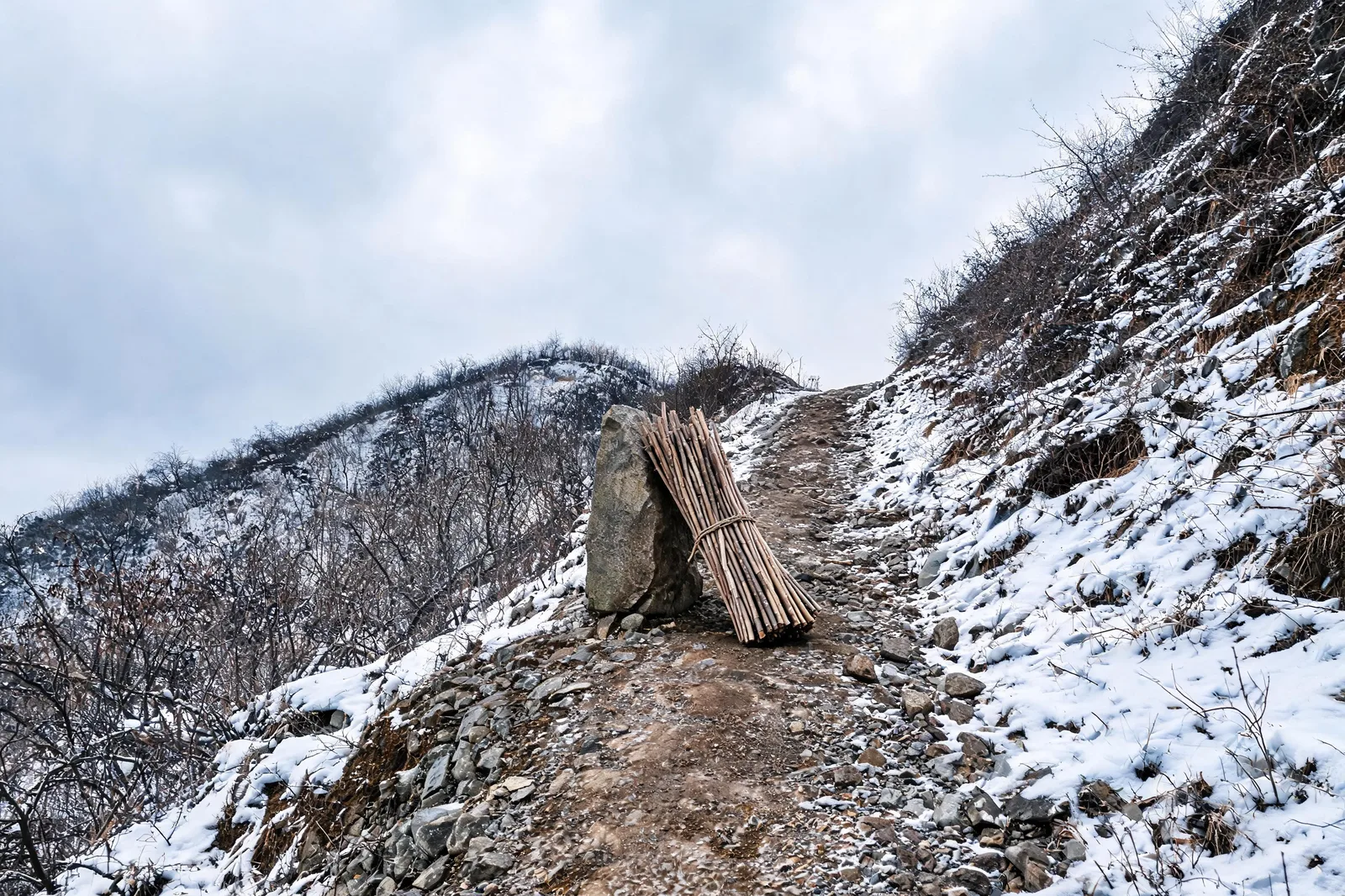
The Ten of Wands, Oppression, is the Thoth deck's name for Saturn ruling the third and final decan of Sagittarius, roughly December 12 to 21. After the Moon's tested endurance in the second decan, covered in the previous part of this series, The Nine of Wands, Strength: Moon in Sagittarius, Saturn closes the suit's whole arc with its heaviest weight. Ten of Wands oppression, read through this decan, is not simple bad luck. It is the accumulated cost of every decan that came before, finally due.
The Third Decan of Sagittarius: Saturn Ends the Suit's Fire
Saturn, the planet of limitation and necessary ending, rules both the first decan of Leo, where it produced Strife's open contest, and this final decan of Sagittarius, where mutable fire has nowhere left to run. The difference between the two placements explains why Oppression feels so much heavier than Strife. Strife was Saturn meeting fresh, confident fire early in a cycle; Oppression is Saturn meeting fire that has already spent nine cards' worth of effort, claiming, proving, defending, racing and enduring, with nothing left in reserve.
This is the structural logic behind the suit's hardest small card. Every one of the Wands' nine prior energies, Dominion's claim, Virtue's proof, Completion's grace, Strife's contest, Victory's win, Valour's defence, Swiftness's speed and Strength's endurance, has been real and has also cost something. Saturn's final decan simply presents the bill.
Oppression: Crowley's Reading of an Honest Burden
Crowley did not soften this title, and in The Book of Thoth he describes the card bluntly as the burden of power exercised without enough rest, a weight carried past the point of comfort. Tradition holds that the card's value lies precisely in that honesty: it names exhaustion as exhaustion, rather than dressing it up as a temporary setback. The blog's broader piece on this card's everyday meaning, burden and overwork in a career context, approaches the same exhaustion from a practical angle; this decan reading explains why the weight arrives exactly here, at the suit's close, rather than earlier.
Ill-dignified, next to cards of denial or false cheer, Oppression can show a burden being carried silently, unacknowledged even to the person carrying it, which tends to make the weight worse rather than lighter.
Malkuth, the Number Ten, and the Four Tens
Every small card numbered ten belongs to Malkuth, the tenth and final Sephirah, the Kingdom where every higher sphere's influence finally becomes concrete, material fact. The series on the Sephiroth covers this placement across suits: Malkuth, the Kingdom, and the Four Tens. Malkuth receives everything above it on the Tree without exception, the costs along with the gifts, and a small card numbered ten always shows a suit's energy fully manifested, for better or worse. In Wands, that manifestation is Oppression: fire's entire journey, arriving at last in the physical world as plain, undeniable fatigue. The Ten of Cups shows the same tens-position as satiety, the Ten of Swords as ruin, the Ten of Disks as wealth; Oppression is Malkuth's reckoning for a suit that spent its whole strength getting here.
This is also why the card, despite its weight, is not read as a dead end. Malkuth is the beginning of a new cycle as much as the end of the old one; every suit's Ace waits just beyond its Ten.
Reading Oppression in a Spread
In practice, Oppression suggests a burden that has become unsustainable, most often through accumulation rather than any single failure. The card's advice differs from Strife's: this is not a fight still worth entering but a weight that needs to be set down, delegated or ended. A querent carrying a long-running responsibility should read Oppression as permission to stop, not as a verdict on whether the earlier effort was worthwhile.
It pairs tellingly with Lust, Leo's trump at the suit's midpoint, by contrast: Lust shows fire mastered and enjoyed, while Oppression shows what happens when that same fire is never permitted to rest. A reading that moves from Lust to Oppression across a spread's timeline is often warning against exactly that failure to pause.
Closing the Decan Calendar
The Golden Dawn's decan tables close Sagittarius with Saturn exactly as Hellenistic astrology's planetary-sign sequence assigned it; the system's history is on the English Wikipedia's decan article. Checked against a tropical ephemeris, mid-December's Saturn-in-Sagittarius window sits at the very end of the solar year's fire signs, just before Capricorn opens earth.
Oppression closes the small-card arc of the Wands as decans. The final part of this series turns to the suit's elemental Princess, who carries no single decan but the whole suit's ground.
Reading the Whole Suit Through Its Final Card
Oppression rewards being read backward as much as forward. A client who draws this card alone, with no other context, benefits from a reader who can name, briefly, what nine decans of fire actually paid for: a position claimed, proven and completed in Aries, won and defended in Leo, raced toward and endured in Sagittarius. None of that labour disappears simply because the final card is heavy. Treating Oppression as the suit's whole verdict, rather than its closing chapter, is the most common misreading this card invites, and it is worth correcting directly: the weight is real, but so is everything that earned it.
Questions
What decan is the Ten of Wands in the Thoth deck?
It is the third and final decan of Sagittarius, roughly December 12 to 21, ruled by Saturn.
Why is Oppression the suit's heaviest card?
It falls at the tenth and final position, where Malkuth gathers the full, accumulated cost of the nine energies that came before it.
What Sephirah governs the Ten of Wands?
Malkuth, the tenth Sephirah, the Kingdom where every higher sphere's influence becomes concrete, material fact.
Does Oppression mean the effort was wasted?
No. It shows accumulated fatigue, not failure. The card's advice is to set the burden down or share it, not to doubt the work already done.
This article talks about
You might also like
 Wands
 Wands
 Wands
© 2026 TAROTS chat (tarots.chat). All rights reserved. No part of this article may be reproduced, distributed or adapted without the owner's written permission.
The Journal
 Spirituality
 Kabbalah
 Learn Tarot
 Major Arcana
 Kabbalah
 Kabbalah
 Symbolism
 Symbolism
 Kabbalah