Three Card Tarot Spread: How to Read It
Past, present, future or situation, obstacle, advice: choosing a framing and reading the cards together, not one at a time.
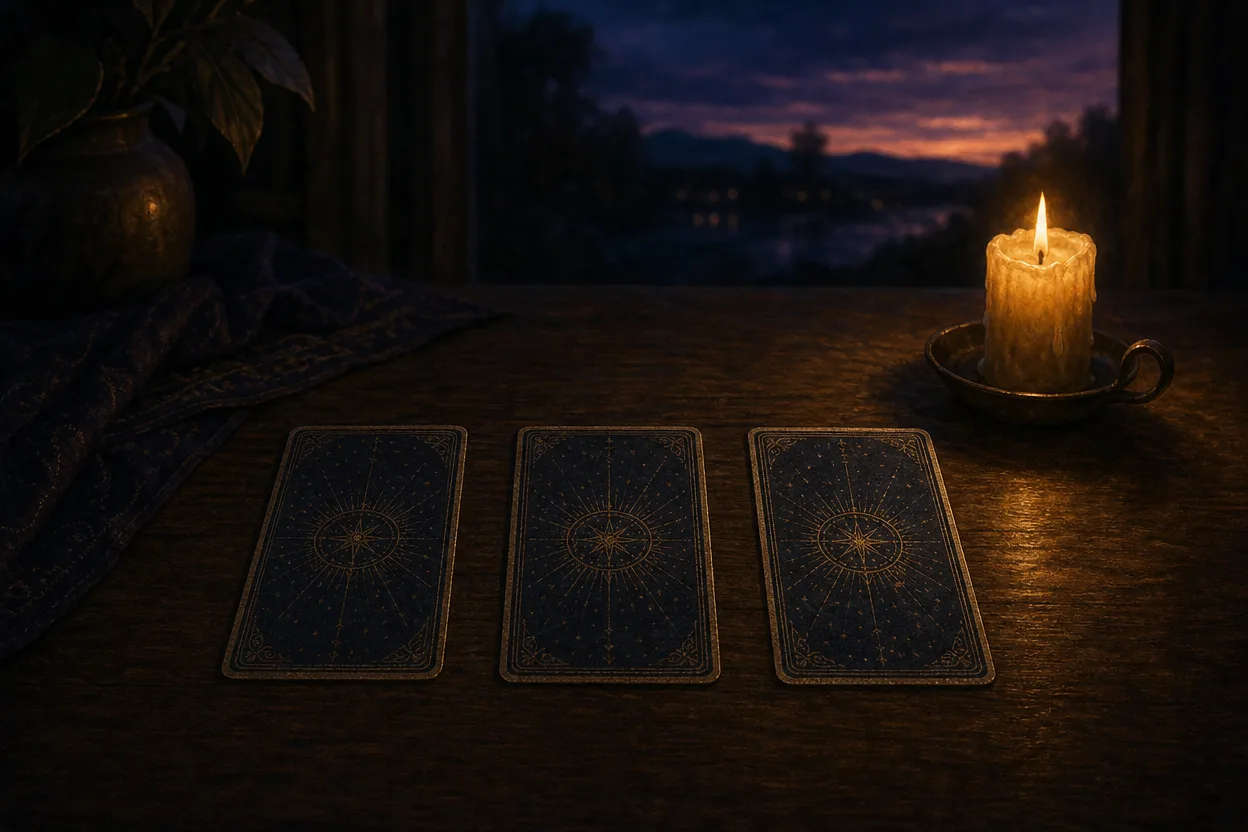
The three card tarot spread is the first layout most readers learn, and for good reason: three positions are enough to hold a real question without overwhelming a beginner with a dozen cards to weave together. It rewards patience more than any fixed formula, because its meaning shifts with the question you bring to it.
What the three-card spread actually is
Three cards, drawn in order, laid left to right. The classic assignment is past, present, and future, but that framing is only one option among several equally useful ones. The same three positions can read as situation, obstacle, and advice, or as you, the other person, and the relationship between you, or as mind, body, and spirit for a check-in reading. What stays constant is the structure: three positions in sequence, each one informed by the two around it, never read in total isolation.
Choosing the right three-position framing
Before drawing, decide which framing fits your question, because it changes what each card is answering.
- Past, present, future: best for "how did I get here, and where is this heading."
- Situation, obstacle, advice: best for a stuck problem that needs a next step, not a forecast.
- Mind, body, spirit: best for a general check-in with no specific external question.
- You, them, the relationship: best for a two-person question, without needing a full compatibility layout.
Naming the framing out loud, even just to yourself, before you draw is what keeps a three-card reading from turning into three disconnected card meanings.
Reading the cards together, not one at a time
The most common beginner mistake is treating the three cards as three separate mini-readings. A three card tarot spread earns its usefulness from the relationships between the cards: does the present card resolve the tension in the past card, or repeat it? Does the advice card actually address the obstacle, or does it quietly avoid it? Read the middle card first if the framing is past/present/future, since it anchors where you actually stand right now, then look outward to the cards on either side.
An example reading
Say the question is "what do I need to understand about this new job?" using situation, obstacle, advice. The Star in the situation position, an ill-dignified The Lovers in the obstacle position, and a strong card in the advice position. Read together: the situation carries real, grounded hope, the obstacle is an unmade decision or unclear commitment somewhere in the new role, and the advice card tells you what clarifying that decision would look like. None of the three cards means much said alone.
When to use three cards instead of a bigger spread
A three card tarot spread is the right tool when a question is specific and contained. Save Celtic Cross or a compatibility layout for questions with more moving parts: a long-running situation, a relationship with real complexity, or a decision with more than two live options. Reaching for a ten-card spread on a simple "should I do this" question usually adds noise, not clarity.
FAQ
What is the best framing for a three card tarot spread? It depends on the question. Past/present/future suits a timeline question, situation/obstacle/advice suits a stuck problem, and you/them/relationship suits a two-person question.
Should I read the cards in order, left to right? Reading order helps, but the real work is reading them together: notice how the outer two cards relate to the middle one, not just what each card means alone.
Can a three card spread answer a yes-or-no question? It can suggest a direction, but tarot in this tradition is built for reflection rather than verdicts, so treat the answer as perspective, not a guarantee.
When should I use a bigger spread instead? When the question has more moving parts than three positions can hold honestly, such as a long-running situation or a decision among several live options.
Frequently asked questions
What is the best framing for a three card tarot spread?
It depends on the question: past/present/future suits a timeline question, situation/obstacle/advice suits a stuck problem, you/them/relationship suits a two-person question.
Should I read the cards in order, left to right?
Reading order helps, but the real work is noticing how the outer two cards relate to the middle one, not just what each card means alone.
Can a three card spread answer a yes-or-no question?
It can suggest a direction, but tarot here is built for reflection rather than verdicts, so treat the answer as perspective, not a guarantee.
When should I use a bigger spread instead?
When the question has more moving parts than three positions can hold honestly, such as a long-running situation or several live options.
This article talks about
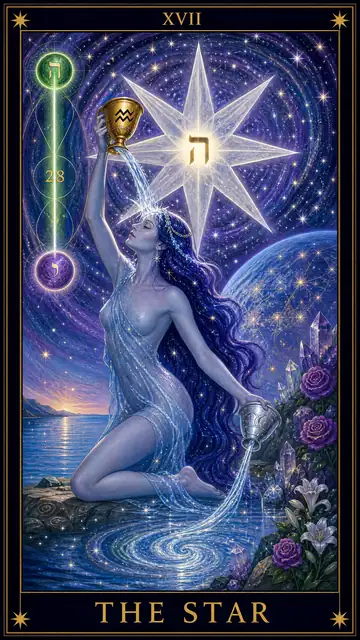 The Star
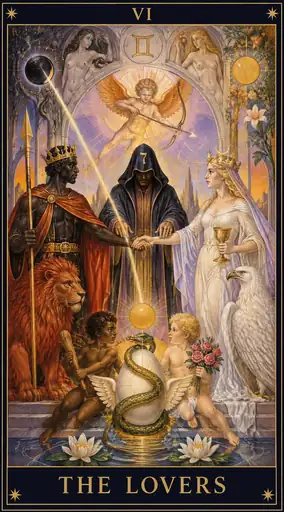 The Lovers
Share this article
You might also like
How to Read Tarot Cards: A Beginner's Guide
Suits, positions and one simple three-card spread to get you reading with real instinct, not memorized definitions.
How to Read the Celtic Cross Tarot Spread
Ten positions, one clear order: what each card in the Celtic Cross actually answers.

Full Moon Tarot Spread: A Monthly Check-In
Four positions for what has reached fullness, what to release, and what to carry into the next cycle.