Éliphas Lévi's School: The Tarot as a Universal Key
How a defrocked seminarian turned twenty-two cards into the grammar of the whole occult world
by Redazione · 9 October 2026 · 5 min read
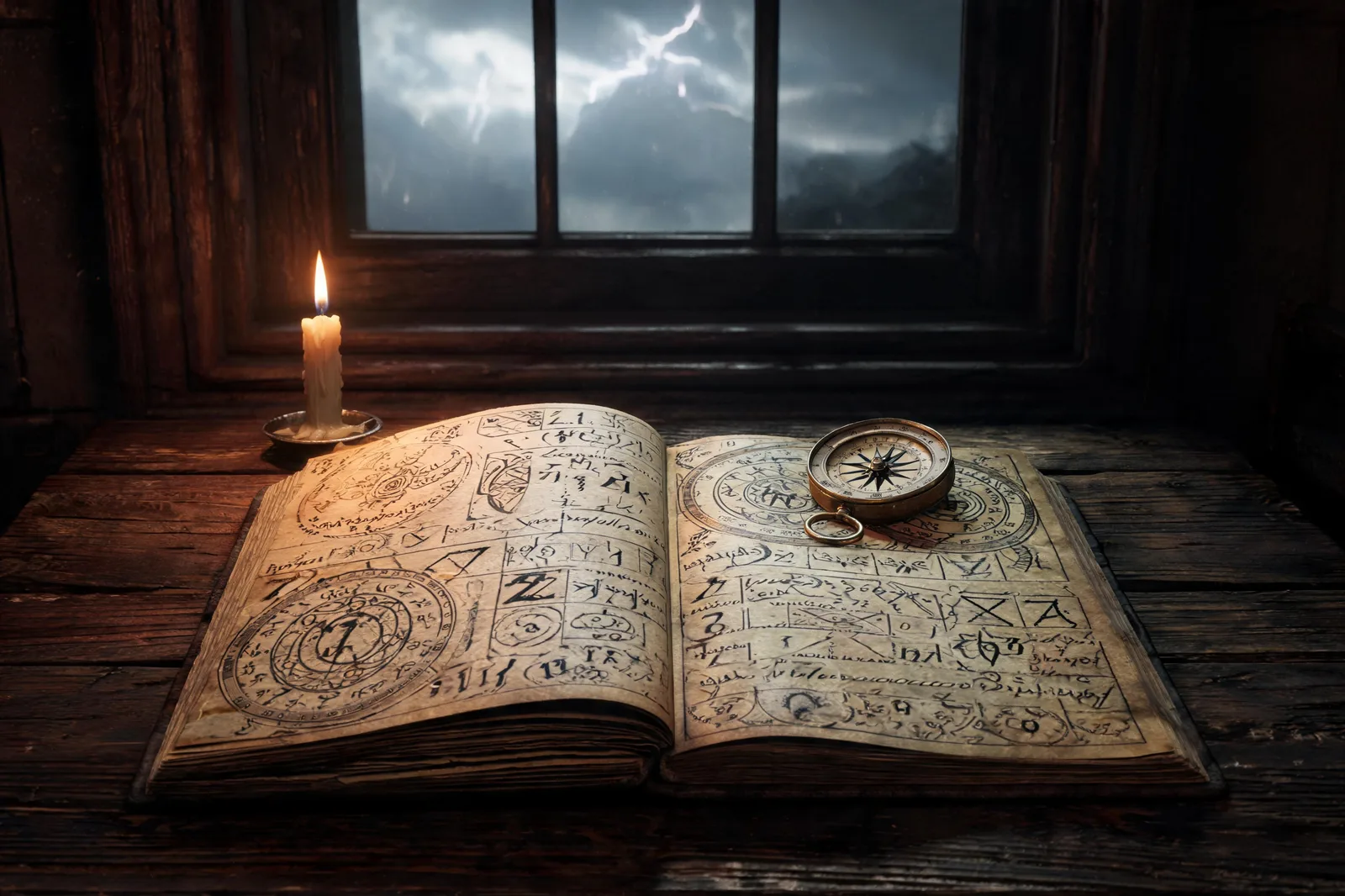
Éliphas Lévi called the tarot a universal key because he believed one deck of twenty-two pictures could unlock every sacred system ever written. He was not a card player. He was a defrocked seminarian turned ritual magician, and he built the first full occult school around the tarot in nineteenth-century Paris.
Lévi, born Alphonse Louis Constant in 1810, published Dogme et Rituel de la Haute Magie in 1854 and 1856. In it he argued that the twenty-two trumps map directly onto the twenty-two letters of the Hebrew alphabet, and through them onto the Kabbalah, onto astrology, onto alchemy, and onto the structure of the human mind. One deck, he claimed, held the grammar behind every other tradition. That claim is the seed of nearly all modern occult tarot.
A seminary dropout rebuilds magic
Constant trained for the priesthood, left before ordination, and spent years writing radical pamphlets before turning to ritual magic under the name Éliphas Lévi, a Hebraicized version of his own name. He read widely and synthesized loosely: Agrippa, the Rosicrucian pamphlets, fragments of real Kabbalah, and his own inventive leaps. He was less a careful scholar than a confident architect. He wanted a single key, and he built one, correspondences and all, out of whatever fit his design.
His synthesis was bold rather than rigorous. Scholars have since shown that his Hebrew-letter attributions were largely his own invention, not an inherited tradition. But the boldness is exactly what made his school so influential. He gave later readers something concrete to argue with, correct, and build on.
The twenty-two letters and the twenty-two trumps
Lévi's central move was numerical. Twenty-two trumps, twenty-two Hebrew letters: the match looked too clean to be coincidence. He assigned Aleph to The Magus, the first trump, treating it as the active, originating force, the letter and the card both standing for pure will turned toward matter. Every other trump received its own letter in sequence, each pairing meant to open a door between the visual symbol and the Hebrew letter's older meaning.
This was the first time someone had proposed, in print, that the trumps were not a game's leftover allegory but a sealed cipher waiting to be read letter by letter. Later writers, including the Golden Dawn circle, would rework his specific pairings, often reversing his sequence, but they kept his premise: the cards and the alphabet belong together.
The tarot as grammar for the whole occult world
For Lévi the tarot was not one symbol system among many. It was the shared grammar underneath astrology, alchemy, Kabbalah and ceremonial magic. He treated the trumps as hieroglyphs of universal ideas: the The Hierophant as the principle of tradition and teaching, the structure of the Major Arcana as a ladder from pure will to final completion. Tradition holds that he saw the whole deck as a compressed textbook, meant to be read in order, each card a chapter in a single unfolding argument about the nature of the cosmos.
This is why his school reads so differently from the card-game manuals that came before it. Earlier writers like Antoine Court de Gébelin had guessed at Egyptian origins. Lévi went further: he proposed a working method, a way of using the cards to think about hidden structure.
Ritual, will and the practicing reader
Lévi did not separate study from practice. His magic depended on volonté, trained will, and he treated the tarot as both a map of that will and a tool for strengthening it. A reader working through the trumps in sequence was, in his view, undergoing a kind of initiation, moving from the Magus's raw potential toward the completed figure of the final card. Meditation on a single trump, held in the mind with disciplined attention, was itself a magical act.
This practical, almost devotional approach to the cards shaped every esoteric school that followed him. The idea that a spread like the Celtic Cross could double as a meditative structure, not just a predictive tool, traces back to this fusion of study and will that Lévi insisted on.
Why his school still matters
Lévi's attributions were often wrong by the standards of actual Kabbalistic scholarship, and his history was closer to invention than inheritance. But he is the hinge on which the modern occult tarot turns. Without his claim that the deck was a universal key, there is no Golden Dawn correspondence table, no Crowley reworking, no century of esoteric schools treating seventy-eight cards as a coherent philosophical system. Reading him today means separating the confident architecture from the shaky foundations, and still recognizing how much of the house still stands.
Readers curious about the man himself can find a solid overview at the English Wikipedia article on Éliphas Lévi.
FAQ
Did Éliphas Lévi invent the tarot? No. The tarot existed as a card game for centuries before him. Lévi reinterpreted an existing deck as an occult cipher; he did not create the cards themselves.
Are Lévi's Hebrew letter attributions still used today? Some schools keep his original sequence; others, following the Golden Dawn, use a revised attribution. Both trace back to the question he first raised.
Was Lévi a practicing magician or only a writer? Both. He performed rituals, including a well-documented evocation attempt, and insisted that study of symbols like the tarot had to be joined to disciplined practice of the will.
Is Lévi's system considered historically accurate? Historians generally treat his Egyptian and Kabbalistic claims as inventive synthesis rather than verified history. His influence on occultism is accepted regardless of that accuracy.
Questions
Did Éliphas Lévi invent the tarot?
No. The tarot existed as a card game for centuries before him. Lévi reinterpreted an existing deck as an occult cipher; he did not create the cards themselves.
Are Lévi's Hebrew letter attributions still used today?
Some schools keep his original sequence; others, following the Golden Dawn, use a revised attribution. Both trace back to the question he first raised.
Was Lévi a practicing magician or only a writer?
Both. He performed rituals, including a well-documented evocation attempt, and insisted that study of symbols like the tarot had to be joined to disciplined practice of the will.
Is Lévi's system considered historically accurate?
Historians generally treat his Egyptian and Kabbalistic claims as inventive synthesis rather than verified history. His influence on occultism is accepted regardless of that accuracy.
This article talks about
You might also like
 Symbolism
 Symbolism
 Symbolism
© 2026 TAROTS chat (tarots.chat). All rights reserved. No part of this article may be reproduced, distributed or adapted without the owner's written permission.
The Journal
 Kabbalah
 Kabbalah
 Kabbalah
 Swords
 Spirituality
 Disks
 Symbolism
 Symbolism
 Kabbalah