Oswald Wirth's Tarot of the Medieval Imagiers
A craftsman's deck built to teach Kabbalah and alchemy through image alone
by Redazione · 9 October 2026 · 5 min read
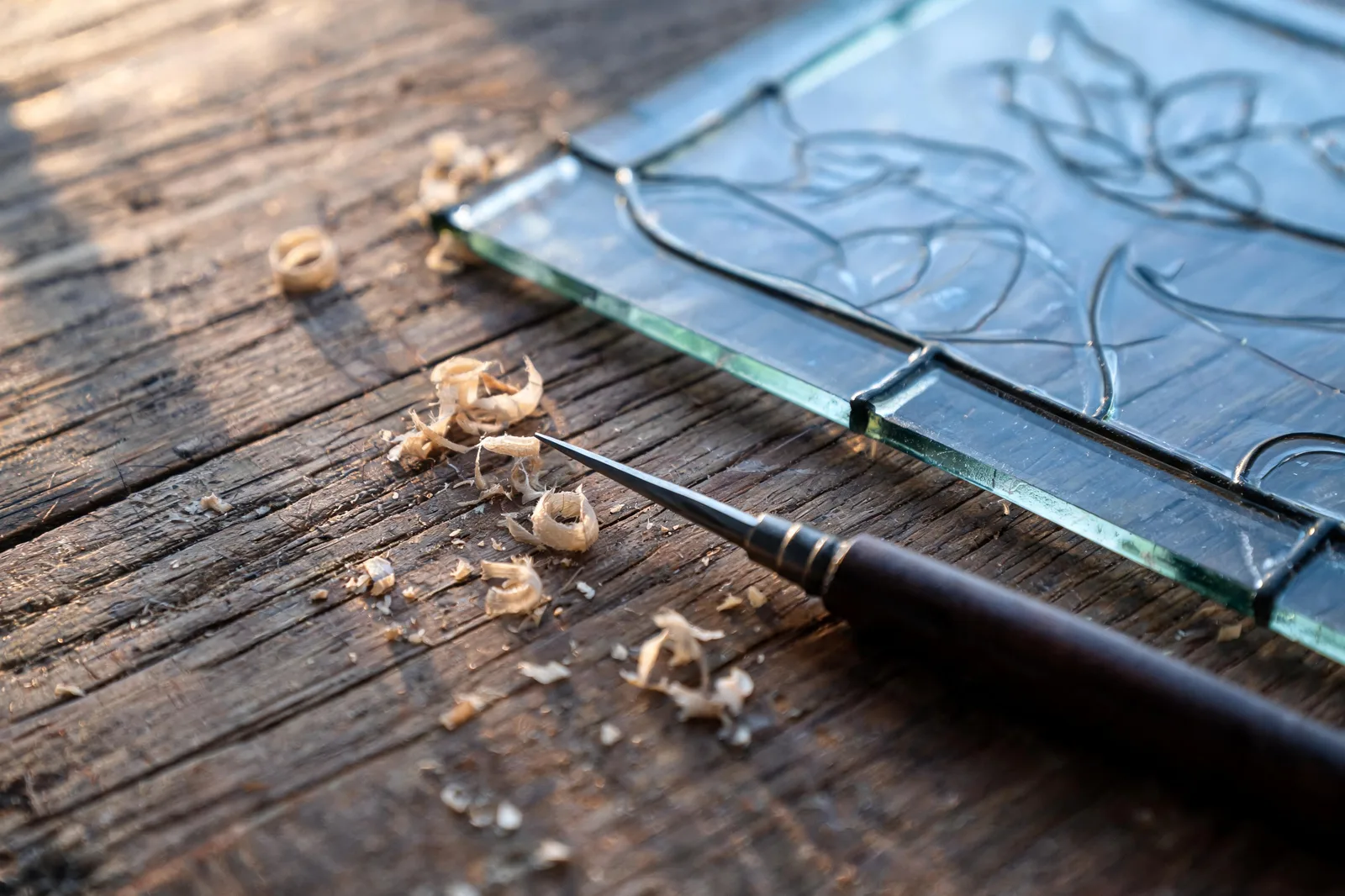
Oswald Wirth's tarot, published as Le Tarot des Imagiers du Moyen Âge in 1889, reimagined the twenty-two trumps as a set of medieval stained-glass images, each one built from scratch to carry a precise symbolic lesson. Wirth was not restoring an old deck. He was a Swiss-born esotericist designing a new one, deliberately, to teach Kabbalah and alchemy through line and color rather than through text.
Wirth worked closely with Stanislas de Guaita, a fellow member of the Parisian occult revival, and the two men treated the deck as a teaching tool for their own order, the Kabbalistic Order of the Rose-Croix. Where Lévi theorized about correspondences and Papus and the Tarot of the Bohemians turned those correspondences into a curriculum, Wirth did something more practical still: he drew the pictures meant to embody the lesson directly, card by card.
A deck built for a specific order
Wirth trained as an engraver and illustrator before turning to occultism, and that craft background shows in every decision behind his deck. He did not attempt a historical reconstruction of an older Tarot de Marseille. Instead he designed a fresh set of images in a consciously archaic, medieval-imagier style, meant to evoke the carved saints and symbols of a Gothic cathedral facade. The deck's name announces this intention: it is the tarot of the imagiers, the medieval craftsmen who carved religious meaning into stone and glass for people who could not read.
De Guaita supplied much of the symbolic program, drawing on Kabbalah and ceremonial magic, while Wirth supplied the visual language. The result was a deck meant to be studied slowly, one card held in meditation at a time, rather than shuffled for a quick reading.
Reading pictures as a second language
Wirth's central conviction was that pictures could carry philosophical content more directly than words. He treated each trump as a glyph, loaded with deliberate visual detail: a gesture, a color, an object placed in a particular hand. The The Magus, standing at the deck's opening, held tools on a table meant to represent the four elements under human control, a visual argument for mastery that a reader absorbed by looking rather than by reading a paragraph of explanation.
This emphasis on pictorial teaching set the oswald wirth tarot apart from both Lévi, who wrote treatises, and Papus, who wrote structured lessons. Wirth's own book about his deck, Le Tarot des Bohémiens, published decades later in 1927, was explicitly a commentary meant to accompany the cards, not a free-standing argument. The images came first.
Astrology, alchemy and the hidden structure
Wirth layered astrological and alchemical symbolism onto his medieval imagery with real care. He assigned planetary and zodiacal associations to the trumps and used recurring colors and objects to link cards across the sequence, so an attentive reader would notice the same visual motif returning transformed in a later card. The The Star carried this layering clearly: Wirth painted her pouring water under a sky of specific stars, a composition meant to be read as a statement about renewal following the destruction of the card before it, rather than as decoration.
Tradition holds that Wirth saw the whole deck as organized in overlapping sets of seven, echoing the numerological habits Papus had popularized, though Wirth's version stayed closer to visual rhythm than to arithmetic proof.
A deck still copied today
Wirth's images proved durable well beyond the small Rosicrucian order that first commissioned them. Later tarot designers, including several working in the English-speaking esoteric revival, borrowed his compositional choices directly, especially his treatment of gesture and his use of a plain black-bordered frame. Studying the oswald wirth tarot today means studying one of the clearest examples of a card meant to teach through form alone, a visual Kabbalah built by a craftsman rather than a philosopher.
Readers who want a fuller biography can consult the English Wikipedia entry on Oswald Wirth, which traces his path from engraving to the Rose-Croix.
FAQ
Did Oswald Wirth restore an old historical deck? No. He designed a new deck of trumps in a deliberately medieval, imagier style; it was not a reconstruction of an existing fifteenth-century pattern.
Who was Stanislas de Guaita in relation to Wirth's deck? De Guaita was Wirth's collaborator and fellow Rosicrucian; he helped shape the symbolic program behind the images Wirth drew.
Does Wirth's deck include the minor arcana? No. Wirth designed only the twenty-two trumps; the deck traditionally associated with his name has no minor arcana of its own.
Why is the deck called the tarot of the medieval imagiers? Wirth named it for the medieval craftsmen who carved symbolic meaning into church stonework, a comparison for how he wanted his cards to teach through image alone.
Questions
Did Oswald Wirth restore an old historical deck?
No. He designed a new deck of trumps in a deliberately medieval, imagier style; it was not a reconstruction of an existing fifteenth-century pattern.
Who was Stanislas de Guaita in relation to Wirth's deck?
De Guaita was Wirth's collaborator and fellow Rosicrucian; he helped shape the symbolic program behind the images Wirth drew.
Does Wirth's deck include the minor arcana?
No. Wirth designed only the twenty-two trumps; the deck traditionally associated with his name has no minor arcana of its own.
Why is the deck called the tarot of the medieval imagiers?
Wirth named it for the medieval craftsmen who carved symbolic meaning into church stonework, a comparison for how he wanted his cards to teach through image alone.
This article talks about
You might also like
 Symbolism
 Symbolism
 Symbolism
© 2026 TAROTS chat (tarots.chat). All rights reserved. No part of this article may be reproduced, distributed or adapted without the owner's written permission.
The Journal
 Kabbalah
 Spirituality
 Kabbalah
 Kabbalah
 Cups
 Kabbalah
 Symbolism
 Symbolism
 Kabbalah