Ficino's Neoplatonism and the Lovers Card
by Redazione · 8 October 2026 · 9 min read
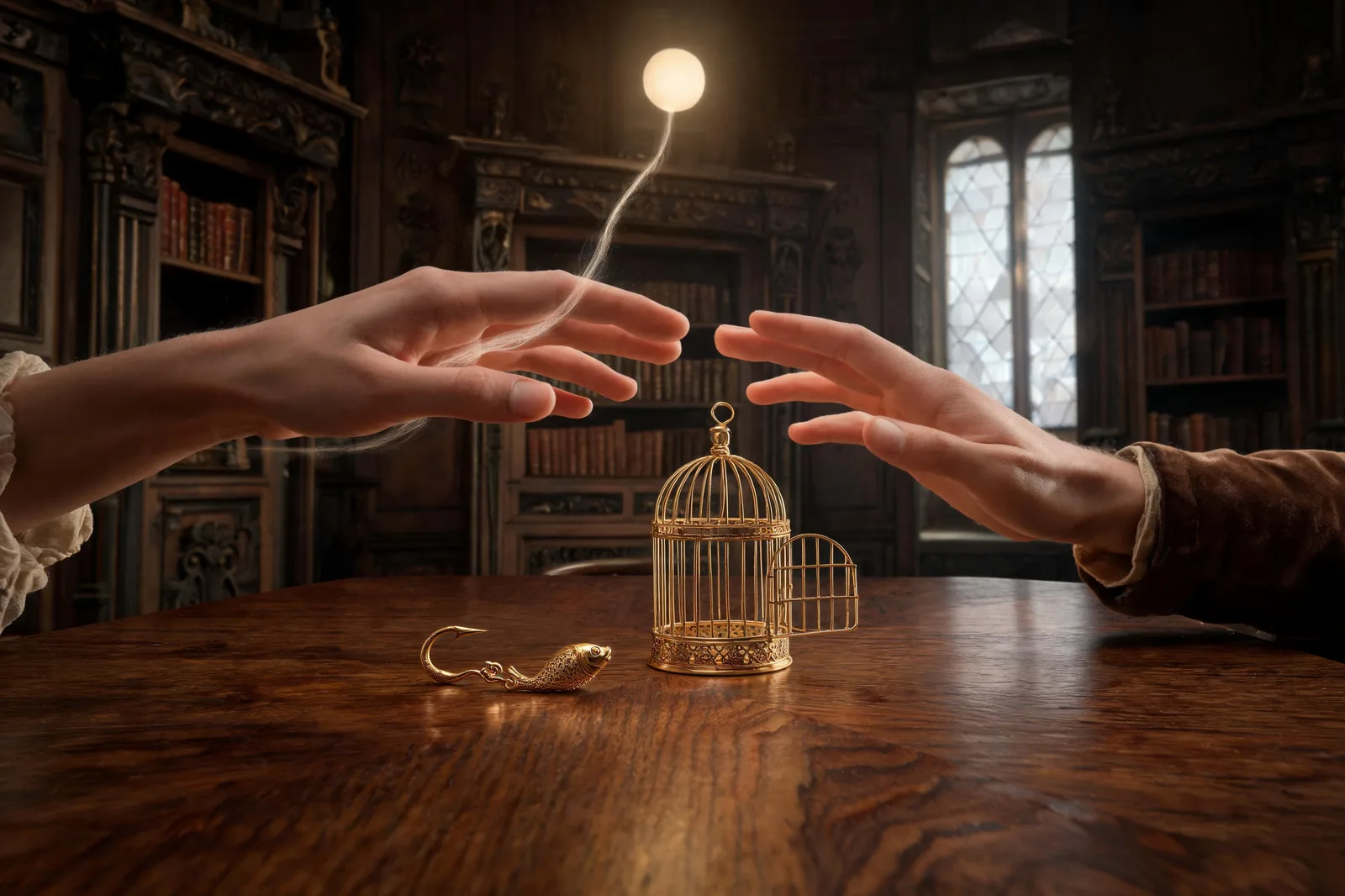
Most Lovers readings stop at the choice. Two figures, an angel, a choice to make — pick a path, be honest about what you want. That reading is defensible. It is also thin, because it treats the card as a fork in the road instead of what the sources actually make of it: a bond. The ficino tarot lovers reading is the older one, and it is the one that explains why the card has never been satisfactorily reduced to a binary choice.
The bond is the older idea. It comes from the Florentine philosopher Marsilio Ficino, who translated the complete works of Plato into Latin in the 1470s and then spent the rest of his life explaining what Plato's theory of love actually does. In Ficino's hands, love is not a decision between two options. It is the active force that holds all things together, the link that every thing in the universe shares in common, and the desire for beauty is its engine. Put that engine on the Lovers card and the card stops being a choice. It becomes the moment where one soul reaches out toward another, and the reach itself is the card.
What Ficino actually said
Ficino's reading is built on three moves. The first: love originates in God and flows out through creation, so that every existing thing carries a share of it. Love is not something people have; it is something they are made of. The second: love is defined as the desire for beauty, and the purpose of love is the enjoyment of beauty. When someone gazes at a beautiful face, they are not really looking at that face. They are being drawn toward the splendor of the highest good, which shines through individual things like light through glass. The third: the soul, when it loves properly, ascends. It moves from love of the particular to love of the universal, from the beloved person toward the source of beauty itself.
Ficino called beauty a hook. The splendor of the highest good blazes through a thing, attracts the gaze, seizes the soul as it approaches, and compels it to rise. The beautiful face is the bait, and the catch is the ascent.
That is the reading of the Lovers card that has the most purchase on the source material. Not a choice between two. A soul being drawn upward through a particular beauty toward something universal. The two figures on the card are not options to choose from. They are the visible and the invisible in the same act of reaching. Ficino wrote this in his commentary on Plato's Symposium, the work that carried the theory of love into the heart of Renaissance thought and shaped the way the entire Western tradition has understood desire since then Stanford Encyclopedia of Philosophy, "Marsilio Ficino".
The Lovers as a bond, not a choice
The standard reading gives the card a fork. You stand between two paths — the body and the spirit, the practical and the ideal, the person and the principle. Pick one. That is the Lovers as decision.
The Ficino reading gives the card a chain. One soul exhales toward the other, and the other returns the gesture. The bond is the thing that is made. Ficino was explicit about the mechanism: love between people occurs when the lover's spirit is exhaled toward the beloved and the beloved returns it reciprocally. Unreciprocated love is, in his formulation, a kind of homicide, because one person has lost a vital element to another and it has not been given back. The metaphor is physical, and Ficino means it that way. The spirit is a substance, and love is an exchange of it.
That is a far stronger card than a choice. A choice can be made by anyone, in any state. A bond requires two parties and a mutual reach. The Lovers, read this way, is not a card about what you will pick. It is a card about whether the reach will be returned, and whether the reach itself will carry both parties somewhere higher than where they started. The difference matters in a reading, because a choice is a one-person card and a bond is a two-person card, and the card on the table is the two-person one.
The angel over the two
The angel above the two figures has always been hard to place in the choice reading. If the card is a fork, what is the angel for? A judge? A witness?
In the Ficino reading, the angel is the direction of the ascent. The two figures below are the particular: the one, the other, the concrete beauty that draws the gaze. The angel above is the universal that the beauty points toward. The reach between the two figures is not the whole act. It is the first move of the ascent. The angel is where the ascent is going.
That is why the card has always felt larger than a relationship card. It is not only about a couple. It is about what a couple, or a bond, or a reach of desire, is made for in Ficino's cosmology. The bond is the training ground for the ascent. The two figures are the body of the act, and the angel is its direction, and the card holds both together in a way a choice card simply cannot.
Why this changes how you read the card
If you pull the Lovers in a reading and the question is a choice, the Ficino reading does not give you a different answer. It gives you a different question. The question is not which of the two paths is right. The question is whether the reach is reciprocal, and whether the beauty that drew you is a hook or a dead end.
A hook pulls you up. A dead end pulls you in and leaves you there. Ficino's distinction between true and false love is exactly the distinction between those two. True love is the enjoyment of beauty in service of the ascent. False love is the fixation on the beautiful object, where the soul stops at the face and never gets to the source.
The Lovers card, in this reading, is the moment where you find out which one you are in.
The Ficino tarot Lovers question and the other readings
None of this is a dismissal of the other Lovers readings. The Golden Dawn reading, which we covered in The Lovers and the Letter Zain: Atu VI on the Seventeenth Path, reads the card as the royal marriage of the soul and spirit on the seventeenth path, with the letter Zain and the arch of swords. That is a different architecture, and it stands on its own. The Thoth reading, which we covered in The Lovers Tarot Card Meaning in the Thoth Deck, reads it through Crowley's alchemical frame of Solve et coagula.
Ficino's reading is the one that sits underneath all of them. It is the reading that explains why the card has two figures at all, why there is an angel, and why the card has never been satisfactorily reduced to a binary choice. The card is a bond. The bond is an ascent. The ascent is what Ficino spent his life explaining, and it is the oldest coherent reading of the Lovers in the Western tradition.
Why Ficino and not just Plato
The question a careful reader will ask is why this reading is attributed to Ficino and not simply to Plato, since the source dialogue is the Symposium. The answer is that Plato's Symposium is a conversation, and Ficino's commentary is a doctrine. Plato gives you Socrates describing a ladder of love. Ficino builds a cosmology out of that ladder, where love is a force, beauty is a mechanism, and the ascent is a process with a direction and a destination.
The tarot card needs the doctrine, not the dialogue. A card has to say what it is, not just that it is. The Lovers is not a question about love, in the way the Symposium is a question about love. The Lovers is an answer, and the answer it gives is the Ficino one: a bond, a reach, an ascent, and a beauty that is either a hook or a dead end.
The hook and the fixation
Ficino's distinction between true and false love is the one the card actually tests. True love is the enjoyment of beauty in the service of the ascent. The soul is drawn through a particular beauty toward something higher, and the beauty does its work and then releases you. False love is the fixation on the beautiful object. The soul is drawn, but it stays. It looks at the face and never looks up. The beauty becomes a cage instead of a door.
The Lovers card, in a reading, is the moment where you find out which of those two you are in. A hook moves you. A fixation holds you. And the card does not flatter either case. It simply shows you the reach, and asks whether the reach is going somewhere or standing still.
What to watch for in a reading
The Ficino reading gives you a practical test. When the Lovers appears, do not ask which of the two things is right. Ask three things. First: is the reach reciprocal, or is one party giving and the other not returning? Ficino was unambiguous that unreciprocated love is a wound. Second: is the beauty in front of you a hook or a fixation? A hook moves you. A fixation holds you. Third: is there somewhere higher this bond is pointing to, or is the bond itself the end?
That is a richer card than a choice, and it is the reading the sources actually support. Ficino's life work — the translation of Plato, the Florentine Academy, the commentary on the Symposium — is the intellectual ground on which every later Lovers reading stands, whether its author knew his name or not Wikipedia, "Marsilio Ficino". Read the card that way and it stops being a fork. It becomes a reach, and the reach is where the card has always been pointing.
Questions
Why is the Lovers attributed to Ficino?
Because the bond, the reach and the ascent are Ficino's doctrine, not Plato's dialogue. The tarot card needs the doctrine. Ficino built the cosmology out of the Symposium, and the card is that cosmology in a single image.
Is the Lovers a choice card or a bond card?
In the Ficino reading it is a bond card. The choice is the thinner, later reading. The bond, and whether the reach is reciprocal and whether it is going somewhere higher, is what the card actually tests.
What is the angel for, if the card is not a choice?
The angel is the direction of the ascent. The two figures below are the particular beauty that draws the gaze. The angel above is the universal that the beauty points toward.
What does the Ficino reading change about a reading?
It changes the question. Instead of asking which of the two paths is right, you ask whether the reach is reciprocal, whether the beauty is a hook or a fixation, and whether the bond is pointing somewhere higher.
You might also like
 Symbolism
 Thoth Tarot
 Major Arcana
© 2026 TAROTS chat (tarots.chat). All rights reserved. No part of this article may be reproduced, distributed or adapted without the owner's written permission.
The Journal
From the Journal
Chosen for this page
 Thoth Tarot
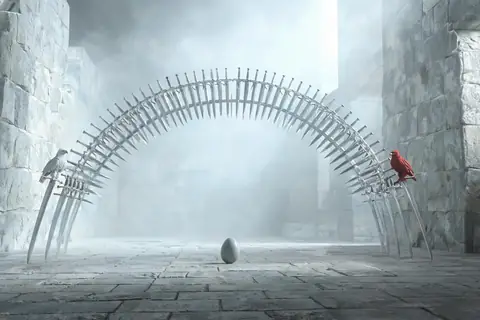
The Lovers and the Letter Zain: Atu VI on the Seventeenth Path
9 min read
More in Thoth Tarot Relationships
The Lovers Tarot Card in Relationships: Choice, Union and Deep Connection
2 min read
More in Relationships Love
Love Spirituality
 Kabbalah
 Learn Tarot
 Kabbalah
 Kabbalah