Is AI Tarot Accurate?
Separating what tarot accuracy can mean from what an AI reader can actually get right or wrong.
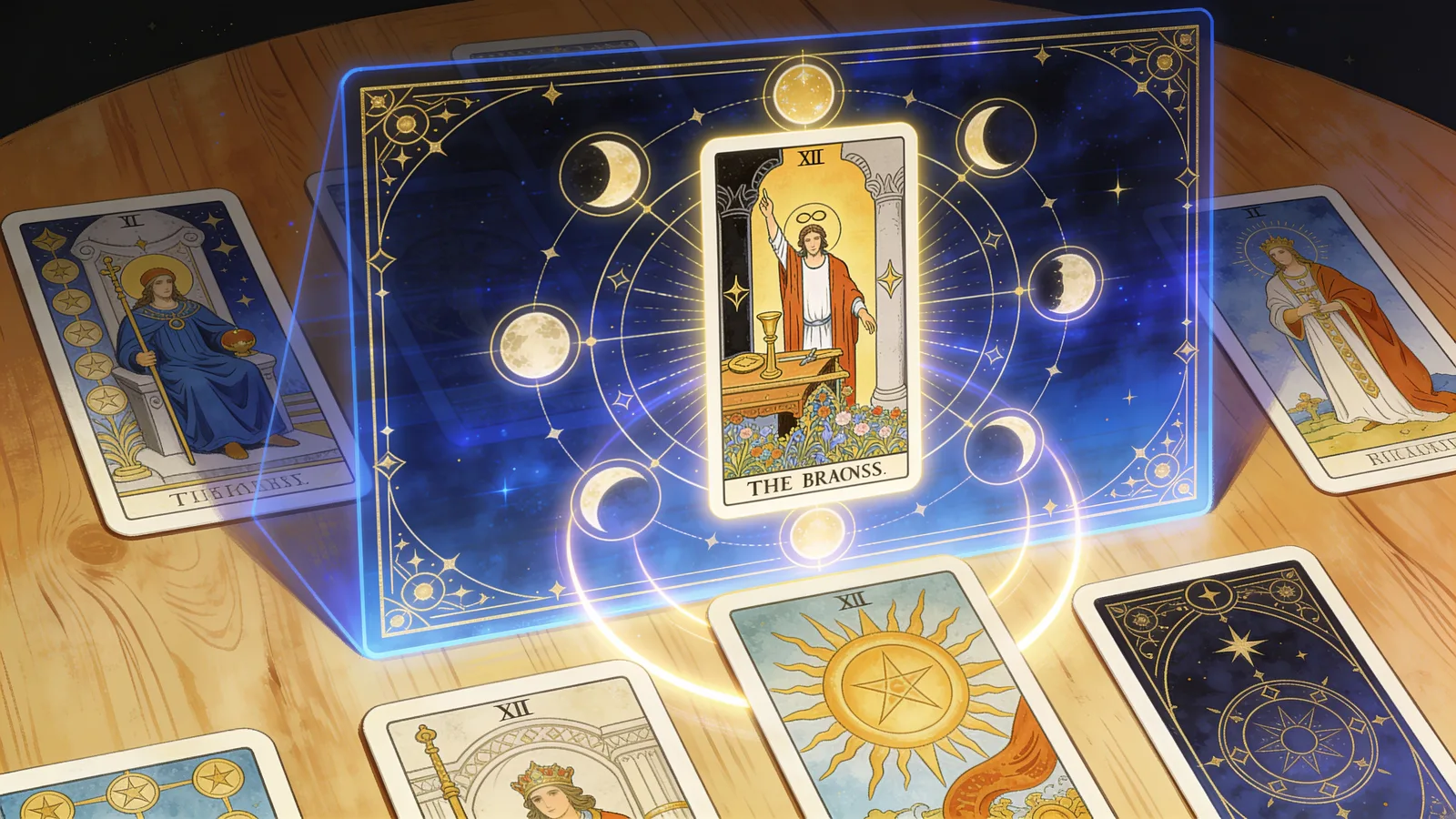
Is AI tarot accurate? is really two different questions wearing one sentence. The first is about the cards: does an AI system draw and read them the same way a trained human reader would, following the same correspondences and traditions? The second is about tarot itself: can any reading, human or AI, be "accurate" in the way a weather forecast is accurate? The honest answer treats these separately, because conflating them is where most of the distrust around AI tarot actually comes from.
Is AI tarot accurate: what accuracy can and can't mean
Tarot is not a predictive instrument in the way a thermometer or a stock ticker is. No card can verify a fact about the external world. What a reading can be accurate about is the internal one: whether the interpretation correctly reflects the card's traditional meaning, its position in the spread, and the question actually asked. That narrower, checkable kind of accuracy is exactly where an AI system can be evaluated fairly — and where it can genuinely fail or succeed.
A related trap: vague statements that feel personal
Any reading style, human or AI, can fall into what psychologists call the Barnum effect: statements broad enough to feel personally accurate to almost anyone. "You've been carrying more than you let on" feels true because it applies to most people most of the time. Naming the card, its position and the exact question is what keeps a reading specific instead of just flattering.
Where AI tarot readers actually go wrong
Most complaints about AI tarot come from one specific failure: a system that names a card correctly but reads it generically, ignoring its position, the question, and the other cards around it. The Tower read the same way whether it lands in a Past or Future position, in a career question or a relationship one, is not a bad card choice — it is a bad reading, and it would be exactly as bad from a human reader on autopilot.
What a more accurate AI reading looks like
A stronger system does three things a shallow one skips: it asks a real, specific question before drawing (rather than reading a blind three-card spread with no context), it explains why a card fits its position using the card's own correspondences rather than a stock paragraph, and it lets a synthesis at the end tie the individual cards into one coherent answer instead of three disconnected blurbs. Each of those is checkable against the tradition the deck comes from — you can compare an AI's stated reasoning for Five of Swords — Defeat (Defeat) in a Present position against what the Thoth correspondences actually say, and see whether it holds up.
Human reader vs AI reader: what each is actually good at
A human reader brings intuition, presence, and the ability to notice what you're not saying out loud — real strengths that current AI systems don't have. An AI system brings total consistency (the same card gets the same correspondences every time, with no bad-mood variance), availability at any hour, and — done well — a written explanation of its reasoning you can check against the source material yourself. Neither replaces the other; they are useful for different things.
A reasonable standard to hold any tarot reading to
Whether the reader is human or AI, ask the same three questions: did it explain the card's meaning in its specific position, did it connect the cards into one answer instead of three unrelated statements, and did it avoid claiming to know something no card can actually know — a specific future event, another person's private thoughts, a medical or legal outcome. A reading that passes those three checks is doing what tarot can honestly do, whoever or whatever drew the cards.
FAQ
Is AI tarot as accurate as a human tarot reader? It depends on the system. A well-built one that reads cards in their position and explains its reasoning against the deck's own correspondences can be as internally consistent as a trained human reader; it still lacks a human reader's intuition and presence.
Can AI predict the future with tarot? No. Tarot itself is not a predictive instrument, and no reading — human or AI — can verify a future fact. Accuracy in tarot means fidelity to the card's meaning and position, not prediction.
Why do some AI tarot readings feel generic? Because they read a card the same way regardless of its position or the question asked, instead of connecting the specific card to the specific spot it landed in.
What should I check in an AI tarot reading to judge its quality? Whether it explains why a card fits its position, ties the cards together into one answer, and avoids claiming to know something no card can actually know.
Should I trust AI tarot over a human reader? Neither should be trusted blindly. Use either as a tool for reflection, and judge the reasoning it gives you rather than the source doing the reading.
Frequently asked questions
Is AI tarot as accurate as a human tarot reader?
It depends on the system. A well-built one reading cards in their position can be as internally consistent as a trained human reader, though it lacks human intuition and presence.
Can AI predict the future with tarot?
No. Tarot is not a predictive instrument, and no reading, human or AI, can verify a future fact.
Why do some AI tarot readings feel generic?
Because they read a card the same way regardless of its position or the question asked.
What should I check in an AI tarot reading to judge its quality?
Whether it explains why a card fits its position, ties the cards together into one answer, and avoids claiming to know something no card can know.
Should I trust AI tarot over a human reader?
Neither should be trusted blindly. Use either as a tool for reflection and judge the reasoning it gives you.
This article talks about
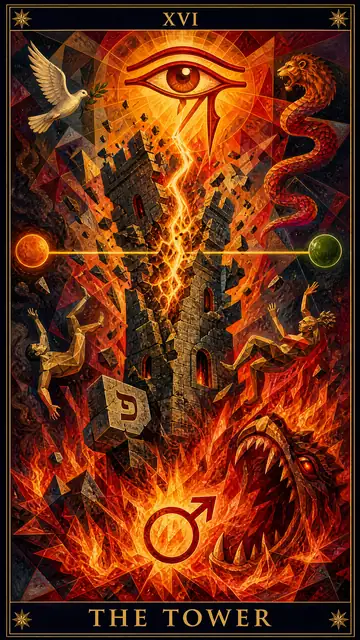 The Tower
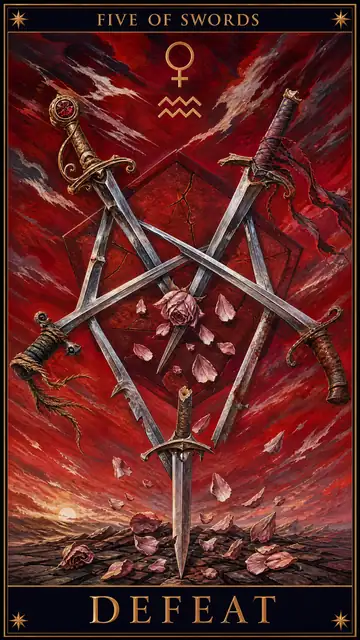 Five of Swords — Defeat
Share this article
You might also like
How to Read Tarot Cards: A Beginner's Guide
Suits, positions and one simple three-card spread to get you reading with real instinct, not memorized definitions.
Tarot Spreads for Career Decisions
A four-card spread for a specific choice, and when to use the wider Horseshoe instead.
Using Tarot for Relationship Problems
A mirror for your own part in a tension, never a verdict on someone else's heart.