How to Ask the Tarot About Love Without Asking It to Decide
A tarot love question that respects free will, and three ways to phrase one
by Redazione · 9 October 2026 · 5 min read
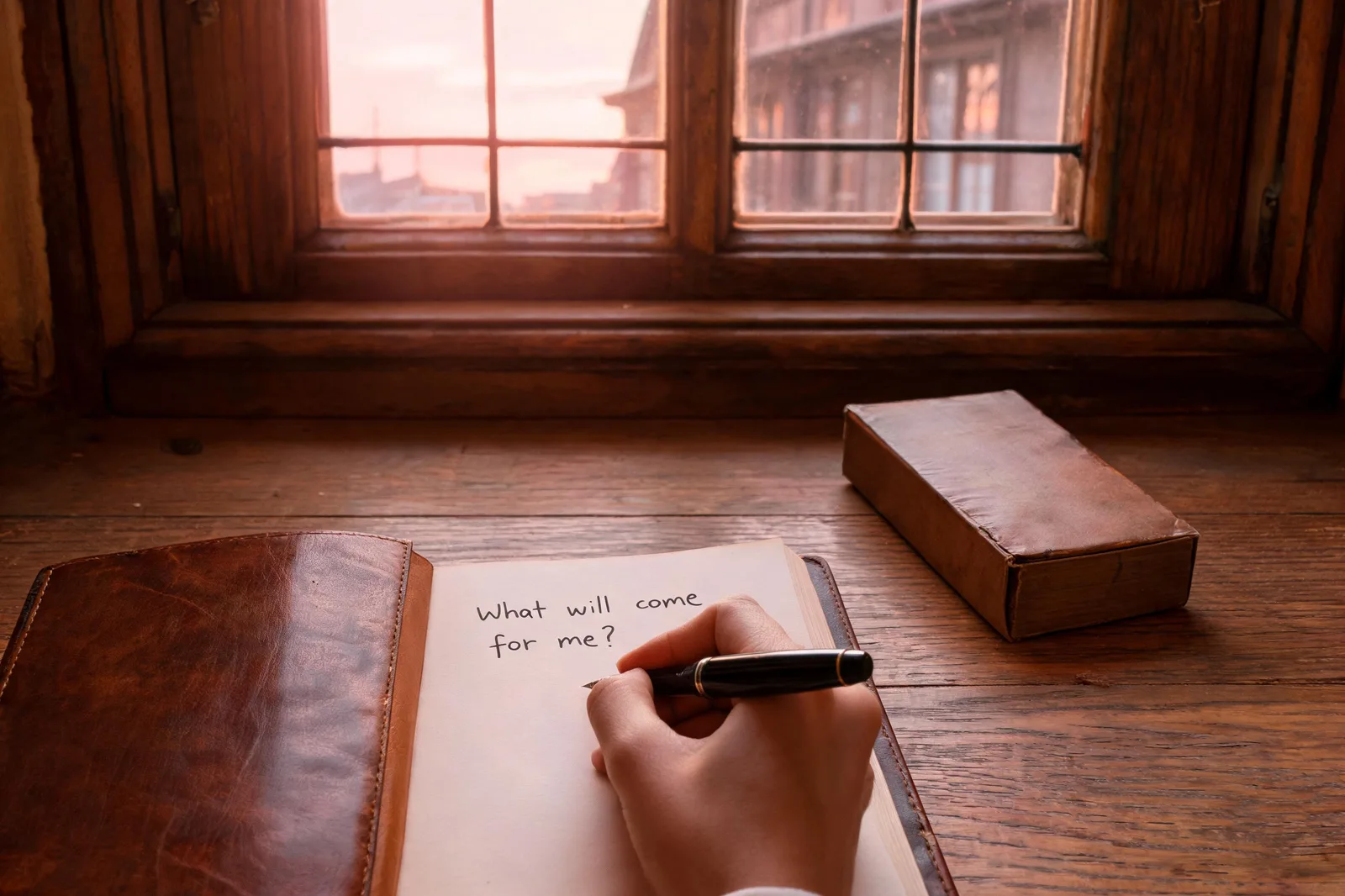
A good tarot love question does not ask the cards to choose for you. It asks them to show you what you cannot yet see clearly: your own patterns, the other person's likely position, and the real shape of the situation you are in. This is the first article in a ten-part series on tarot and love, and it sets the ground rule for everything that follows: the deck describes energies and tendencies, never verdicts.
Why "Will They Come Back?" Is the Wrong Question
Most beginners phrase love questions as yes-or-no demands aimed at another person's future behaviour. "Will he call?" "Will she change her mind?" These questions put the cards in a position they were never meant to hold: predicting a free choice that belongs to someone else. A reading can describe current feelings, obstacles and likely directions, but it cannot override a person's will.
A tarot love question works better when it turns inward. Instead of "will they come back," try "what do I need to understand about this connection right now?" Instead of "should I text them," try "what happens if I reach out, and what happens if I wait?" The cards answer questions about patterns and consequences far more honestly than they answer questions about someone else's mind.
Reframing the Question Before You Shuffle
Before any cards touch the table, write the question down. This single habit improves every reading that follows. A vague question produces a vague answer; a specific, self-aware question produces a useful one. Compare:
-
Weak: "What does he feel about me?"
-
Better: "What is open between us right now, and what is still closed?"
-
Weak: "Will this relationship work?"
-
Better: "What does this relationship need from me to grow well?"
The second version in each pair keeps the questioner as the active party. It treats the other person as someone with their own will, not a variable to be solved. This matters ethically as much as practically: a reading that respects the other person's autonomy also respects the client's own capacity to choose.
A Simple Three-Question Method
For a focused love reading, three questions in sequence work well:
- Where do things stand today? (one card, present tense)
- What pattern is repeating from my side? (one card, pulled with the first still visible)
- What would help me respond with clarity? (one card, drawn last)
This structure keeps the reading diagnostic rather than fortune-telling. It never promises an outcome; it maps a situation so the person can act with more self-knowledge. The The Lovers showing up in the second position, for example, often points to a real choice being avoided rather than a romance being confirmed or denied.
What a Tarot Love Question Should Never Ask
Some questions are better left alone entirely. Avoid asking the cards to confirm infidelity, to diagnose another person's mental state, or to promise a wedding date. These requests ask divination to do forensic work it cannot do responsibly. If a relationship question touches on safety or coercion, a reading can offer reflection, but it is not a substitute for talking to someone qualified to help with that specific situation.
Keeping a tarot love question honest also means accepting uncomfortable cards without rushing to soften them. A reading that only ever tells people what they want to hear is not a reading; it is a mirror pointed the wrong way. Traditions as different as the Thoth system and older cartomancy agree on this: the deck's value lies in the quality of its questions, not in the certainty of its answers. Tradition holds that the earliest French and Italian card readers used similarly open, situational phrasing long before romantic fortune-telling became a parlour trick.
Building the Habit for the Rest of This Series
Every article in this "Tarot and Love" series returns to this same discipline. When a later piece discusses the The Tower appearing in a relationship spread, or the Court cards describing real people in your life, the same rule applies: describe, do not decide. The reader always keeps the choice.
If you are new to reading for matters of the heart, start small. Pull one card each morning and ask only "what should I notice about my relationships today?" Over a few weeks you will notice the deck's vocabulary settling into something practical rather than mystical. For a broader grounding in how diviners have framed questions across centuries, the Wikipedia overview of cartomancy is a useful starting point, even though modern tarot practice has moved well past its simplest fortune-telling roots.
A tarot love question, asked well, becomes a tool for self-understanding rather than a request for permission. The next article in this series looks at the Thoth Lovers card itself, and the alchemical marriage it depicts between opposing forces inside one person, long before it describes any pairing of two.
Questions
Can tarot tell me if someone loves me?
A reading can describe emotional currents and openness on both sides, but it cannot read another person's private feelings with certainty. It works best as a mirror for your own situation.
Is it wrong to ask the tarot about a specific person?
No, but phrase the question around the relationship's dynamics and your own next step, rather than demanding to know the other person's private thoughts or future choices.
What is the best first question for a love reading?
Something like 'what do I need to understand about this connection right now?' works well because it invites description instead of a yes-or-no prediction.
Should I ask the same love question twice?
Repeating an identical question in quick succession usually just produces noise. Wait until the situation changes, or rephrase the question to explore a different angle.
This article talks about
You might also like
 Love
 Love
 Love
© 2026 TAROTS chat (tarots.chat). All rights reserved. No part of this article may be reproduced, distributed or adapted without the owner's written permission.
The Journal
 Kabbalah
 Disks
 Career
 Spirituality
 Kabbalah
 Tarot Journal
 Symbolism
 Symbolism
 Kabbalah