The Practice of Magical Evocation and the Tarot's Spirits
by Redazione · 9 October 2026 · 3 min read
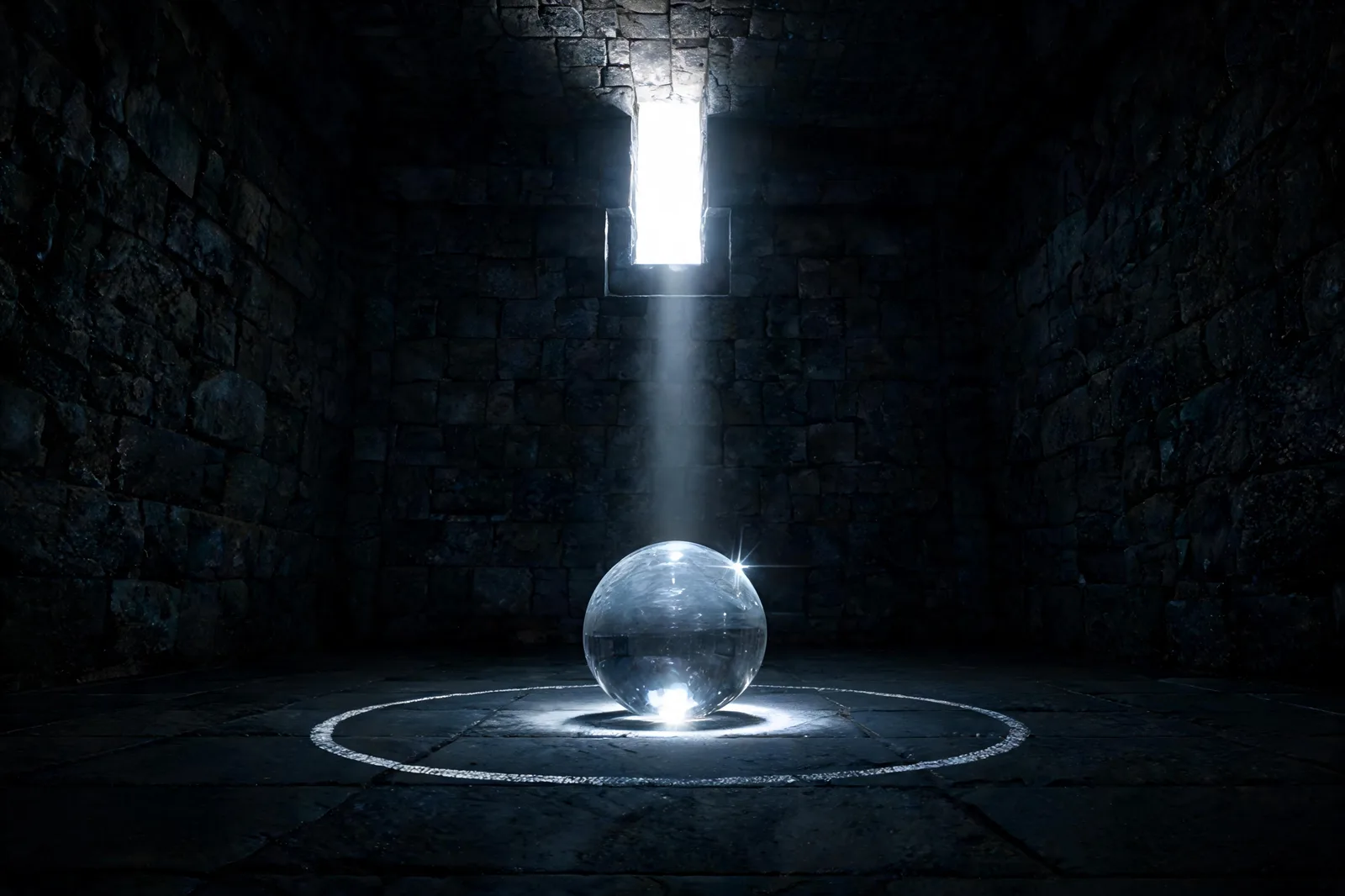
The practice of magical evocation is the title Bardon gave his second book, and it is the most demanding of his three: a manual for calling and working with named spirits rather than training the self alone. Bardon's Electric and Magnetic Fluids and the Polarity of the Cards covered the two currents a student learns to direct; this part looks at what Bardon says those currents are eventually for, and at where the Thoth deck keeps its own gallery of intelligences.
A Catalogue of Named Spirits
Bardon's second book is built around a long catalogue, organised by planetary and elemental rank, of named spirits a trained practitioner may call into a mirror or a crystal and question or command. Each entry gives the spirit's office, its temperament and the kind of request it governs, from healing to knowledge of hidden things. The practice of magical evocation assumes everything from the first book has already been mastered: without a steady mind and a trained will, Bardon warns, the exercises in this book are simply unsafe to attempt.
Elementals Before Higher Spirits
Before a student meets the higher, named intelligences, Bardon has them work with elementals: gnomes of earth, undines of water, sylphs of air, salamanders of fire, each tied to the element trained earlier in his course. Readers of the Thoth deck meet a version of this same fourfold population in the Princesses, one for each suit, figures Crowley and Harris painted as young and elemental rather than regal, closest in the deck's own hierarchy to the raw spirits a beginner first encounters. The parallel is a reader's bridge between two systems, not a claim that Bardon had the cards in mind.
The Hierophant as a Figure of Mediation
Evocation, in Bardon's account, is never a free-for-all: a spirit is addressed through a precise form, with named offices and expected conduct on both sides, a relationship closer to formal diplomacy than to a séance. The Hierophant carries something of that same posture in the Major Arcana, a figure who holds a structured channel between ordinary life and a hidden order, admitting a visitor only inside clear terms. Bardon's spirits have ranks and courtesies; so, on this reading, does the Hierophant's own office.
What the Series Takes, What It Leaves
This series does not recommend Bardon's evocation exercises to a reader without training, nor does it treat the Thoth deck as a lesser version of his spirit catalogue. The two systems answer different needs: one summons named intelligences through ritual, the other reads a fixed set of printed images for pattern and meaning. Franz Bardon's own students have always stressed the first book's discipline as a precondition for the second; a tarot reader borrows that caution gladly; a deck of cards demands no invocation and no consent from anything but the reader's own attention.
Reading Without Summoning
What a reader can take from the practice of magical evocation, without performing any of it, is the habit of naming precisely what is being asked before any answer is sought. Bardon's spirits refuse vague requests; a reading answers vague questions just as poorly. The next part of this series turns from evocation to Bardon's third book, the Key to the True Quabbalah, and to the Hebrew letters that already sit quietly behind the Major Arcana's own numbering.
Questions
What is the practice of magical evocation?
Franz Bardon's second book, a manual for calling and working with named spirits and elementals through precise ritual form.
What are elementals in Bardon's system?
Gnomes, undines, sylphs and salamanders, beings tied to earth, water, air and fire that a student meets before any higher spirit.
How does this book relate to the tarot?
It does not, in Bardon's own text; readers have compared his elementals to the Thoth deck's four Princesses and his ritual structure to the Hierophant's mediating office.
Is evocation safe to attempt without training?
Bardon says no: the book assumes the discipline of his first book is already mastered before any of its exercises are tried.
This article talks about
You might also like
 Spirituality
 Spirituality
 Spirituality
© 2026 TAROTS chat (tarots.chat). All rights reserved. No part of this article may be reproduced, distributed or adapted without the owner's written permission.
The Journal
 Thoth Tarot
 Thoth Tarot
 Thoth Tarot
 Swords
 Tarot Journal
 Kabbalah
 Symbolism
 Symbolism
 Kabbalah