Plotinus and the Emanations Behind the Tree
How a third-century philosopher's One, Nous and Soul prefigure the Tree of Life
by Redazione · 9 October 2026 · 5 min read
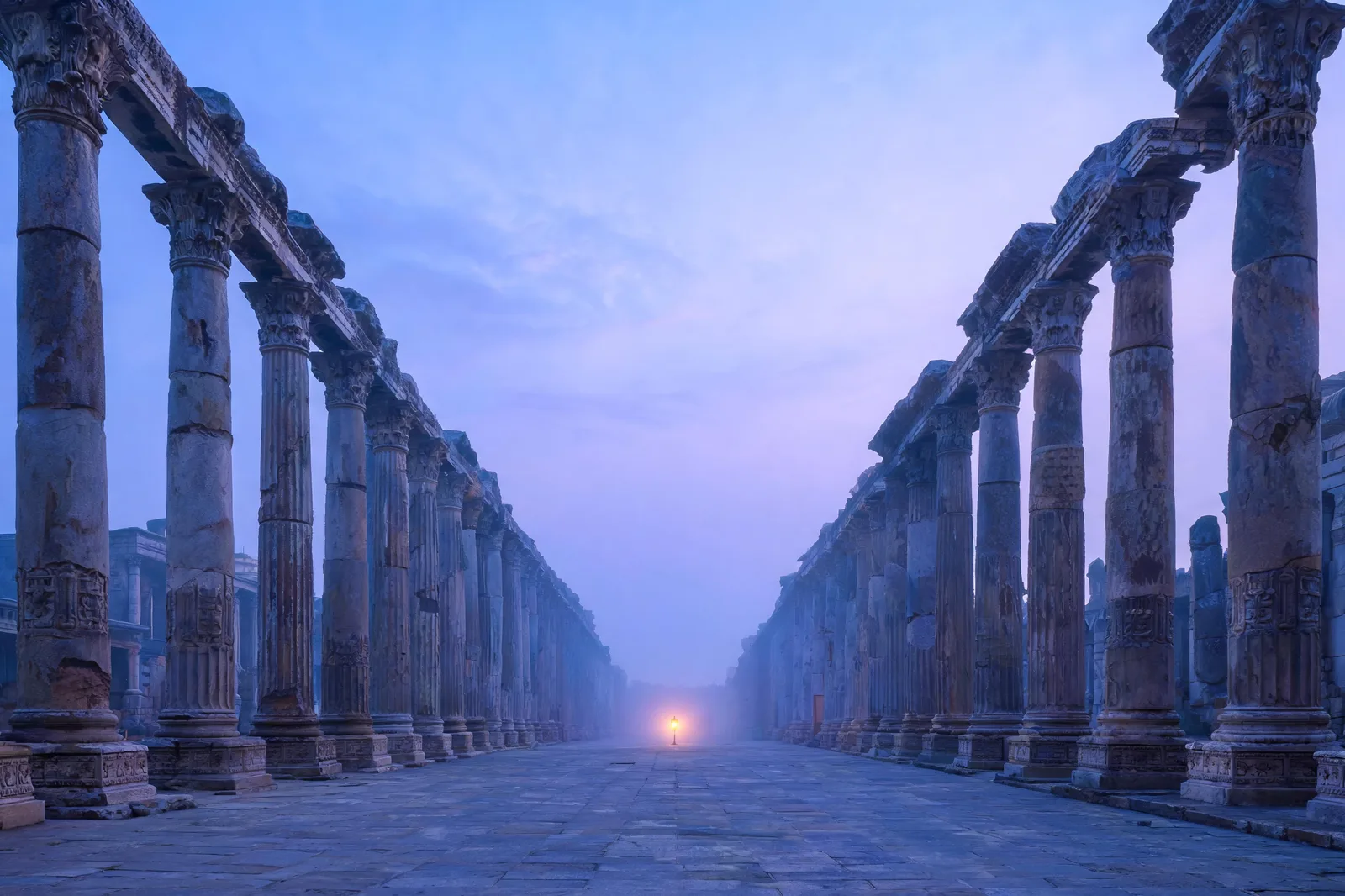
The philosopher behind the structure
Plotinus emanation is the idea, central to his whole philosophy, that reality flows outward from a single perfect source in a fixed descending order, each level less unified than the one above it but never cut off from it. Plotinus never saw a tarot card and never heard of the Kabbalah's Tree of Life, yet the pattern he described in third-century Alexandria and Rome is the same pattern a reader meets in the Tree's ten spheres, and in the Thoth deck's own insistence that every card, however far down the suits, still carries something of the source. The previous article in this series followed the Emerald Tablet's axiom through The Emerald Tablet and the Art Card; here the current goes further back, to the philosopher who gave that axiom its clearest logical shape.
Plotinus wrote no system of magic and performed no rituals that survive in record. His influence on the occult tradition came entirely through the shape of his metaphysics, inherited by readers who wanted a ladder between the human and the divine.
The One, the Nous and the Soul
Plotinus described three fundamental levels beneath ultimate unity. The One is beyond being and beyond description, so complete that naming it already distorts it. From the One, without diminishing it, emanates Nous, intellect, the realm of perfect forms. From Nous emanates Soul, which in turn generates the visible material world as its lowest, dimmest reflection. Each stage emanates the next the way a sun radiates light without losing anything of itself: creation here is overflow, not labour, and certainly not a single act of construction finished and done.
This triad, reduced and multiplied, became the template later Renaissance and Kabbalistic thinkers reached for whenever they needed to explain how many could come from one without damaging the one's perfection. Ficino's Neoplatonism and the Lovers Card already showed how directly Marsilio Ficino carried this scheme into his own commentary; the Tree of Life's ten sephiroth, unknown to Plotinus himself, answered a strikingly similar need for later Kabbalists working in a different idiom entirely.
Why emanation suits a tree better than a chain
Earlier philosophy had often pictured the universe as a chain, one link joined to the next in sequence. Plotinus preferred something closer to a root system or a tree: each level present at once, each lower level still touching the one above it rather than only the one immediately below. That is why the Kabbalist's Tree of Life, far later and from an entirely different source, mapped onto Plotinus's picture so comfortably once Renaissance scholars set the two side by side. Plotinus himself insisted the levels were not spatially separate at all; descent was a matter of attention and clarity, not geography. The Universe, the final trump of the Thoth deck, pictures something close to this: a single dancing figure holding the whole completed order in one continuous gesture, high and low present together rather than stacked in isolated boxes.
A reader who keeps this in mind stops treating the Tree, or a spread, as a ladder to be climbed rung by rung and starts seeing it as one structure, visible all at once from wherever a person happens to be standing.
Return as the other half of the pattern
Emanation only describes half of what Plotinus argued mattered. The other half was epistrophe, return: everything that proceeds outward from the One also turns back toward it, drawn by a kind of longing built into its very nature. Matter is the point furthest from the source, but even matter is not abandoned; it is simply the stage at which the pull to return is weakest and hardest to feel. Plotinus described philosophy itself as training in that return, a discipline of attention that strips away distraction until the soul remembers what it already, secretly, is.
Later esoteric writers folded this directly into their reading practice: a card is not only a position on a map of descent but an invitation back up it, and a reading that only maps where someone has fallen, without a path home, misses half of what Plotinus thought mattered most.
What this current leaves a reader today
Few tarot readers quote Plotinus directly, but his logic survives wherever a deck is treated as a coherent cosmos rather than seventy-eight unrelated pictures. It survives, too, in the habit of reading a spread outward from a single central card rather than as an unordered row of equals, a small echo of a much older conviction that unity always precedes and organises multiplicity. The next article in this series turns from a Greek philosopher to a wholly different current, the Rosicrucian manifestos that reshaped the same questions for a different century.
FAQ
Did Plotinus ever discuss tarot cards or Kabbalah? No. He wrote centuries before either existed; later thinkers applied his framework of emanation to both.
What does "emanation" mean in Plotinus's philosophy? Reality flowing outward from a perfect, undivided source, each level a progressively dimmer reflection, without the source itself ever being diminished.
Is Plotinus the same as Neoplatonism in general? He is its founding figure. Later Neoplatonists, including those who influenced Ficino, developed and modified his original system considerably.
Why does the Tree of Life resemble Plotinus's three levels? Both describe multiplicity arising from unity in ordered stages. Renaissance scholars who knew both traditions actively mapped them onto one another.
Questions
Did Plotinus ever discuss tarot cards or Kabbalah?
No. He wrote centuries before either existed; later thinkers applied his framework of emanation to both.
What does "emanation" mean in Plotinus's philosophy?
Reality flowing outward from a perfect, undivided source, each level a progressively dimmer reflection, without the source itself ever being diminished.
Is Plotinus the same as Neoplatonism in general?
He is its founding figure. Later Neoplatonists, including those who influenced Ficino, developed and modified his original system considerably.
Why does the Tree of Life resemble Plotinus's three levels?
Both describe multiplicity arising from unity in ordered stages. Renaissance scholars who knew both traditions actively mapped them onto one another.
This article talks about
You might also like
 Kabbalah
 Spirituality
 Spirituality
© 2026 TAROTS chat (tarots.chat). All rights reserved. No part of this article may be reproduced, distributed or adapted without the owner's written permission.
The Journal
 Career
 Kabbalah
 Symbolism
 Tarot Journal
 Love
 Tarot Journal
 Symbolism
 Symbolism
 Kabbalah