Lon Milo DuQuette: A Playful Guide to the Thelemic Tarot
by Redazione · 9 October 2026 · 5 min read

Lon Milo DuQuette tarot writing takes Aleister Crowley's dense, difficult Book of Thoth and makes it readable without dumbing it down. That is a rare combination in a field where authors tend toward either reverent obscurity or thin popularisation. His best-known book on the subject, Understanding Aleister Crowley's Thoth Tarot, has introduced more newcomers to the deck's real correspondences than almost any other single text published since Crowley's own.
Lon Milo DuQuette Tarot: A Thelemite Who Writes for Beginners
DuQuette is a long-practising member of Ordo Templi Orientis, the Thelemic order Crowley once led. He brings an insider's working familiarity with the system to his books while deliberately writing for readers who have never attended a lodge meeting. That stance sets him apart from writers who assume prior fluency in Crowley's vocabulary. DuQuette explains Qabalistic correspondences, planetary attributions and the Thoth deck's often startling imagery in plain, conversational prose. He frequently leavens it with self-deprecating humour about his own decades of mistakes and misunderstandings along the way. The result reads less like a lecture and more like a patient friend walking a newcomer through a complicated subject one card at a time.
Humour as a Teaching Method, Not a Distraction
Some readers mistake DuQuette's comic tone for a lack of seriousness, but the humour does real pedagogical work. Crowley's own writing in The Book of Thoth is notoriously dense, mixing genuine insight with wordplay, obscure references and the occasional deliberate joke at the reader's expense; DuQuette's lighter register gives students permission to laugh at the system's stranger corners without dismissing its substance. The Fool suits his approach particularly well. Its meaning depends on embracing uncertainty and looking slightly ridiculous while doing it. DuQuette treats the Fool's apparent foolishness as the card's actual teaching rather than a flaw to explain away, and he writes about his own beginner missteps in the same spirit.
Bridging Crowley's System for a Modern Audience
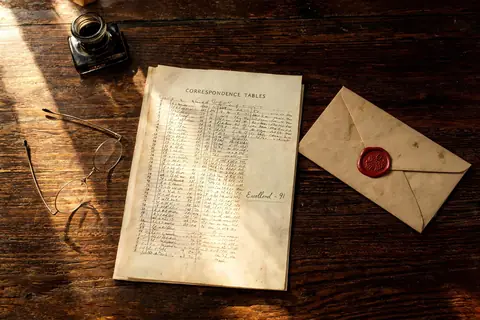
DuQuette's wider body of work, including The Magick of Aleister Crowley and his memoir My Life with the Spirits, performs a similar bridging function across Thelemic practice generally, not only the tarot. Readers who first encountered Crowley's system through The A∴A∴ and the Thoth Tarot as a Teaching Tool's original grade papers or through the dense correspondences of Liber 777 often find DuQuette's books the easiest second step: a working practitioner's plain-language gloss on material that intimidates many newcomers on first contact. That accessibility has made him one of the most frequently recommended living authors for readers approaching the Thoth deck for the first time.
A Living Author, An Active Practice
DuQuette continues to write, teach and perform publicly, maintaining an active role within O.T.O. and a steady output of new books and recorded talks. Any account of his contribution to tarot literature describes a living, working author rather than a settled historical legacy, and his own published statements about his practice and beliefs remain the most reliable source for understanding his current views, rather than secondhand characterisation.
What His Books Offer a Thoth Reader Today
For a reader already committed to studying the Thoth deck seriously, DuQuette's books function best as a second pass. Read them after a first careful look at Crowley's own text. They clarify what Crowley meant where the original prose obscures it, without substituting an entirely different system in its place. That combination of fidelity and readability explains why his tarot writing remains in heavy circulation decades after its first publication, recommended by teachers who want students to enjoy learning the system rather than merely endure it.
An Example: Reading the Hanged Man Through DuQuette
DuQuette's method shows clearly in how he handles a famously puzzling trump. Rather than opening with Crowley's own cryptic prose on the card, he typically starts from a plain question: what does it feel like to be suspended, unable to act, waiting on a change you cannot force? Only after establishing that ordinary emotional ground does he bring in the Hebrew letter, the elemental attribution and Crowley's denser commentary, layering the technical material onto a foundation a reader without lodge training can already recognise in their own life. That sequence, feeling first, correspondence second, recurs throughout his tarot writing and explains much of its lasting popularity among readers who tried and abandoned more academic introductions to the same deck.
Frequently Asked Questions
What is Lon Milo DuQuette's best-known tarot book? Understanding Aleister Crowley's Thoth Tarot, which explains the deck's correspondences in accessible, often humorous prose.
Is DuQuette affiliated with a specific magical order? Yes, he is a long-practising member of Ordo Templi Orientis, the Thelemic order associated with Aleister Crowley.
Does DuQuette's humour mean his teaching is not serious? No. His lighter tone is a deliberate teaching choice that makes complex Thelemic correspondences more approachable without simplifying their substance.
Is Lon Milo DuQuette still active as a writer? Yes, he continues to write, teach and perform publicly as of this writing.
Questions
What is Lon Milo DuQuette's best-known tarot book?
Understanding Aleister Crowley's Thoth Tarot, which explains the deck's correspondences in accessible, often humorous prose.
Is DuQuette affiliated with a specific magical order?
Yes, he is a long-practising member of Ordo Templi Orientis, the Thelemic order associated with Aleister Crowley.
Does DuQuette's humour mean his teaching is not serious?
No. His lighter tone is a deliberate teaching choice that makes complex Thelemic correspondences more approachable without simplifying their substance.
Is Lon Milo DuQuette still active as a writer?
Yes, he continues to write, teach and perform publicly as of this writing.
This article talks about
You might also like
 Love
 Symbolism
 Symbolism
© 2026 TAROTS chat (tarots.chat). All rights reserved. No part of this article may be reproduced, distributed or adapted without the owner's written permission.
The Journal
From the Journal
Chosen for this page
 Relationships
The Lovers Tarot Card in Relationships: Choice, Union and Deep Connection
2 min read
More in Relationships Career
The Emperor Tarot Card in Career Readings: Authority, Structure and Leadership
2 min read
More in Career Major Arcana
 Symbolism
 Kabbalah
 Wands
 Symbolism
 Symbolism
 Kabbalah