From the Sola Busca to the Waite Smith Minor Arcana
by Redazione · 8 October 2026 · 9 min read
The modern Waite Smith minor arcana are the direct result of one decision made around 1909. A. E. Waite wanted his new deck's numerals to be fully illustrated, and the one deck that had ever done that before was the Sola Busca. Pamela Colman Smith drew the small cards from his instructions, and in a handful of cases her compositions are clearly echoes of Sola-Busca scenes. This is the final part of a series tracing the fully illustrated minor arcana from the Sola Busca, through the Waite-Smith deck, to the Thoth cards you actually read. Part one, in The First Fully-Illustrated Pips: The Sola-Busca Deck, established the Sola Busca as the earliest fully illustrated deck. This one follows the line of descent in one place, and it asks what that choice gave every deck after 1909.
What Waite actually saw
Waite first encountered the Sola Busca in 1909, shown it by a friend, and was struck by one thing above all: the fully illustrated numerals. Every other deck he knew, the Marseille packs, the Visconti-Sforza cards, used plain pips for the numerals. The Sola Busca was the exception. It was also, at that moment, a curiosity. It had no occult reputation, no reading tradition attached to it. Waite saw not a grimoire but a precedent.
The timing is important. Waite was already deep into the Golden Dawn's tarot program when he saw the deck. He did not come to the Sola Busca looking for a system. He came to it, in effect, looking for a picture to go with the system he already had. The Sola Busca answered a question he had not known he was asking. It showed him that the numerals, the part of the deck he and his friends had been treating as a blank, could instead be a canvas.
That distinction matters, because it means the modern illustrated minor arcana are not the survival of an ancient practice. They are a deliberate revival, made possible because one Italian deck proved the format was possible. Waite's innovation was not to copy the Sola Busca. It was to take the idea that the numeral cards could be scenes, and to attach it to a whole new system of meaning that the Sola Busca never had.
It is worth being precise about how much Waite actually borrowed. He did not copy the Sola Busca's compositions. The scenes in his deck are Smith's, drawn from his written instructions and her own imagination. What he borrowed was the principle. The principle that a numeral card could be a scene at all. That was the Sola Busca's contribution, and it was the only one. Everything else, the meanings, the correspondences, the structure, came from the Golden Dawn's own program.
Which Waite Smith minor arcana echo the Sola Busca
Smith did not have the Sola Busca in front of her when she drew. She worked from Waite's written instructions, and her compositions are her own. But a handful of the small cards show clear echoes of Sola-Busca scenes, and the two most cited are worth looking at closely.
The Three of Swords in the Waite-Smith deck shows three swords driven through a heart, a heart pierced by grief. The Sola Busca's Ten of Swords, in contrast, shows a man lying face-down in a stream while ten swords rain down on his back. The two are not the same scene, but they are the same family of idea. A pile of swords is a single, overwhelming blow. The modern Three of Swords is a gentler, more personal version of that image. The Sola Busca's Ten of Swords is the raw, physical version.
The Ten of Wands in the Waite-Smith deck shows a man carrying a heavy bundle of ten sticks, bent under the weight. The Sola Busca's Ten of Coins, in its own way, is a scene of material weight. A man stands before a wall of ten coins, and the burden is not the coins themselves but the fact that there are so many of them. The modern card carries the weight on the body. The Sola Busca card carries it in the image. The logic is the same. A numeral is not just a count. It is a scene whose subject is the number.
These are not exact copies. Smith was not redrawing the Sola Busca. But the choice to make the numeral a scene, rather than a count, is the Sola Busca's choice, and it is the one that every modern deck inherited.
It is worth noting what the echo is and is not. The echo is a composition, a particular way of staging a number as a subject. It is not a doctrine. Smith did not inherit the Sola Busca's humanist reading of the numerals. She inherited the fact that a numeral could be a scene, and then she filled the scene with a different meaning.
What the Sola Busca could not give
This is the point of the whole series, and it is worth stating plainly. The Sola Busca gave the modern deck the format. It did not give it the meaning. The numerals in the Sola Busca carry humanist and alchemical imagery, but they do not carry a system. They are not assigned to planetary rulers, to sephiroths, to a kabbalistic tree. They are scenes, moral and humanist in their orientation, and that is all.
Waite made this explicit in the Pictorial Key to the Tarot. There he explains the small cards as expressions of a quality in different stages, and the source of those explanations is the Golden Dawn's system, not the Sola Busca. The Key is a modern document about a modern arrangement. The Sola Busca, in Waite's own account, supplied the precedent for the pictures, not the doctrine behind them (Wikipedia, "Pamela Colman Smith").
When Waite and Smith built their deck, they took the format and filled it with a meaning system the Sola Busca never had. The numerals got their planetary and kabbalistic attributions from the Golden Dawn, not from the Italian deck. The small cards became a vehicle for the whole system. The Sola Busca is the ancestor of the form. It is not the ancestor of the content.
That distinction is the one that separates a fair reading of the history from the romantic one. The romantic version says the modern deck descends from a single ancient source, the Sola Busca, and that everything in it is the residue of that source. The fair version says the modern deck descends from two sources. The form comes from the Sola Busca. The meaning comes from the Golden Dawn. The two were combined in 1909, and the combination is what you are reading.
What that means for the card you turn up
When a small card comes up in a Thoth reading, you are holding two decisions at once. The decision to make it a scene is the Sola Busca's. The decision to make the scene carry a kabbalistic and planetary meaning is the Golden Dawn's, carried forward by Crowley into the Thoth deck. You cannot separate the two without changing what the card is.
That is a small but real thing to know. It means the modern minor arcana are not a discovery. They are an invention, and it is worth knowing which part of the invention belongs to which hand. The scene is Italian. The meaning is English. The card you are holding is both.
This also explains why two modern decks can look so different while sharing the same minor arcana. The Waite-Smith small cards and the Thoth small cards both descend from the same 1909 decision. Their differences are not a matter of one being closer to the Sola Busca than the other. Both are equally far from it. The Sola Busca is the common ancestor of the form, not of the differences. When you compare the Two of Wands in one deck against the Two of Wands in the other, you are comparing two English answers to the same Italian question, not two answers to an ancient question.
In the series as a whole, the Sola Busca has done three things for the modern deck. It proved the numerals could be scenes. It proved the court cards could be named people, as we saw in Named Court Cards from Roman and Biblical Heroes. And it proved that a complete 78-card deck could be built on imagery rather than on plain pips. The modern deck inherited all three. What it added on top was the system, and that addition is the real innovation of the twentieth century.
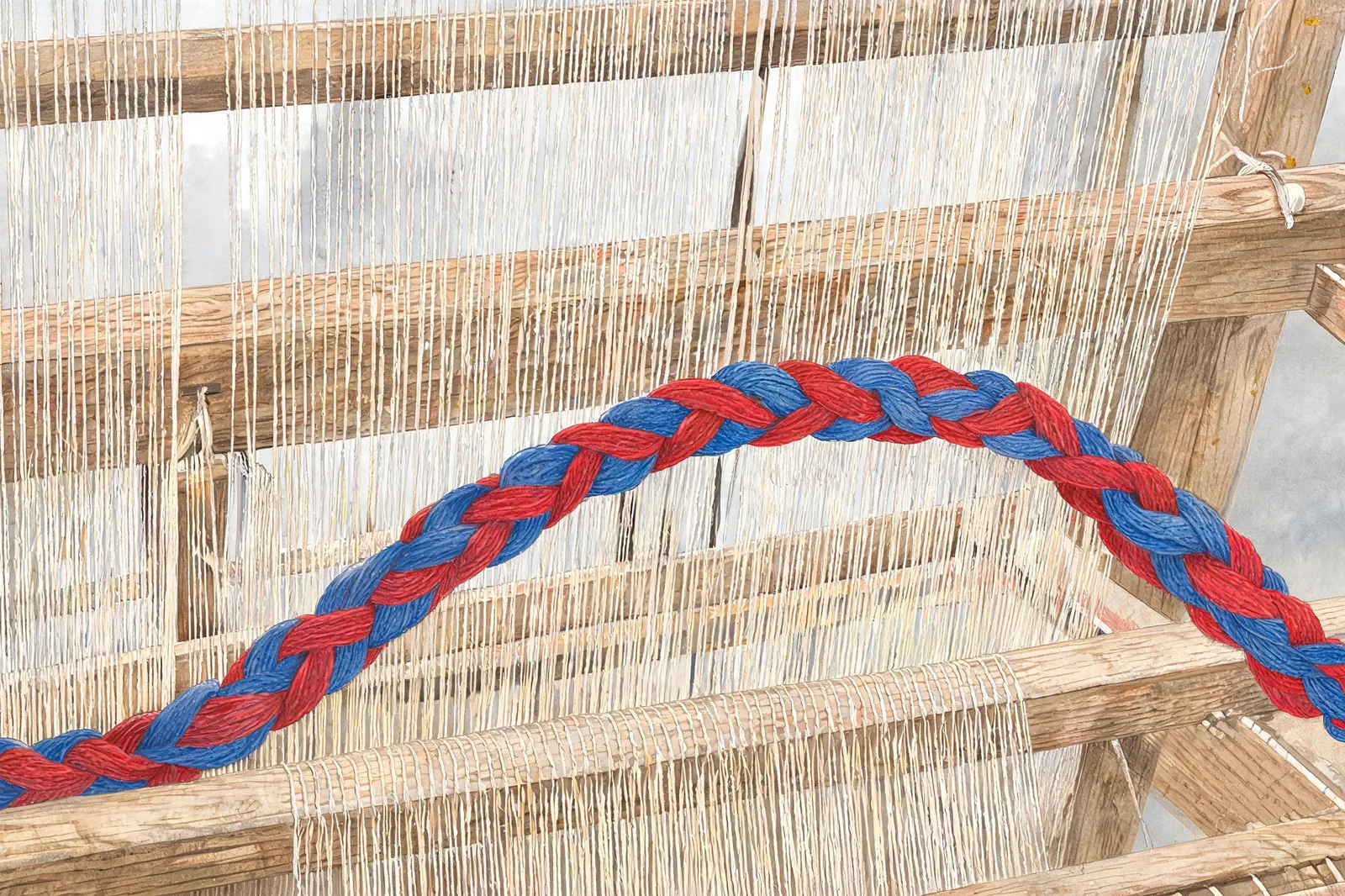
The line of descent, then, is not a single thread from an ancient source to your present card. It is a braid. The Italian thread supplies the form. The English thread supplies the meaning. The card you turn up is the braid, and it is not any one of those threads alone.
That is the whole series in one image. A deck from 1491, drawn for a humanist audience, made the numerals into scenes and the courts into named people. A movement from 1909 took that form, filled it with a system the Italian deck never had, and handed it to the decks you actually read. The Sola Busca did not start a tradition that survived to your card. It proved a format that could be started. The difference is small, and it is the difference that separates the history of the modern minor arcana from the mythology of it.
Questions
Did Waite copy the Sola Busca small cards?
No. He did not copy the compositions. He borrowed the principle that the numerals could be fully illustrated scenes, which the Sola Busca had proved was possible. The actual pictures in the Waite Smith deck are Pamela Colman Smith's, drawn from Waite's written instructions.
Which Waite Smith minor arcana echo the Sola Busca?
The two most cited are the Three of Swords, a gentler version of the Sola Busca's Ten of Swords, and the Ten of Wands, which carries the same logic as the Sola Busca's Ten of Coins: a numeral staged as a scene whose subject is the number.
Did the Sola Busca give the modern deck its meanings?
No. The Sola Busca gave the modern deck the form, the illustrated numerals. The meaning, the planetary and kabbalistic system, came from the Golden Dawn. The two were combined in 1909.
Why are the Waite Smith and Thoth minor arcana different if they share the same ancestor?
Because both descend from the same 1909 decision, not from the Sola Busca. Their differences are two English answers to the same Italian question, not two answers to an ancient question. The Sola Busca is the common ancestor of the form, not of the differences.
- #series-the-sola-busca-and-the-invented-minor-arcana
- #tarot history
- #tarot symbolism
- #waite smith tarot
You might also like
 Symbolism
 Symbolism
 Symbolism
© 2026 TAROTS chat (tarots.chat). All rights reserved. No part of this article may be reproduced, distributed or adapted without the owner's written permission.
The Journal
 Kabbalah
 Thoth Tarot
 Kabbalah
 Thoth Tarot
 Thoth Tarot
 Thoth Tarot