The Hanged Man Tarot Card Meaning in the Thoth Deck
The Hanged Man Tarot Card Meaning Thoth Deck: Crowley's Vision of Surrender
The hanged man tarot card meaning thoth deck interpretation reveals one of the most misunderstood and profound Major Arcana in all of tarot. In the Thoth deck, painted by Lady Frieda Harris under Aleister Crowley's direction, The Hanged Man stands as a figure suspended by one ankle from a living tree — an image that transforms this card from a symbol of victimhood into one of voluntary surrender and divine perspective.
Unlike the Rider-Waite-Smith tradition where the figure appears to be in ecstatic bliss, Crowley's version is more contemplative: the face shows serene acceptance rather than rapture. This subtle difference captures the essence of The Hanged Man in the Thoth deck — not passive suffering but conscious choice to suspend action for greater understanding.
Understanding the Hanged Man Tarot Card Meaning Thoth Deck
The Imagery of Crowley's Hanged Man
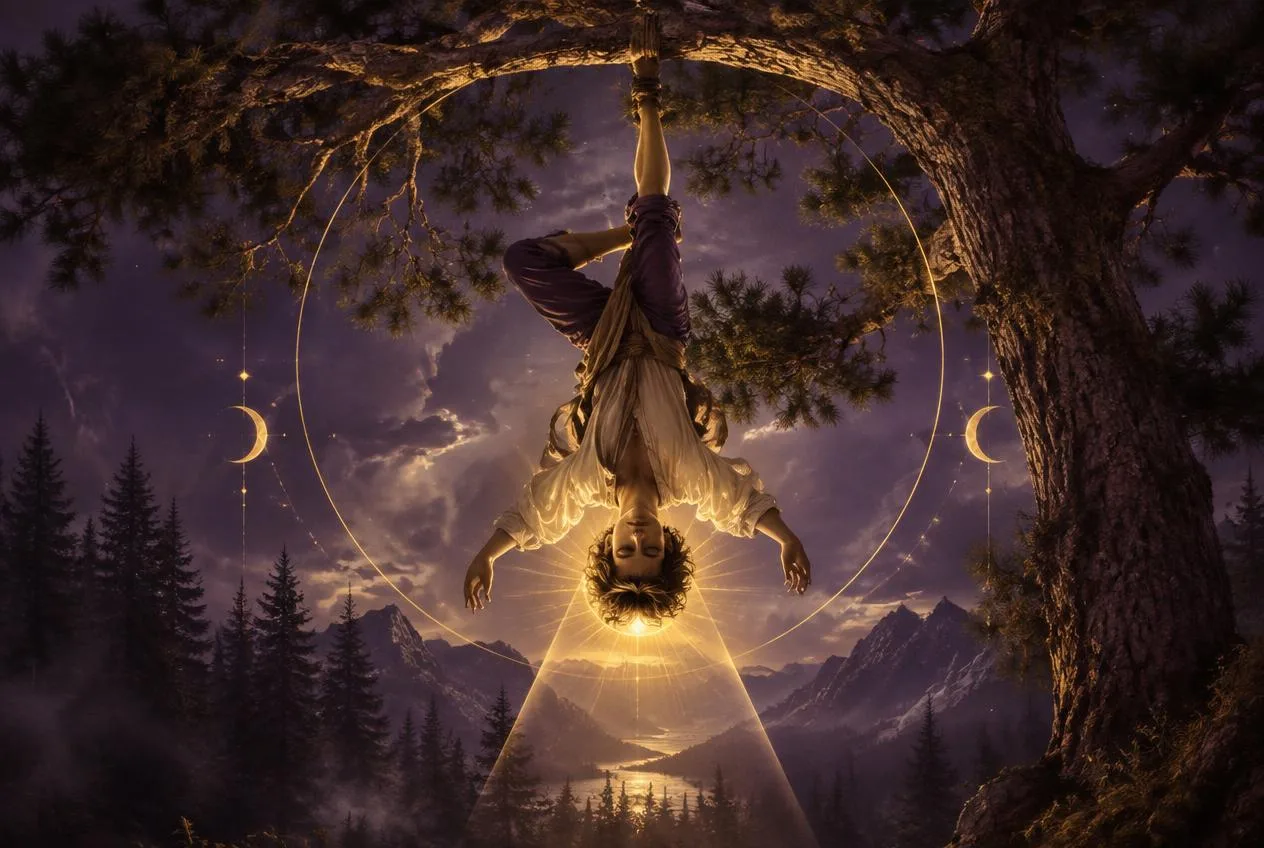
Lady Frieda Harris depicted The Hanged Man with extraordinary precision, following Crowley's instructions for each Major Arcana card. The central image shows a figure suspended by one ankle from the branch of a living tree — specifically a pine tree, which in esoteric tradition represents immortality and eternal life. Golden light radiates from the head of the suspended figure, forming a triangle pointing downward toward the earth.
The tree itself is crucial: it is not a dead crossbeam as in some traditions but a living organism with roots in the ground and branches reaching skyward. This symbolizes that surrender is not death — it is alignment with natural law. The figure hangs voluntarily, feet crossed at the ankles in the shape of the alchemical symbol for water (☿), representing fluidity and emotional depth.
Crowley described this card as representing "the foundation of the universe" — a seemingly paradoxical statement that becomes clear when you understand that suspension is creative in Thoth philosophy. The figure does not fall; rather, by stopping its descent, it reveals truth from a new angle. This is why The Hanged Man, despite its reputation for stagnation, is ultimately one of the most positive cards in the Major Arcana.
Qabalistic Correspondence: Yesod
In the Qabalah, The Hanged Man corresponds to Yesod (Foundation), the ninth Sephirah on the Tree of Life. Yesod represents the subconscious mind, the realm of images and dreams, and the funnel through which divine energy flows into Malkuth (the physical world). It is the sphere where all higher principles are gathered and prepared for manifestation.
The Hanged Man's suspension from the living tree connects directly to Yesod's function: by hanging between heaven and earth, the figure becomes a conduit — suspended action allows deeper truths from the unconscious to surface. This vertical relationship on the Tree of Life reveals a profound teaching: before we can manifest anything in the physical world, we must first surrender our conscious control and allow the subconscious mind to guide us.
Crowley wrote in The Book of Thoth that this card represents "the foundation of the universe" because Yesod is the last Sephirah before Malkuth — the final preparation before manifestation. The Hanged Man teaches that what we call reality is built upon a foundation of images, dreams, and subconscious patterns that only become visible when we stop moving. For Crowley's complete analysis of this card, see his original commentary at The Book of Thoth.
The Hanged Man in a Tarot Reading
When The Hanged Man appears in a Thoth deck reading, expect pause, surrender, or the need to see things from a new perspective. However, unlike its Rider-Waite counterpart which often signals external delay, the Thoth Hanged Man emphasizes internal transformation — shifts in perception, willingness to let go, and trust in the process of dissolution.
Upright Meaning
In the upright position, The Hanged Man announces that conscious surrender will bring revelation. This might manifest as:
- A period of pause where action is less valuable than reflection
- The release of ego-driven desires in favor of deeper understanding
- An opportunity disguised as delay — the suspension revealing a path forward
- Intellectual breakthrough after accepting what you cannot control
The key to reading The Hanged Man upright is recognizing that surrender is not defeat. What you let go of makes room for something more aligned with your authentic self.
Reversed Meaning
When reversed, The Hanged Man suggests resistance to necessary surrender. You may be clinging to a belief, relationship, or identity that needs dissolution. The suspension is coming whether you welcome it or not; the reversed position asks whether you will meet it with grace or struggle against it.
In the Thoth system specifically, the reversed Hanged Man can indicate that you are hanging in limbo — neither acting nor surrendering fully. You are stuck between worlds because you refuse to let go of what the tree demands.
The Hanged Man and Other Major Arcana
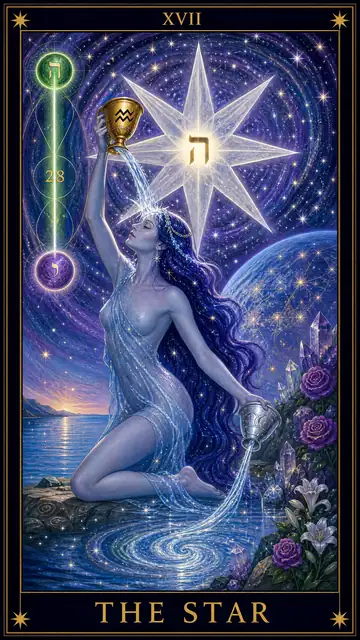
The Hanged Man's meaning deepens when read in relation to other cards in the spread. Its relationship with The Star is particularly significant — both cards feature radiating light, but where The Star pours forth from above after destruction, The Hanged Man receives illumination while suspended. Together they form a complete cycle of surrender and healing.
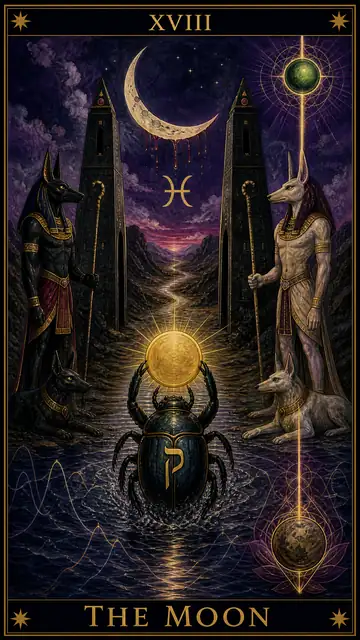
The Hanged Man also connects to The Moon, the card of illusion and the subconscious. Where The Moon reveals hidden fears, The Hanged Man teaches acceptance of those fears without judgment. This cyclical relationship reminds us that understanding begins with suspension — we must stop moving before we can see clearly.
For readers interested in spreads, The Hanged Man plays a crucial role in Celtic Cross readings when it appears as the cross card (representing the central challenge) or as the outcome (indicating transformation through surrender). Understanding its Thoth-specific meaning — conscious suspension rather than passive victimhood — allows for more nuanced interpretations across any spread.
Practical Guidance from The Hanged Man
The practical teaching of The Hanged Man in the Thoth deck is simple but profound: surrender what you cannot control. This applies to beliefs, relationships, careers, and self-concept alike. When this card appears, ask yourself:
- What structure in my life feels stable but may be limiting?
- Where am I clinging to comfort over truth?
- What would happen if I let go of what I think I know?
The Thoth Hanged Man invites you to trust the process of suspension. Like a seed that must fall into the earth before it can grow, the figure hangs not to die but to reveal — and from its inverted perspective, it sees farther than ever before.
Conclusion: Embracing Divine Surrender
The hanged man tarot card meaning thoth deck interpretation ultimately teaches us that surrender is not the opposite of action; it is part of it. Crowley's suspended figure does not merely hang — it illuminates. It reveals truth by stopping movement, and in doing so, makes way for deeper understanding.
When The Hanged Man appears in your reading, do not fear the pause. Trust that suspension is creative — like a seed falling into dark earth, or a river slowing before a waterfall. As ** teaches us at the end of the Major Arcana journey, every ending contains a beginning — and The Hanged Man is one of the most honest suspensions in all of tarot.
Frequently asked questions
What does The Hanged Man card represent in the Thoth deck?
In the Thoth deck, The Hanged Man represents voluntary surrender, sacrifice of ego, and gaining a new perspective. Crowley depicted it as a figure suspended by one ankle from a living tree — symbolizing that true wisdom comes not from struggle but from willing suspension of action.
How does the Thoth Hanged Man differ from the Rider-Waite version?
While both show a figure suspended upside down, Crowley's version replaces the peaceful expression with one of serene acceptance. The Thoth Hanged Man hangs from a living tree (representing nature and growth) rather than a wooden crossbeam, emphasizing that surrender is an act of alignment with natural law.
What is the Qabalistic correspondence of The Hanged Man in the Thoth deck?
The Hanged Man corresponds to Yesod (Foundation) on the Tree of Life, which represents the subconscious mind and the realm of images. This reflects how surrendering conscious control allows deeper truths from the unconscious to surface.
Is The Hanged Man a negative card in tarot readings?
Not at all. While it signals pause, delay or sacrifice, The Hanged Man is profoundly positive — it represents conscious choice to suspend action for greater understanding. In the Thoth deck specifically, Crowley called it 'the foundation of the universe' because suspension reveals what movement conceals.
What should you do when The Hanged Man appears in a reading?
Surrender to the present moment without resistance. Release your need for control, accept delays as opportunities for reflection, and look at situations from a new angle. The Thoth Hanged Man invites you to trust that stillness is not stagnation but a different kind of movement.
This article talks about
 The Star
 The Moon
Share this article
You might also like

The Sun Tarot Card Meaning in the Thoth Deck
The Sun Tarot Card Meaning Thoth Deck: Crowley's Vision of Light The sun tarot card meaning thoth deck interpretation reveals one of the most radiant and positive cards in all of Major Arcana. In the Thoth deck, painted…
The Tower Tarot Card Meaning in the Thoth Deck
The Tower Tarot Card Meaning Thoth Deck: Crowley's Vision of Divine Destruction The tower tarot card meaning thoth deck interpretation reveals one of the most powerful and misunderstood Major Arcana in all of tarot. In…
The Wheel of Fortune Tarot Card Meaning in the Thoth Deck
Kaph, Jupiter and path 21: why Crowley just calls it Fortune, and what changes when the wheel turns.