The Key to the True Quabbalah: Bardon's Letters and the Hebrew Trumps
by Redazione · 9 October 2026 · 3 min read
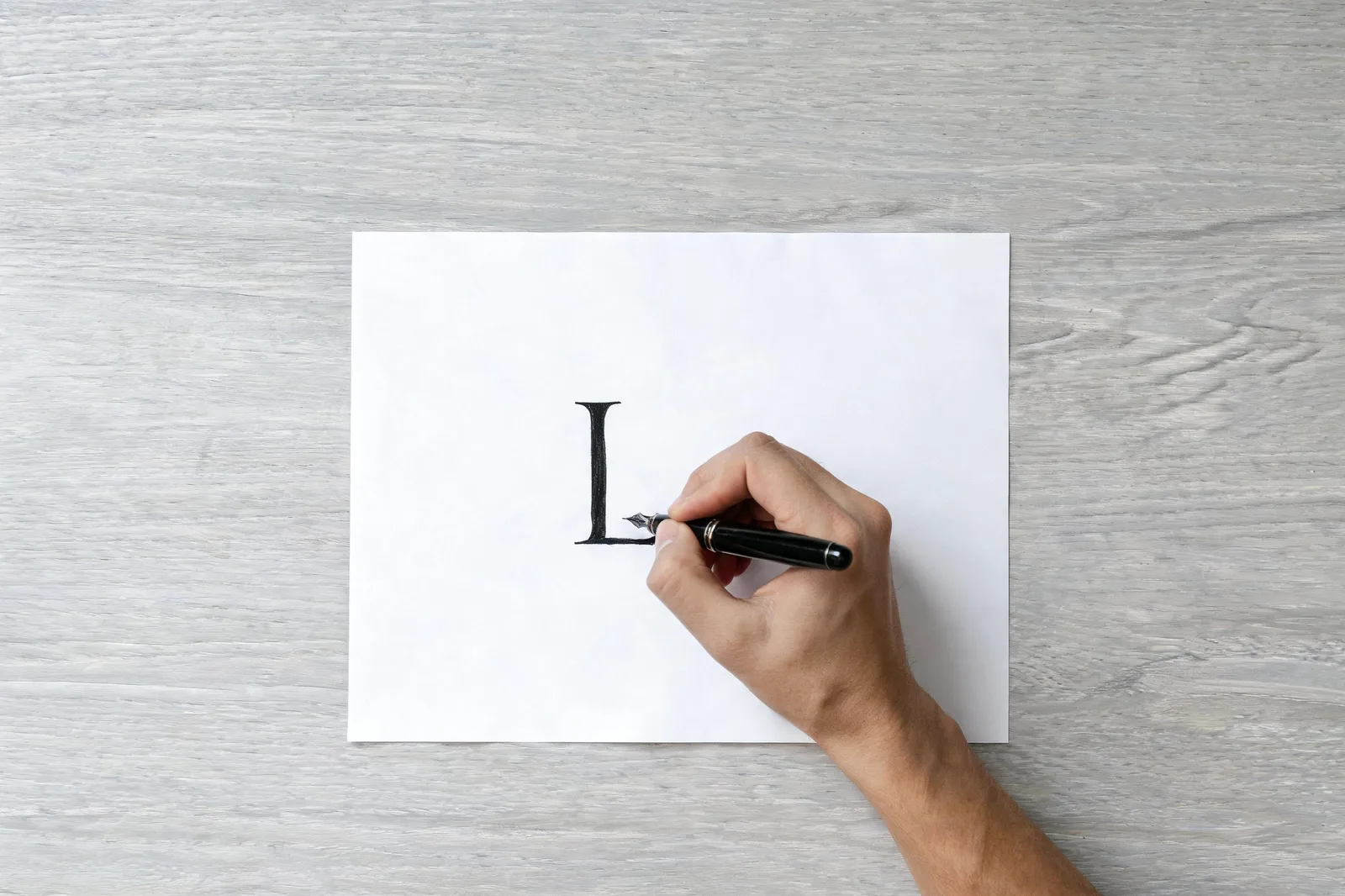
The Key to the True Quabbalah is Bardon's third and final book, and its title carries a deliberate spelling choice: Quabbalah, not Kabbalah, a signal that what follows is Bardon's own system of sound and letter magic, not the Hebrew mystical tradition the Golden Dawn drew on for its trump attributions. The Practice of Magical Evocation and the Tarot's Spirits covered the spirits his second book calls into form; this part sets his very different alphabet against the Hebrew letters a tarot reader already meets on every Major Arcana card.
A Language Built From Breath, Not History
Bardon's third book teaches a practitioner to work with the sounds of an alphabet, mostly German and Latin letters in the editions he wrote in, treating each one as a carrier of a distinct magical force locked into its vowel or consonant shape. He calls this the "mouth alphabet" and the "head alphabet," systems built from where a sound forms in the body, not from any historical script. Nothing here claims descent from Jewish mysticism. Bardon's spelling of Quabbalah with a Q was his own marker, used by later commentators to keep his system clearly separate from the older Kabbalah his title echoes.
The Hebrew Trumps Bardon Never Used
The Golden Dawn's attribution scheme, by contrast, assigns each of the twenty-two Hebrew letters to one trump of the Major Arcana: Aleph to the Fool, Beth to the Magus, and onward through the alphabet to Tav. The Hermit carries Yod in this scheme, the hand that gives without grasping; The Tower carries Peh, the mouth as a fortress breached. Bardon's books never mention this attribution, and his own alphabet runs on entirely separate letters and entirely separate correspondences. A reader who knows both systems should resist blending them: they solve different problems with different tools.
Why the Distinction Matters for a Reader
Treating Bardon's Quabbalah as a variant flavour of the Golden Dawn's Hebrew scheme would misread both. Bardon's method trains a practitioner's own voice as an instrument; the Golden Dawn's Hebrew attributions build a fixed grid connecting the trumps, the paths of the Tree of Life and the twenty-two letters, a structural map rather than a vocal exercise. The Hermetic Order of the Golden Dawn formalised its Hebrew letter attributions decades before Bardon published anything, in a current he likely never engaged with directly.
What Carries Across Anyway
Despite the different letters, one habit does carry across both systems: the conviction that sound and form are not arbitrary, that a given letter or word shapes the force behind it rather than merely labelling it. A reader who takes a trump's Hebrew letter seriously, sounding it slowly before a reading rather than only naming it, is practising a smaller version of the same attention Bardon asks a student to bring to his own alphabet. The tool differs; the discipline of treating language as active, not decorative, is shared ground.
A Caution Worth Keeping
Tradition holds that confusing Quabbalah with Kabbalah has misled more than one casual reader of Bardon's work, and the confusion is easy to make from the title alone. The Key to the True Quabbalah rewards a reader precisely because it is not another gloss on the Hebrew letters; it is a separate, self-contained system that happens to share a border with the tarot's own Kabbalistic scaffolding. The next part of this series turns from Bardon's three books to the single title he gave his very first one, and to why he called it, in his own words, the first card.
Questions
What is the Key to the True Quabbalah about?
Franz Bardon's third book, teaching a system of sound and letter magic built from German and Latin alphabet sounds, not the Hebrew alphabet.
Why does Bardon spell it Quabbalah, not Kabbalah?
The spelling marks his system as his own invention, separate from the historical Jewish Kabbalah that the word usually names.
Does Bardon use the Hebrew letters on the tarot trumps?
No. The Golden Dawn's Hebrew letter attributions to the Major Arcana come from a separate tradition Bardon's books do not engage with directly.
What can a tarot reader take from Bardon's third book?
The habit of treating a letter or word as active rather than decorative, which also rewards sounding out a trump's own Hebrew letter slowly.
This article talks about
You might also like
 Kabbalah
 Kabbalah
© 2026 TAROTS chat (tarots.chat). All rights reserved. No part of this article may be reproduced, distributed or adapted without the owner's written permission.
The Journal
From the Journal
Chosen for this page
 Thoth Tarot
 Kabbalah
Johannes Reuchlin's De Arte Cabalistica and the Western Occultists
5 min read
More in Kabbalah Love
 Wands
 Major Arcana
 Symbolism
 Symbolism
 Symbolism
 Kabbalah