Johannes Reuchlin's De Arte Cabalistica and the Western Occultists
by Redazione · 9 October 2026 · 5 min read
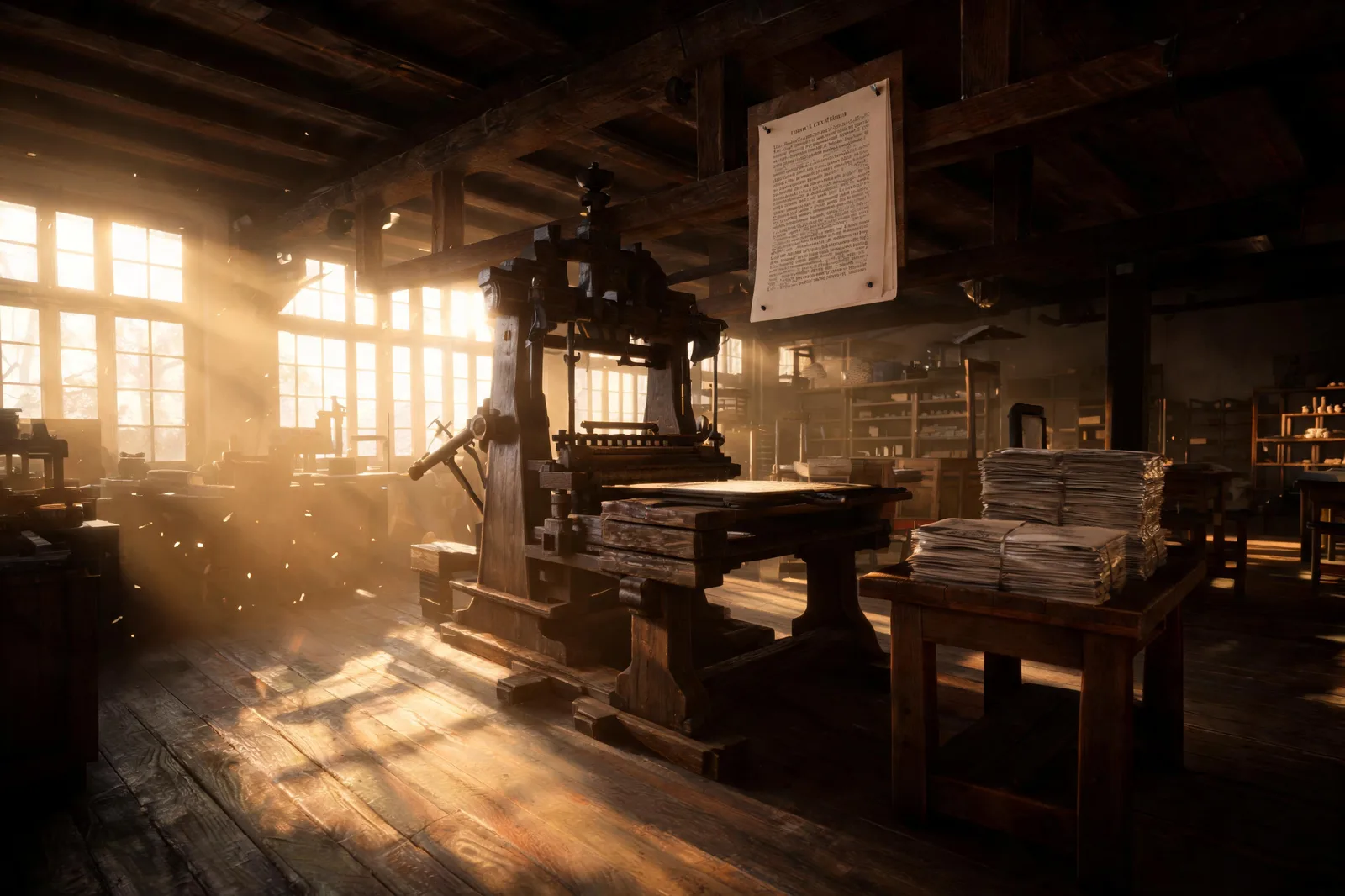
Reuchlin De Arte Cabalistica gave Christian Cabala its first systematic textbook. Published in 1517 by Johannes Reuchlin, the Latin dialogue built on Pico della Mirandola and the Birth of Christian Cabala's earlier theses. It turned a scattered set of claims into something later Western occultists could actually study and copy. It is a key hinge in how Hebrew mysticism reached the circles that, centuries later, attached Hebrew letters to the tarot trumps.
A German humanist's Hebrew project
Reuchlin was born in 1455 in Pforzheim and became one of the most accomplished Hebraists in Christian Europe, learning the language from Jewish teachers at a time when few Christian scholars bothered to try. His first Cabalistic book, De Verbo Mirifico, appeared in 1494; De Arte Cabalistica, written as a dialogue between a Jewish scholar, a Muslim philosopher, and a Christian student, followed over twenty years later and became his most influential work. Unlike Pico, Reuchlin worked more directly with Hebrew sources. This gave his version of Christian Cabala a more careful, scholarly texture. Even so, its underlying goal stayed the same as Pico's: showing that Kabbalah led, in the end, to Christian truth.
What Reuchlin De Arte Cabalistica Argues
The book moves through Hebrew letter mysticism, number symbolism, and divine names, presenting Kabbalah as a philosophy capable of bridging Judaism, Islam, and Christianity, with Christianity as its true destination. Reuchlin treated the permutation of Hebrew letters as a technique any educated Christian could learn and redirect toward Christian meditation. This was a genuine subject in Jewish Kabbalistic practice, explored seriously by figures such as the ecstatic Kabbalist Abraham Abulafia. That move, repeated across the book, is the same pattern this series keeps naming: a real Jewish technique, read out of its own religious context and put to a different use by someone outside the tradition that produced it.
Defending Jewish books, for his own reasons
Reuchlin is also remembered for a separate, consequential episode: around 1510, he publicly opposed a campaign to confiscate and burn Jewish books in the Holy Roman Empire, arguing that Hebrew texts had scholarly value. This stance provoked the Pfefferkorn controversy, a bitter public dispute that split German humanists for years. Reuchlin's defense of the books was genuine and had real consequences protecting Jewish texts from destruction, but it coexisted comfortably with his belief that those same texts ultimately proved Christianity. Respecting Hebrew scholarship and respecting Judaism as a living, self-governing tradition were, for him, two different things.
From Reuchlin to the occultists
De Arte Cabalistica circulated across Europe for the next three centuries, read by Christian Hebraists, Rosicrucian writers, and eventually the nineteenth-century occultists who built the tarot's letter correspondences. The Priestess often carries the heaviest weight of this inherited symbolism in modern tarot writing, treated as a gateway to "hidden" Hebrew wisdom that, on inspection, usually traces back through exactly this Reuchlin-Pico lineage rather than to any Jewish source directly. The next article in this series turns to a very different kind of witness: Gershom Scholem, the twentieth-century scholar who spent his career documenting Jewish mysticism on its own terms and who had sharp words for its occult borrowings. Reuchlin's own book, and the controversy around it, are covered well in the Johannes Reuchlin Wikipedia entry.
Reading Reuchlin today
A tarot reader who encounters "Cabalistic" letter attributions in a modern guidebook is, more often than not, reading a simplified echo of Reuchlin's sixteenth-century synthesis. That is worth knowing. It is not a reason to discard the symbolism, but it is a reason to name it accurately: this is a Christian and Western esoteric reading of Hebrew letters, built by a specific scholar for a specific theological purpose, not a window into Judaism itself.
A common misreading worth correcting
Many modern readers assume any book with "Cabalistic" in its title must be a Jewish religious text, written for a Jewish audience, carrying the same authority as the Zohar or a rabbinic commentary. Reuchlin De Arte Cabalistica shows why that assumption fails. The book is a Latin dialogue, written by a Christian humanist, for a Christian readership, arguing a Christian theological point. Its Jewish characters are literary devices inside Reuchlin's own construction, not representatives speaking for the tradition itself. The confusion matters today because tarot guidebooks sometimes present "Kabbalistic" symbolism with the same unearned authority, as though quoting an ancient Jewish source rather than a sixteenth-century Christian synthesis built for a different purpose entirely. A simple habit helps: when a book or a tarot guide uses "Cabala" with a C, treat it as a label for this Christian and later occult current, distinct from Kabbalah with a K. The spelling convention is imperfect and not universal, but it signals the right question to ask: who wrote this, for whom, and toward what end? Reuchlin's own answer, consistently, was a Christian one.
Questions
What is De Arte Cabalistica about?
Published in 1517, Reuchlin de arte cabalistica is a dialogue presenting Kabbalistic letter and number symbolism as a philosophy that, in Reuchlin's argument, points toward Christian truth.
Did Reuchlin know Hebrew well?
Yes, better than most Christian scholars of his time. He studied with Jewish teachers and worked more directly with Hebrew sources than Pico della Mirandola had.
Did Reuchlin defend Jewish communities?
He publicly opposed a campaign to confiscate and burn Jewish books around 1510, a stance that protected real texts, though his theology still treated Kabbalah as ultimately Christian in meaning.
How does this connect to tarot symbolism?
Reuchlin's synthesis became a template later Western occultists drew on when building Hebrew-letter correspondences for the tarot trumps, centuries after his death.
This article talks about
You might also like
 Kabbalah
 Kabbalah
 Kabbalah
© 2026 TAROTS chat (tarots.chat). All rights reserved. No part of this article may be reproduced, distributed or adapted without the owner's written permission.
The Journal
 Spirituality
 Thoth Tarot
 Love
 Symbolism
 Kabbalah
 Kabbalah
 Symbolism
 Symbolism
 Kabbalah